
Modupe Olalere
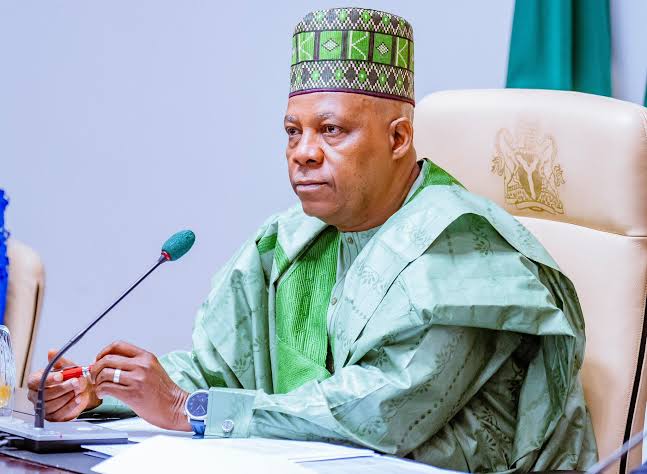
With a single legislative move, Vice President Kashim Shettima thrust Nigeria into what could become its most transformative era of digital governance. His sponsorship of the National Digital Economy and e-Governance Bill has set off a wave of anticipation, as lawmakers begin scrutinising a proposal that promises to reinvent public service delivery and reposition Nigeria as a GovTech leader.
Vice President Shettima made his sponsorship of the the National Digital Economy and e-Governance Bill public during the Digital Nigeria International Conference held in Abuja, underscoring it as the next logical step after Nigeria’s fintech-driven digital economy breakthroughs. “Just as the cashless policy unlocked the fintech revolution, this Bill will unlock the GovTech revolution,” he declared, outlining the ambition to build a future government that operates smarter, more transparently, and inclusively through technology.
The bill formally entered the House of Representatives on November 5, 2025. Currently, it is under review by relevant parliamentary committees, which are tasked with scrutinizing its provisions before it proceeds to the whole legislative debate and approval. If passed, it will embed automation, artificial intelligence (AI), and data analytics deeply into government processes—from decision-making to frontline service delivery.
Shettima’s bill aims to overhaul a sprawling, often inefficient civil service comprising millions of workers serving Nigeria’s 220 million people. It focuses on expanding digital access across urban and rural centers alike, seeking to bridge historic disparities in governance quality among regions. The government’s vision for this bill includes three foundational pillars that support the larger digital transformation:
– People: Scaling up Nigeria’s digital workforce through programs like Digital Literacy for All (DL4ALL) and the 3 Million Technical Talent initiative (3MTT), which aim to equip citizens with the skills needed in a technology-driven economy.
– Infrastructure: Expanding broadband connectivity nationwide, with projects such as Bridge and Project 774 ensuring high-speed internet access not just in Lagos or Abuja but also in smaller cities like Gusau and Makurdi.
– Policy: Creating legislative and regulatory frameworks conducive to innovation in public administration, leveraging lessons learned from the fintech ecosystem’s regulatory successes to foster GovTech advancement.
Together, these pillars reflect an integrated approach to preparing Nigeria’s civil service for the digital era.
Proponents of the bill argue that its successful implementation could herald a transformational shift in how Nigerians interact with their government. One of the key anticipated benefits is improved efficiency. By automating routine tasks and digitizing records, the bill could substantially reduce bureaucratic delays, often blamed for frustrating citizens and businesses alike.
With digital platforms, Nigerians can access services online, such as passport applications or tax payments, without having to visit a physical location or use an intermediary. This change promises greater convenience, shorter turnaround times, and greater accountability, as real-time data and automated operations reduce human intervention that can lead to corruption.
Experts such as Dr. Emeka Okafor from the African Centre for Digital Transformation highlight the transparency gains enabled by digitization. “Digitizing public services not only streamlines government functions but also enables citizens to monitor service delivery in real time,” Dr. Okafor notes. This is crucial for strengthening trust, especially in a country where transparency in governance has long been a concern.
Inclusivity remains another critical merit. By extending broadband access beyond major metropolitan hubs, the bill strives to level the playing field for rural communities, many of whom have historically been marginalized in receiving public services. Professor Amina Abdullahi, a specialist in digital inclusion, emphasizes, “When citizens in Lagos and Abuja can access online government services, and those in Gusau or Makurdi have equivalent platforms, governance truly democratizes.”
Furthermore, by fostering a digitally literate workforce through robust education and training programs, the bill aligns with broader economic development goals. Tech entrepreneur Chijioke Nwosu underscores that these efforts “not only create jobs but build a resilient, innovation-driven economy that can adapt to future technological advances.”
Politically, the bipartisan support the bill enjoys in Nigeria’s House of Representatives reflects a firm commitment from legislative stakeholders to modernize public-sector governance — a critical signal for sustained policy implementation.
While the bill’s promises are significant, several questions remain about Nigeria’s readiness for such a comprehensive digital overhaul. The civil service’s entrenched bureaucracy and often resistant culture could slow adaptation. Nigeria’s public institutions have historically struggled with capacity constraints, understaffing, and inconsistent application of reforms—factors that could complicate the rollout of digital solutions.
Infrastructure challenges also remain pressing. Despite ongoing efforts to close Nigeria’s digital divide, many rural areas still experience poor or unreliable internet connectivity. Without sustained investment to improve infrastructure quality and affordability, large segments of the population risk being excluded from the benefits of e-governance.
Cybersecurity and data privacy concerns present another formidable hurdle. The digitization of sensitive government data and citizen information requires rigorous safeguards to prevent breaches, misuse, or unauthorized access. Nigeria will need to establish robust legal and technical frameworks to protect individuals’ privacy rights while promoting transparency.
Moreover, the complexity of integrating new digital systems with existing legacy processes could cause operational disruptions. Effective governance will need continuous monitoring, periodic evaluation, and agile adjustments to ensure these technologies deliver on their intended goals without unintended negative consequences.
Lastly, success depends heavily on political will beyond initial legislative approval. Sustained funding, cross-agency coordination, and inclusive stakeholder engagement, including civil society and private-sector partnerships, are vital to maintaining momentum.
Shettima’s National Digital Economy and e-Governance Bill boldly envisions transforming Nigeria’s civil service through technology. The Vice President has taken a crucial step towards a more efficient, transparent, and inclusive administration by proposing this legislation. Despite the challenges, this bill positioned Nigeria to lead the continent in GovTech innovation if it receives political, infrastructural, and societal backing.