
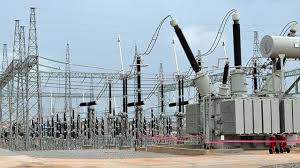
Nigeria’s power generation companies have raised fresh concern over a looming N1 trillion debt, warning that persistent liquidity challenges and stranded capacity now exceeding N2.376 trillion are threatening the survival of the sector.
The operators say urgent intervention by the Federal Government is needed to stabilise the market, improve cash flow and prevent further deterioration of generation assets. The alarm comes at a delicate moment for the sector, just weeks after a leadership change at the helm of the Power Ministry.
According to data the Association of Power Generation Companies presented to the National Assembly, total available generation capacity rose from 4,214 megawatts in 2013 to 7,311.20MW as of May 2026. Actual average dispatch, however, stood at just 4,222.40MW, leaving 3,162.40MW, or 43.25 per cent, of total capacity stranded. The underutilisation produced capacity payment shortfalls put at over N2.376 trillion between 2015 and May 2026. For 2026 alone, capacity payment losses had already reached N93.34 billion as of May.
The figures extend a long pattern of waste. APGC data made public earlier in 2026 showed GenCos lost an estimated N2.28 trillion in capacity payments between 2015 and 2025, with stranded power peaking at 54.38 per cent at one point. The association has long argued that the sector remains stuck at roughly 4,000MW of average grid generation despite an installed capacity of 15,500MW.
GenCos blame the persistent stranding on gas supply constraints, inadequate transmission infrastructure, and distribution bottlenecks that limit the grid’s ability to evacuate generated electricity. They warn that unless these structural problems are addressed, the sector risks deeper financial distress and falling investor confidence.
The operators have asked the new minister to forestall further indebtedness, estimated at about N1 trillion, and to settle all outstanding payments owed by the Nigerian Bulk Electricity Trading Plc and the market operator. They also want a government-backed Payment Risk Guarantee to improve market creditworthiness, a dedicated foreign exchange window for operations and maintenance, and an immediate reconciliation of accounts with NBET. “We urgently want reconciliation with NBET so that there is clarity on what is owed,” an industry source who pleaded anonymity said.
The debt question has already proved contentious. After a July 2025 reconciliation involving GenCos, NBET, the Ministry of Finance and the Office of the Special Adviser on Energy, President Bola Tinubu approved N4 trillion as verified legacy debt. The operators have since rejected suggestions of a lower N2.8 trillion figure, warning that altering agreed numbers could weaken contracts and market trust.
The Minister of Power, Joseph Tegbe, who was sworn in on June 8, 2026 after the exit of Adebayo Adelabu, used a separate platform to court investors. Speaking at the National Healthcare Electrification Investor Matchmaking Forum in Lagos, held under the Nigeria Power for Health Initiative, Tegbe called on local and international investors to embrace sustainable financing models to power health facilities, according to a statement by ministry spokesman Clement Ezeorah.
Tegbe described the power sector as one of the most compelling investments on the continent. He said more than 35,000 registered health facilities nationwide formed a pipeline of bankable projects for solar mini-grids, hybrid systems, battery storage and energy-efficiency technologies. He noted that the Electricity Act provides the foundation for structuring power purchase agreements and licensing mini-grid operators.
Deputy Health Minister Isiaq Salako, who hosted the forum, described the initiative as a shift from donor-funded infrastructure to a sustainable energy-as-a-service model.