
Samuel Omang
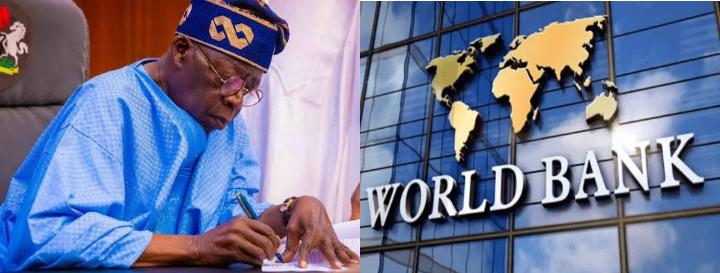
The Presidency has dismissed the World Bank’s latest report on poverty in Nigeria, describing it as outdated, incomplete, and unreflective of the current realities under President Bola Tinubu’s administration.
In a statement issued on Wednesday by Special Adviser to the President on Information and Strategy, Bayo Onanuga, the Presidency said the report, which claimed that 104 million Nigerians are living in poverty, relied on pre-reform data that failed to capture the government’s recent interventions to stabilise the economy and cushion hardship.
According to Onanuga, the World Bank’s poverty figures were based on surveys and data collected before key economic policy measures—including fuel subsidy removal and exchange rate unification—began yielding results.
“The report, while statistically framed, does not reflect the actual realities of Nigeria’s ongoing economic reforms. It uses outdated metrics that ignore the significant policy responses and social investments implemented since mid-2023,” Onanuga said.
He explained that since President Tinubu assumed office in May 2023, the administration has rolled out several social safety nets to alleviate hardship, including cash transfers, wage awards, and a N50,000 grant for small businesses across the country.
The Presidency maintained that contrary to the World Bank’s bleak portrayal, Nigeria’s economy is showing signs of recovery, with inflation stabilising and agricultural productivity improving under various intervention schemes.
“President Tinubu’s reforms were designed to lay the foundation for long-term stability. While challenges remain, we have started seeing improvements in fiscal balance, energy investment, and job creation,” Onanuga added.
He also accused the Bretton Woods institution of failing to acknowledge Nigeria’s resilience and the reforms aimed at strengthening fiscal discipline, diversifying revenue, and reducing dependence on crude oil exports.
“The World Bank report appears to overlook the gains of policies such as the student loan scheme, the 300,000 social housing project, and the food security initiatives now underway. These programmes are directly addressing poverty and human capital development,” the statement read.
Onanuga further noted that the Federal Government is committed to evidence-based policymaking and regularly engages local and international data agencies, including the National Bureau of Statistics (NBS), to ensure accurate poverty tracking and inclusive growth metrics.
He said, “We welcome constructive international assessments, but they must be balanced, factual, and grounded in current data. The report’s failure to account for recent developments makes its conclusions questionable at best.”
The Presidency reaffirmed that President Tinubu’s “Renewed Hope Agenda” remains focused on inclusive economic recovery, infrastructure development, and social welfare improvements for all Nigerians.
Meanwhile, economic experts have expressed mixed reactions to the World Bank’s findings. Some analysts agree that the data may not fully reflect post-reform realities, while others argue that the depth of hardship across households indicates the need for more robust policy implementation at the grassroots level.
The World Bank, in its report published earlier this week, estimated that Nigeria’s poverty rate had risen sharply, with over 104 million citizens living below the poverty line—an increase attributed to inflation, unemployment, and declining household purchasing power.
However, the Presidency insists the report paints “a one-dimensional picture of a complex economy undergoing recovery” and assured Nigerians that ongoing reforms will yield tangible relief and growth in the months ahead.