
Ofure Akhigbe
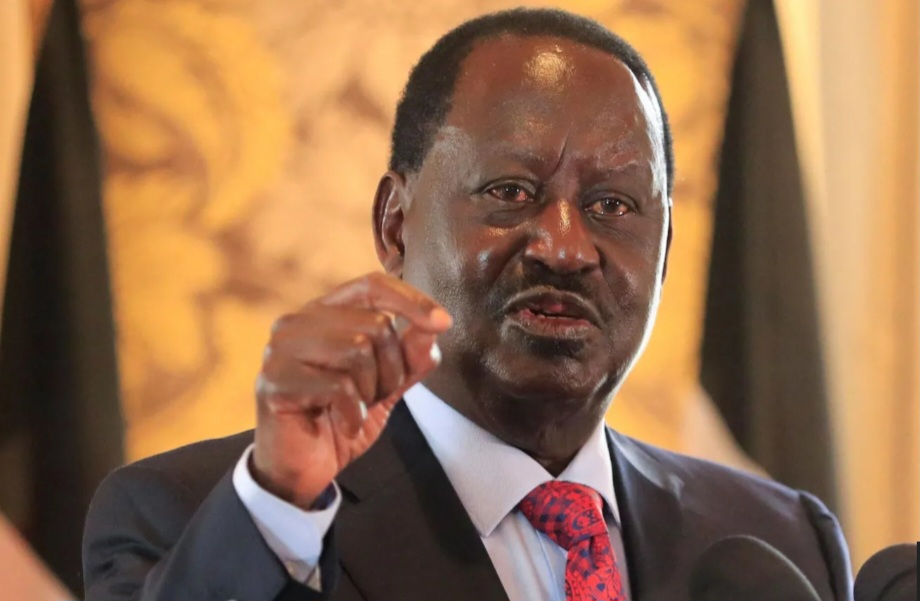
Former Kenyan Prime Minister and opposition leader Raila Odinga has died at the age of 80, family sources confirmed on Wednesday.
Odinga passed away while receiving medical treatment at a hospital in India. According to Indian police reports, he was walking with family members and his personal doctor when he suddenly collapsed. He was rushed to a nearby hospital, where doctors pronounced him dead.
His death comes after weeks of speculation about his health, which his family and political allies had repeatedly dismissed. Condolences have begun pouring in from across Africa, including messages from Ethiopian Prime Minister Abiy Ahmed and other regional leaders.
A towering figure in Kenyan politics, Odinga ran unsuccessfully for the presidency five times, often alleging electoral malpractice and claiming that victory was stolen from him. In 2017, his position was partly vindicated when Kenya’s Supreme Court annulled the presidential election result that declared Uhuru Kenyatta the winner, citing irregularities. However, Odinga boycotted the subsequent rerun, insisting on comprehensive electoral reforms.
The 2007 general election, one of the most contentious in Kenya’s history, saw Odinga accuse then-President Mwai Kibaki of rigging the vote. The disputed outcome triggered widespread violence that left 1,200 people dead and displaced more than 600,000 others. The crisis was eventually resolved through a power-sharing deal brokered by former UN Secretary-General Kofi Annan, which created a unity government with Odinga serving as Prime Minister.
In recent years, Odinga maintained a complex relationship with successive administrations. Following his defeat in the 2022 presidential election, he later joined hands with President William Ruto in what was described as a broad-based government — a move he defended as vital for national unity after mass protests that rocked the country and led to dozens of deaths.
Earlier this year, the Ruto administration supported Odinga’s bid to chair the African Union Commission, but he lost to Djibouti’s Mahmoud Ali Youssouf despite strong regional backing.
A political mobiliser and reform advocate, Odinga earned enduring nicknames from his supporters — “Baba” (Father), “Agwambo” (Act of God), and “Tinga” (Tractor) — symbols of his populist appeal and grassroots connection, especially in his native western Kenya.
Odinga was also a former political prisoner, holding the record as Kenya’s longest-serving detainee. He was twice imprisoned during Daniel arap Moi’s regime — from 1982 to 1988, and again from 1989 to 1991 — for his alleged involvement in a failed coup and his role in the struggle against one-party rule.
Throughout his political journey, Raila Odinga remained a symbol of resistance, reform, and resilience, leaving behind a legacy deeply woven into Kenya’s democratic history.