
Daniel Otera
As the National Assembly embarks on one of the most significant constitutional reviews in recent memory, proposals for the creation of 55 new states and 278 additional local government areas (LGAs) have sparked intense debates regarding the country’s fiscal health, historical challenges, and the delicate balance of ethnic representation. These proposals stem from long-standing calls for administrative equity and are being considered at a time when Nigeria’s subnational debts are rising, and public resources remain under strain.
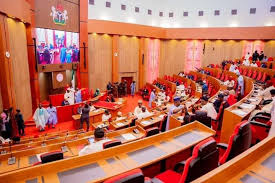
The Joint Committee on Constitution Review, led by Deputy Senate President Barau Jibrin, has compiled these requests as part of a broader review agenda that includes 69 bills, two boundary adjustments, and institutional reforms such as the introduction of independent candidacy. According to the Debt Management Office (DMO), Nigeria’s total public debt, which includes substantial subnational debt, stood at ₦152.40 trillion as of June 30, 2025. This represents a 2.01 percent increase from the previous quarter, highlighting the increasing pressure on both federal and state finances.
Subnational debt, which encompasses borrowings by Nigeria’s 36 states and the Federal Capital Territory (FCT), reached approximately ₦5.97 trillion by the end of March 2025. Among the states with the highest debt burdens are Lagos, with ₦1.23 trillion, and Rivers, with ₦0.89 trillion. This growing financial pressure has led to concerns about the feasibility of further administrative divisions without significant financial restructuring. These statistics paint a picture of fiscal fragility, where new administrative units could exacerbate borrowing needs without immediate revenue offsets.
The financial implications of creating new states in Nigeria are substantial and multifaceted. Experts estimate that the initial cost of establishing essential infrastructure such as governor’s lodges, legislative assemblies, high courts, and secretariats ranges from ₦50 billion to ₦100 billion per state. If Nigeria were to expand from 36 to 55 states, this would result in an estimated infrastructure cost of between ₦2.75 trillion and ₦5.5 trillion, excluding ongoing operational expenses.
In terms of recurrent expenditures, the wage bill for state civil servants has seen a significant increase. Following the implementation of the ₦70,000 minimum wage in 2024, the total expenditure on salaries and allowances by Nigerian state governments surged from ₦2.036 trillion in 2024 to ₦3.87 trillion in 2025. This growing financial burden highlights the need for careful fiscal planning in any discussions around state creation and the allocation of resources.
Revenue redistribution is also a key consideration in the debate over state creation. Oil-rich southern states, such as Delta and Akwa Ibom, have made substantial contributions to the Federation Account. For instance, in the first half of 2025, Delta State received ₦185.16 billion, while Akwa Ibom received ₦124.79 billion in statutory allocations. These figures underscore the potential for resource redistribution to enhance the financial capacity of newly created states, especially those in resource-rich regions.
The Central Bank of Nigeria (CBN) projects a 3.5% GDP growth for 2025 in its economic outlook, falling short of the 4.2% growth rate needed to accommodate a projected 20-30% increase in the national wage bill. This increase is tied to the creation of new states, which would result in the addition of governors, 109 senators, and 360 House of Representatives members.
Barau Jibrin, during a plenary session on October 24, 2025, cautioned that these proposals must be balanced against the country’s rising debt obligations, which have already consumed ₦8.7 trillion of the 2025 budget more than the combined allocations for education and health. He stressed the importance of pursuing “people-centered” reforms that do not jeopardize macroeconomic stability.
The Debt Management Office (DMO) also warned of the increasing external debt burden, which has reached $2.86 billion for state governments in the first eight months of 2025, a 10.6% increase year-on-year, primarily driven by naira devaluation. Without a proportional increase in GDP, currently pegged at ₦450 trillion nominally (as per the National Bureau of Statistics), critics argue that the debt-to-GDP ratio could surpass 50%. Such a scenario would mirror the debt thresholds that led to IMF interventions in neighboring Ghana in 2022.
In 2024, Nigerian states collectively generated a record ₦3.63 trillion in Internally Generated Revenue (IGR), reflecting a 49.7% increase from ₦2.43 trillion in 2023. Despite this growth, many states, including those in the northern region, continue to face fiscal deficits. The Federal Government recorded a budget deficit of ₦13.51 trillion in 2024, exceeding the legal limit set by the Fiscal Responsibility Act. Although specific deficit figures for individual states are not readily available, the overall fiscal challenges are evident across the nation.
The revenue generation disparity between regions remains significant. While Lagos, Rivers, and the Federal Capital Territory (FCT) lead in IGR, northern states continue to struggle with lower revenue generation. For example, while southern states like Lagos generate IGRs in the hundreds of billions, northern states such as Kano and Kaduna are far behind, with much lower revenue figures. The gap in IGR, averaging ₦15 billion annually in northern states compared to ₦45 billion in their southern counterparts, contributes to the ongoing fiscal strain in these regions.
Northern Nigeria is rich in solid minerals, including gold, limestone, and zinc, which remain largely untapped. For example, Zamfara State, known for its gold deposits, saw its mining ban lifted in December 2024 due to improved security conditions. This move is expected to boost mining activities and potentially increase revenue generation. However, despite these resources, the solid minerals sector still contributes less than 1% to Nigeria’s GDP, highlighting the untapped potential that could significantly boost state revenues if fully explored and developed.
The Nigeria Extractive Industries Transparency Initiative (NEITI) has stressed the importance of improving the management and exploration of solid minerals in northern Nigeria. States like Gurara and Apa, which are rich in solid minerals, could contribute an estimated ₦500 billion in yearly royalties if their mineral resources were fully exploited.
The Central Bank of Nigeria (CBN) has indicated that, without significant fiscal federalism reforms such as the devolution of Value Added Tax (VAT), new states formed through restructuring could see their wage bills increase by 25%, without corresponding improvements in productivity. This underscores the need for careful planning and fiscal policy reforms to ensure that the creation of new states or the restructuring of existing ones does not exacerbate the nation’s fiscal deficits.
The current proposals for new states evoke the 1996 state creation exercise under General Sani Abacha, which led to the creation of six states: Bayelsa, Ebonyi, Ekiti, Gombe, Nasarawa, and Zamfara, thereby swelling the federation from 30 to 36 states. This was purportedly done to address minority agitations and bring governance closer to the people. However, archival records from the National Archives of Nigeria reveal that the exercise, intended to diffuse ethnic tensions, inadvertently deepened regional divisions. According to a 2005 study by the Institute for Peace and Conflict Resolution (IPCR), inter-state boundary disputes surged by 40% between 1996 and 2000 as a result of the new state boundaries. Ethnic groups like the Ijaw in Bayelsa and Tiv in Nasarawa reported heightened marginalization. IPCR data also logged 15 low-intensity conflicts related to resource control in the following decade.
Fast forward to today, and similar risks loom over the 2027 general elections. The Independent National Electoral Commission (INEC) zoning formula, which rotates the presidency across Nigeria’s geopolitical zones, already faces strain from voter registration anomalies. Preliminary 2025 data shows a 28% discrepancy in southern registries compared to 12% in the northern regions, fuelling accusations of gerrymandering. The concerns of boundary realignment have not been taken lightly; INEC’s internal memos warn that creating new states could fragment existing zoning blocs, which could amplify ethnic voting patterns. This was evident in the post-1996 elections, where northern candidates dominated 60% of gubernatorial races despite demographic parity.
The lessons from the 1996 state creation are apparent. It contributed to a 25% increase in ethno-religious clashes, according to the Armed Conflict Location & Event Data Project (ACLED), as minority groups gained nominal autonomy but lost federal leverage. As INEC prepares for the 2027 elections, the costs are expected to rise significantly, with a projected ₦870 billion budget to cover boundary redelineations. In light of this, the 2025 INEC memo projects that boundary shifts could increase post-election litigation by 15-20% in contested areas.
As former INEC Chairman, Professor Attahiru Jega, warned in a 2025 forum, “Territorial changes without robust safeguards could erode electoral credibility, much like the boundary skirmishes that marred the 1999 transition.” With 93 million registered voters as of August 2025, and a disproportionate 52% of voters from the northern region, any perceived bias in state approvals could polarize the polls. This was evidenced in the 2023 elections, where multi-ethnic zones saw a 35% dip in voter turnout, raising further concerns about the integrity of future elections.
Beneath the fiscal and historical complexities lies a demographic fault line. According to the National Bureau of Statistics (NBS) 2023 Demographic Statistics Bulletin, Nigeria’s population is estimated at 228 million, with the northern zones (North West: 38.5 million; North East: 23.2 million; North Central: 25.1 million) comprising 53 percent, or roughly 121 million residents, compared to 47 percent in the southern zones, which account for approximately 107 million residents.
This north-south divide is further emphasized by higher fertility rates in the northern regions, with an average of 5.2 births per woman in the north, versus 3.8 in the south, as per the 2023-24 Nigeria Demographic and Health Survey. This demographic imbalance contributes to the inequities in the federal system: northern states receive 55 percent of the FAAC disbursements, despite generating only 22 percent of the Internally Generated Revenue (IGR).
Interestingly, the momentum for new state proposals reveals a southern bias. Of the 278 Local Government Area (LGA) requests, 42 percent originate from the South East and South South zones, according to committee records. Notably, the bills for Adada (South East) and Anioma (South South) are progressing to the second reading stage. Additionally, the joint committee’s endorsement of a sixth state for the South East Etiti addresses a longstanding demographic imbalance, as the zone’s five states serve 23 million people, which is more densely populated than the North West’s six states serving 38.5 million.
“This is not about favoritism, but rather correcting historical oversights. The South East’s demographic density requires administrative agility,” Senator Ned Nwoko, sponsor of the Etiti bill, explained during the debates on 25 October 2025.
Contrastingly, proposals for northern regions like Savanna (North West) and Gurara (North Central) face significant viability challenges. According to National Bureau of Statistics (NBS) data, these areas have sparse populations, with fewer than 2 million people per proposed unit, which makes them unsuitable as standalone economies. A 2025 ISS African Futures report further projects that unchecked expansion in the south could exacerbate the north-south development divide, with per capita GDP in the south projected to reach ₦2.1 million by 2030, compared to ₦1.4 million in the north. This sets the stage for a critical debate on federalism: should decisions prioritize objective metrics, such as population density (e.g., South East: 500 persons/km² vs. North East: 150 persons/km²), or should they be swayed by zonal pressures?
As discussions intensify, with zonal hearings set for November 2025, stakeholders from the Nigerian Bar Association to civil society groups are calling for data-driven decisions. The NBS’s ongoing General Household Survey (Wave 5, 2023-24) underscores the importance of inclusivity, revealing that 41% of Nigerians under the age of 15 live in the north, amplifying calls for states that foster inclusive growth rather than deepen divisions. With Nigeria’s population projected to reach 237 million by the end of 2025, as estimated by the UNFPA, the stakes go beyond mere geography they touch on fiscal stability, electoral peace, and the future of Nigeria’s federal system.