
Crystal Dike
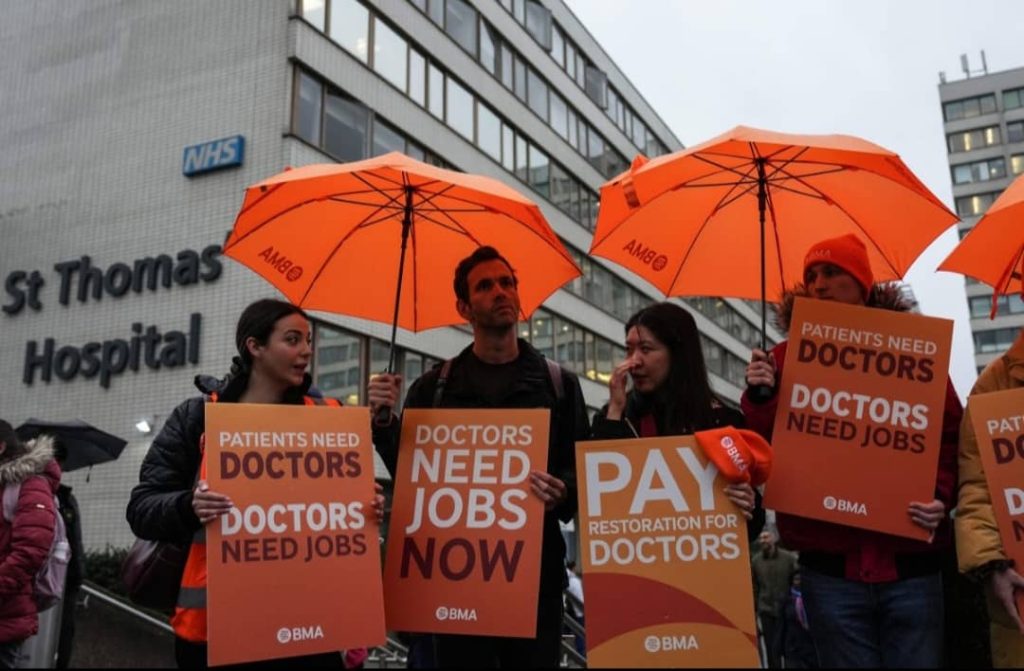
Resident doctors across England, including major hospitals in London, have begun a five-day strike in a dispute over pay, training posts, and working conditions. The industrial action, organized by the British Medical Association (BMA), is the 13th such strike since March 2023 and highlights ongoing frustrations among resident doctors over their treatment and career prospects.
The walkout, which started at 7 a.m. GMT on 14 November and is set to end at 7 a.m. on 19 November, has led London NHS trusts to reschedule non-urgent appointments while maintaining emergency and life-saving care. According to the BMA, resident doctors’ pay has fallen in real terms by roughly 20% since 2008, and the government’s latest pay offer fails to restore lost earnings.
In addition to pay concerns, resident doctors are pressing for more training posts to ensure career progression, warning that current shortages leave many doctors uncertain about their professional futures. The BMA also cites challenging working conditions, burnout, and understaffing as key factors driving the strike.
Health Secretary Wes Streeting criticized the action, calling it “irresponsible,” while Prime Minister Keir Starmer made a last-minute appeal to resident doctors to reconsider, citing potential disruptions to NHS services. Hospitals in London, including St Thomas’ Hospital, have become focal points for picket lines, drawing media and political attention.
The BMA maintains that the strike by resident doctors is essential to protect the future of the NHS, arguing that failing to address pay, training, and working conditions will worsen staff shortages and negatively affect patient care in the long term.