
Ofure Akhigbe
The Federal Government has called on member states of the International Criminal Court (ICC) to uphold principles of cooperation while respecting Nigeria’s sovereignty and constitutional framework.
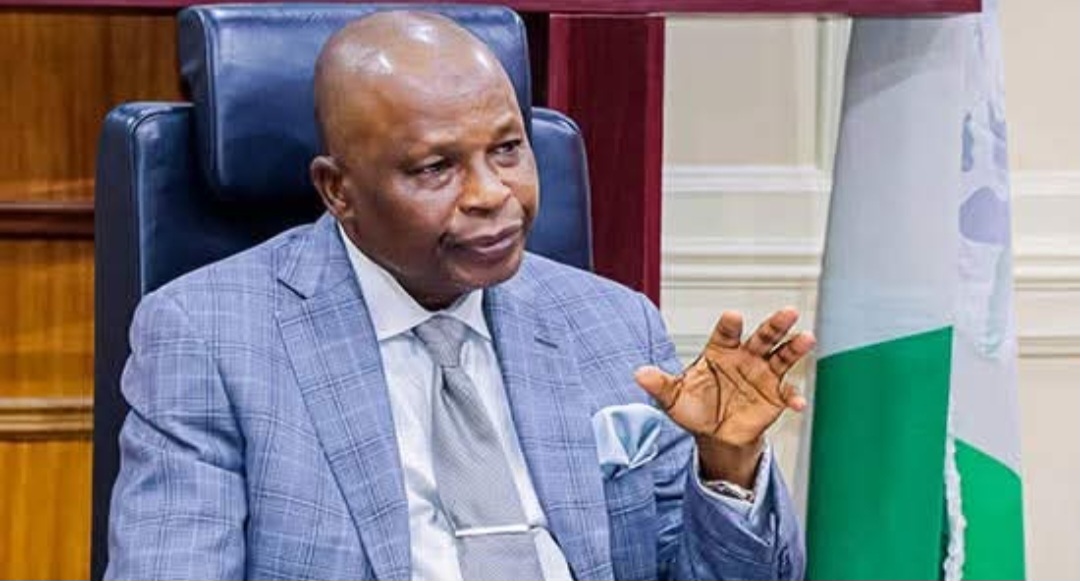
The Attorney-General of the Federation and Minister of Justice, Lateef Fagbemi (SAN), made the call on Monday in The Hague at the opening of the 24th Session of the Assembly of States Parties to the Rome Statute.
Delivering Nigeria’s national statement, Fagbemi conveyed President Bola Tinubu’s appreciation to the Court and the Assembly for their commitment to strengthening international criminal justice. He reaffirmed Nigeria’s longstanding loyalty to the Rome Statute system and its resolve to hold individuals accountable for war crimes, genocide and crimes against humanity.
“The Federal Government of Nigeria reaffirms its readiness to continue working with the ICC in the fulfilment of its mandate. Our cooperation is firmly rooted in the principles of international law and the sovereign equality of states, and we remain committed to ensuring that such cooperation always reflects respect for Nigeria’s sovereignty and constitutional framework,” he said.
Highlighting recent national efforts to strengthen humanitarian and criminal justice norms, the minister recalled Nigeria’s May 2025 High-Level International Humanitarian Law Dialogue, which brought together ministries, departments and agencies, civil society and academia. He said Nigeria continues to prioritise civilian protection and accountability in military operations.
“Our Armed Forces conduct operations in line with international humanitarian law and maintain mechanisms for independent and transparent investigations into alleged violations. The Six-Month Demobilisation, Deradicalisation and Reintegration Programme, our home-grown initiative, has successfully reintegrated more than 6,000 former combatants into society, contributing significantly to national stability and peacebuilding,” Fagbemi stated.
He also noted ongoing legislative efforts, including the domestication of the Kampala Convention, now awaiting presidential assent, as well as work to domesticate the Rome Statute and Additional Protocols I and II to the Geneva Conventions.
The minister added that Nigeria has joined like-minded states in the Global Initiative to Garner Political Support for International Humanitarian Law and has endorsed the Political Declaration on Explosive Weapons in Populated Areas.
In line with the ICC’s complementarity principle, Fagbemi said Nigeria continues to demonstrate capacity and willingness to investigate and prosecute serious crimes committed within its territory.
“Nigeria therefore looks forward to the formal conclusion of its Situation by the ICC. We will continue to cooperate with the Office of the Prosecutor to address all observations on our Situation, in line with our international and national obligations,” he said.
He warned that the ICC’s mandate is now more critical than ever amid rising armed conflicts and violations of international humanitarian law globally.
“The disregard for international humanitarian law, deliberate targeting of civilians, and destruction of civilian infrastructure illustrate the urgent need to bolster global accountability efforts,” he said, expressing concern over the growing “dehumanisation” of armed conflicts.
Fagbemi also flagged emerging risks from lethal autonomous weapons systems, which he said pose complex challenges to civilian protection and accountability.
“As autonomous systems evolve from defensive tools to potentially offensive weapons, questions of legal responsibility and ethical accountability become more pressing,” he said, adding that Nigeria supports ongoing UN and multilateral efforts to establish safeguards for emerging technologies.
The minister urged the Assembly to remain sensitive to the distinct challenges faced by African states confronting terrorism, insurgency and mass displacement.
“Effective cooperation, including victim support, timely sharing of information, technical assistance and support for national justice systems, remain essential,” he said.
He reaffirmed Nigeria’s support for strengthening the ICC’s independence, efficiency and credibility, while calling for Africa’s experiences to be fully integrated into discussions on cooperation, complementarity and reform.
“We encourage adequate resourcing of the Court and continued implementation of the Independent Expert Review recommendations. We also emphasise the need for sustained dialogue between the ICC and the African continent,” he said.
Fagbemi also condemned recent cyber-attacks on the ICC’s infrastructure, describing them as deliberate attempts to undermine the Court’s independence and global trust in international justice.
“We urge the Court to deepen collaboration with relevant stakeholders, including experts in emerging technologies and artificial intelligence, to bolster resilience against future threats and safeguard the integrity of the Court’s operations,” he added.