


Australian PM Apologizes to Jewish Community After Bondi Hanukkah Shooting.
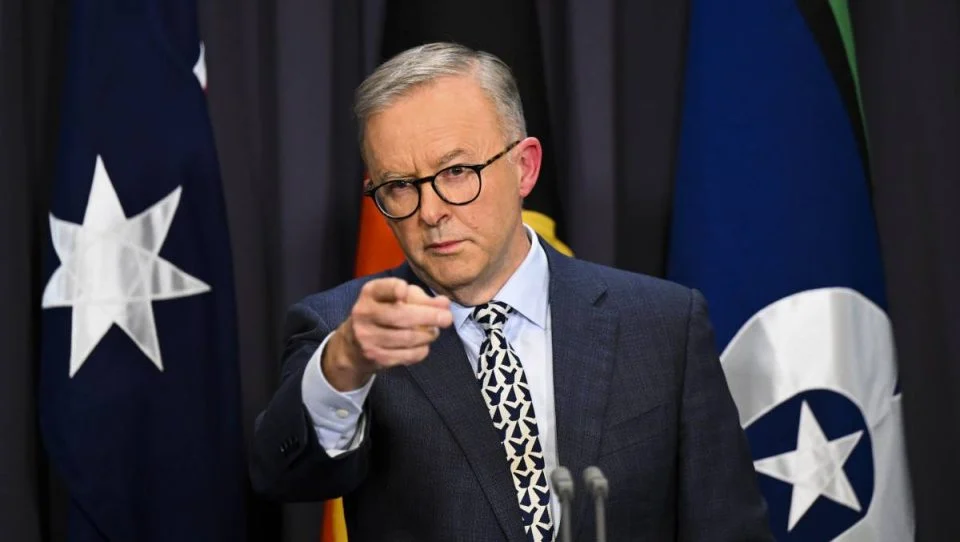
Australian Prime Minister Anthony Albanese has issued a formal apology to the nation’s Jewish community following a mass shooting that targeted a Hanukkah celebration in Sydney, marking one of the deadliest such attacks in the country’s history.
“As Prime Minister, I feel the weight of responsibility for an atrocity that happened while I’m Prime Minister, and I’m sorry for what the Jewish community and our nation as a whole have experienced,” Albanese stated on Monday. He pledged the government’s commitment to protecting Jewish Australians and ensuring their “fundamental rights to be proud of who they are, to practice their faith, to educate their children and to engage in Australian society in the fullest way possible.”
The attack occurred on the evening of December 14 at Bondi Beach, where a family-oriented Hanukkah event was taking place. Authorities allege that Sajid Akram, 50, and his son Naveed Akram, 24, opened fire on the crowd with long-barrelled firearms, killing 15 people and wounding dozens.
Court documents released on Monday reveal that police believe the attack was “meticulously planned” over several months. The planning allegedly included firearms training in rural New South Wales and a nighttime reconnaissance visit to the beach just days before the shooting. Surveillance footage reportedly shows the pair surveying the location from a footbridge later used in the attack.
According to investigators, the suspects recorded a video prior to the attack denouncing “Zionists” and outlining their motivations. In the hours leading up to the shooting, they were captured on camera loading “long and bulky items wrapped in blankets” into a car. Police allege these items included three firearms, four homemade explosive devices, and two Islamic State flags.
The victims included a 10-year-old girl, an 87-year-old Holocaust survivor, and a married couple who were shot while attempting to intervene.
Sajid Akram, an Indian national who entered Australia on a visa in 1998, was shot and killed by police at the scene. His son, Naveed Akram, an Australian-born citizen, was wounded and taken into custody after emerging from a coma three days later.
Naveed Akram has been charged with terrorism offenses, 15 counts of murder, 40 counts of grievous bodily harm with intent to murder, and displaying symbols of a prohibited terrorist organization. He was transferred from the hospital to prison on Monday to await his next court appearance.
Investigations have revealed that the pair took a four-week trip to the southern Philippines, returning to Australia just weeks before the attack. The purpose of their stay in Davao City remains unclear.
The case has raised significant questions about security protocols, as the Australian Security Intelligence Organisation (ASIO) investigated Naveed Akram in 2019 over radicalization concerns but concluded he did not pose a threat at that time.
Despite this prior scrutiny, Sajid Akram subsequently obtained a gun license permitting ownership of six rifles, three of which were recovered at the crime scene.