
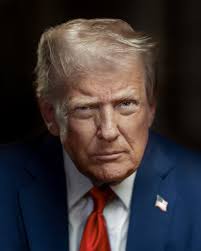
President Donald Trump announced on Christmas Day that United States forces had carried out airstrikes against Islamic State militants in northwest Nigeria, marking the first such operation in the country during his current administration.
In a post on his Truth Social platform, Trump described the action as a “powerful and deadly strike” directed at what he called “ISIS Terrorist Scum” in the northwest region. He stated: “Tonight, at my direction as Commander in Chief, the United States launched a powerful and deadly strike against ISIS Terrorist Scum in Northwest Nigeria, who have been targeting and viciously killing, primarily, innocent Christians.” Trump added that he had previously warned the militants of consequences if the violence continued, noting: “I have previously warned these Terrorists that if they did not stop the slaughtering of Christians, there would be hell to pay, and tonight, there was.”
The US Africa Command (AFRICOM) confirmed the strikes, stating they were conducted in coordination with Nigerian authorities in Sokoto State and resulted in the deaths of multiple ISIS terrorists. An initial assessment indicated the operation targeted known militant camps. US Secretary of Defense Pete Hegseth praised the action on X, expressing gratitude for Nigerian government support and cooperation while hinting at potential further operations.
Nigeria’s Ministry of Foreign Affairs also acknowledged the strikes, describing them as part of ongoing security cooperation with the United States involving intelligence sharing and strategic coordination. The ministry emphasised that the precision airstrikes targeted terrorist sites in the northwest, aligning with efforts to combat violent extremism.
This development follows months of heightened attention from the Trump administration on security challenges in Nigeria. In October and November 2025, Trump highlighted what he described as an “existential threat” to Christians in the country amid ongoing conflicts involving armed groups. These statements drew mixed reactions, with some welcoming the focus on protecting religious communities, while others, including Nigerian officials and independent analysts, cautioned against framing the violence primarily as religious persecution.
Nigeria, Africa’s most populous nation with over 220 million people roughly evenly divided between Muslims and Christians, has grappled with complex security issues for years. In the northeast, groups like Boko Haram and its splinter, the Islamic State West Africa Province (ISWAP), have waged a prolonged insurgency, leading to tens of thousands of deaths and massive displacement since 2009. ISWAP, in particular, has been noted for increased activity in 2025, with reports indicating hundreds of attacks on military and civilian targets, primarily in the Lake Chad Basin region.
In the northwest, where the recent strikes occurred, violence is often attributed to armed bandits involved in kidnappings for ransom and cattle rustling, though jihadist elements have increasingly intersected with these conflicts. According to data from sources monitoring the situation, both Muslims and Christians have been victims of attacks by extremist groups, with many incidents driven by factors beyond religion, including resource disputes and criminality. The Armed Conflict Location & Event Data Project (ACLED) and other analysts have pointed out that a significant portion of casualties from groups like ISWAP and Boko Haram have been Muslims.
The strikes come against this backdrop of multifaceted violence, underscoring the challenges in addressing terrorism in the region. Nigerian President Bola Tinubu, in a Christmas message earlier on 25 December, reiterated his commitment to protecting all citizens irrespective of faith, calling for peace amid differing religious beliefs.
Experts note that while international partnerships, including with the US, have supported Nigeria’s counterterrorism efforts through intelligence and training, the root causes of insecurity—such as poverty, governance gaps, and climate-related resource conflicts require broader approaches.