
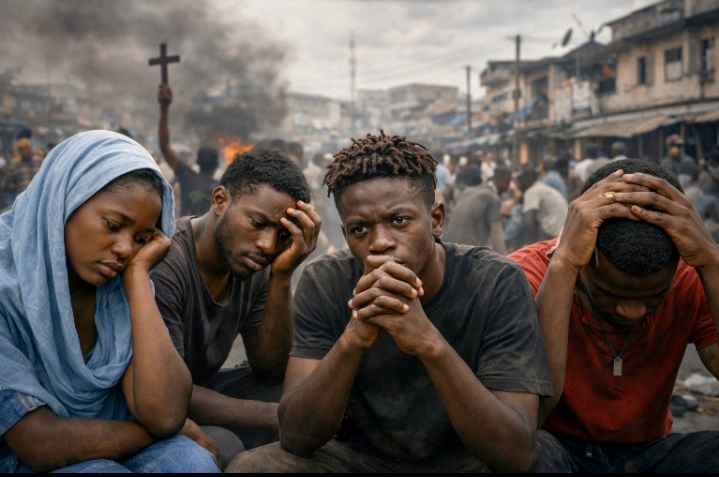
The mathematics of despair is straightforward. Nigeria’s youth population aged 15 to 35 comprises roughly 60 percent of the country’s 223 million people. Yet according to data from the National Bureau of Statistics, unemployment among this demographic has hovered between 23 and 35 percent in recent years, with underemployment figures climbing even higher. For many, formal employment represents not a reasonable expectation but an increasingly distant aspiration. This statistical reality has crystallised into something far more consequential than mere economic hardship: it has become a crisis of institutional legitimacy, where an entire generation questions whether the state exists to serve their interests at all.
The phenomenon is visible everywhere, coded into language itself. “Japa,” Yoruba slang for escape or disappearance, has become the defining word of contemporary Nigerian youth discourse. It no longer simply describes emigration; it describes an entire orientation toward life, a repudiation of futures imagined within Nigeria’s borders. Between 2020 and 2023, the International Organisation for Migration documented that over 1.5 million Nigerians emigrated, with youth accounting for the overwhelming majority. They board planes to Canada, the United States, the United Kingdom, and increasingly to countries like Turkey and Ghana, carrying with them not just their labour and talent but, critically, their belief that somewhere else, anywhere else might be better.
But the story of contemporary youth disenchantment extends far beyond migration statistics. It involves a systemic breakdown in the social contract, a historical erosion of institutional capacity, and a generational reckoning with promises that were never kept.
To understand what Nigerian youth face today requires confronting what their predecessors were promised and what they inherited instead.
The immediate post-independence generation, those who came of age in the 1960s and 1970s, were animated by the possibility of nation-building. Independence from colonial rule arrived with genuine economic optimism. Nigeria’s oil wealth, which began to flow in significant quantities by the late 1960s, seemed to promise developmental transformation. Universities expanded. Infrastructure projects commenced. A growing professional class emerged. The narrative, however was corrupted by political instability and military coups, yet remained essentially optimistic: this generation would build something.
By contrast, the generation that came of age in the 1980s and 1990s, the parents and older siblings of today’s youth, witnessed the systematic hollowing of that possibility. The Structural Adjustment Programme imposed by international financial institutions throughout the 1980s devastated social spending. Real wages collapsed. Universities, once engines of social mobility, began their long decline into under-resourced, politically contested institutions. The healthcare system contracted. Public infrastructure, never maintained adequately, began to visibly deteriorate. Corruption, which had always existed, became institutionalised at every level of governance.
This cohort, often called the “lost generation” developed strategies for survival that became the implicit inheritance of their children: distrust of institutions, reliance on family and kinship networks, and an orientation toward private solutions to public problems. If the state could not be relied upon, one sought alternatives through personal connections, migration, or informal economic activity.
The generation currently aged 15 to 35 came of age within this landscape of institutional decline and inherited cynicism, but with a crucial difference: they had access to unprecedented information and global connectivity. Through mobile phones and internet access (however inconsistent), they could see not just that Nigeria’s institutions were failing but exactly how much better-resourced, more functional systems operated elsewhere. This comparative visibility fundamentally altered the psychological experience of being young and Nigerian.
The employment crisis represents far more than a simple shortage of jobs. It embodies a specific failure of imagination and capacity within Nigeria’s economic and political leadership.
Nigeria’s economy, despite being Africa’s largest by nominal GDP, remains structurally dependent on crude oil exports. The oil sector, however, directly employs fewer than 50,000 people—a fraction of the annual influx of youth entering the labour market. The promise that oil wealth would generate the tax revenue for public investment, which would then create broad-based employment, has never materialised at a meaningful scale. Oil revenue, historically, has been captured by political and economic elites, invested in personal enrichment rather than productive capacity, or dispersed through patronage networks that prioritise loyalty over competence.
Beyond oil, Nigeria’s formal private sector remains underdeveloped relative to population size. Manufacturing capacity has contracted over the decades. Agricultural production, despite employing roughly 35 percent of the workforce, remains largely informal and subsistence-oriented, offering minimal income security. The service sector, heavily concentrated in telecommunications and finance, absorbs some educated youth but increasingly demands skills and credentials that are difficult to acquire in Nigeria’s degraded educational system.
The result is a labour market fundamentally incapable of absorbing the supply of young people entering it. According to the National Bureau of Statistics’ Labour Force Survey, Nigeria needs to create roughly 3.5 million jobs annually to accommodate population growth and prevent unemployment from worsening. The economy has consistently generated far fewer. This is not cyclical; it is structural.
For many young Nigerians, this structural incapacity translates into chronic underemployment. A graduate with a university degree works as a “marketing executive” for a telecommunications company, a role that involves door-to-door sales with minimal salary and commission-based income. Another, trained as an accountant, manages a retail shop. Others drift between temporary gigs content creation, social media management, freelance writing without the security, benefits, or dignity that formal employment once represented.
This precarity has ideological consequences. Young Nigerians increasingly view the state not as a guarantor of public welfare but as an extraction machine, an apparatus designed to funnel resources upward while providing nothing in return. The failure to create meaningful employment is experienced not as economic mismanagement but as abandonment, as a statement that their lives and futures do not matter.
Education occupies a complex position in the crisis of youth disenchantment; it is simultaneously the mechanism through which social mobility was supposed to occur and the institution that has most visibly failed.
Nigeria’s educational system, once a source of regional pride, has experienced systematic under-investment and deterioration. Universities that trained several generations of skilled professionals have become shells of their former selves. Lecturers, underpaid and often unpaid for months at a time, frequently pursue multiple side engagements. Library facilities are outdated. Laboratory equipment is absent or non-functional. Internet connectivity is unreliable. The promises of a university education, access to networks, knowledge, and credentials that would unlock opportunity have become increasingly hollow for students attending Nigerian institutions.
The National Universities Commission has documented this decline in multiple reports. Between 2010 and 2020, the percentage of government funding allocated to education fell from already-inadequate levels to genuinely catastrophic ones. A 2021 UNESCO report noted that Nigeria spends less than 4 percent of its annual budget on education, despite the sector requiring substantially more investment, given the size of the youth population.
The response from young Nigerians has been rational: those with the means pursue education abroad, incurring enormous costs and thereby positioning themselves for eventual emigration. Those without such means either abandon formal education or pursue it half-heartedly, knowing that a Nigerian diploma carries diminished market value both domestically and internationally. The educational system, which should be the great equaliser and vehicle for meritocratic advancement, has instead become a mechanism through which privilege is reproduced and those without family resources are further marginalised.
This has created a particular bitterness because the betrayal is not abstract. Parents sacrificed, going into debt, to send children to university with explicit expectations of employment and social advancement. Instead, graduates face precisely the same employment crisis as their non-educated peers, rendering the credential essentially worthless. The debt remains; the opportunity does not.
Migration, in this context, becomes not an individual choice but a structural inevitability—the only rational response to systematically closed doors.
The migration of Nigerian youth is not new. Professional emigration doctors, engineers, and academics have been a feature of post-independence Nigeria. What has changed is the scale, the demographic breadth, and the cultural meaning. In previous waves, emigration was often temporary, pursued by professionals seeking advanced training or experience before potential return. Contemporary migration increasingly involves younger, less-credentialed individuals making what they understand to be permanent departures.
The data tells a stark story. The World Bank estimates that Nigeria has more emigrants than any other country in sub-Saharan Africa. According to the UN Department of Economic and Social Affairs, approximately 17 million Nigerians live outside the country. The remittance flows from this diaspora, estimated at over $19 billion annually, constitute a lifeline for millions of families, exceeding the value of government spending on education and health combined.
But remittances mask a deeper problem: they represent a privatisation of what should be public welfare. Because the state has failed to provide, families depend on relatives abroad. This creates a particular kind of psychological relationship to the state, not merely disappointment but active rejection. The government is not experienced as a social good but as an obstacle to be escaped.
The “japa” phenomenon has also created a powerful cultural narrative among youth. Success is increasingly defined not as building something in Nigeria but as getting out. Social media amplifies this: young Nigerians document their lives abroad, showcasing apartment availability, employment, social services, and comparative stability. These testimonials, whatever their individual accuracy, collectively construct a narrative of elsewhere as fundamentally superior, Nigeria as fundamentally dysfunctional.
This has psychological consequences that extend beyond migration itself. For those who cannot leave, the constant exposure to narratives of escape generates despair. One is trapped not by lack of desire or effort but by circumstances of birth and limited capital. This produces not resignation but acute awareness of injustice.
Perhaps most significantly, youth disenchantment extends into active political withdrawal.
In Nigeria’s democratic periods, elections have historically mobilised significant youth participation, particularly around moments of perceived democratic stakes. The 1999 transition from military to civilian rule, for instance, generated genuine hope among younger voters. The 2023 presidential election, by contrast, revealed a generational fracture.
Before the 2023 election, social media erupted with youth-centred political organising. The #EndSARS movement of 2020, while focused on police brutality, had demonstrated unprecedented youth political agency. For many observers, the 2023 election seemed poised to translate this energy into electoral participation. Yet what occurred was complex and revealing.
Voter turnout in 2023 was lower than in 2019, with youth comprising a disproportionate share of non-voters. Those who did vote expressed frustration at being offered choices that seemed to represent different varieties of the same establishment. The winning candidate, Bola Ahmed Tinubu, represented continuity with a political class many youths viewed as responsible for their disenfranchisement. Even for youth who mobilised around his candidacy initially, his governance was marked by controversial economic policies, perceived disconnection from ordinary suffering, and minimal rhetorical acknowledgment of youth crises, which quickly generated disillusionment.
The broader phenomenon is one of political withdrawal. Young Nigerians increasingly view electoral politics as a performance by elites that has no bearing on their lived circumstances. The state, in this understanding, is not something to be reformed or captured but something to be escaped or endured.
This represents a genuine danger to democratic governance. Democracies, however imperfect, depend on sufficient faith in institutional participation to maintain legitimacy. When an entire generation ceases to believe in democratic institutions, the space opens for authoritarianism, demagogy, or collapse.
Beyond employment and education, youth disenchantment is rooted in the daily material degradation of public life in Nigeria.
A young person in Lagos navigates broken roads, inconsistent electricity supply despite privatisation promises, a healthcare system that routinely denies services to those without ready cash, and security challenges that seem to worsen yearly. The electricity crisis alone is instructive: Nigeria generates substantial electrical capacity but distributes it chaotically. For most Nigerians, electricity supply remains erratic. This has profound consequences. Businesses struggle with operational costs. Studying becomes difficult. Telecommunications, essential for work and education, are constantly interrupted. The state is experienced not as a provider of basic services but as a source of chronic frustration and indignity.
Healthcare represents another catastrophic failure. Nigeria’s healthcare system, despite being constitutionally guaranteed as a right, is largely inaccessible to the poor and working classes. Public hospitals lack medications, equipment, and basic supplies. A serious illness can bankrupt a family. Young people, often without insurance and without a steady income, face healthcare crises not as problems to be managed but as catastrophes to be feared. The state’s failure to provide health security generates profound anxiety.
Beyond these material failures, there is also the matter of personal safety. Youth in many Nigerian cities, particularly in the north, navigate environments of genuine danger from kidnapping, banditry, and intercommunal conflict. The state’s security apparatus, underfunded and often complicit in abuses, provides minimal protection. Young people navigate threat not as an exceptional circumstance but as a normal feature of existence. This generates its own form of hopelessness: what future can one build when basic safety cannot be guaranteed?
A crucial element of contemporary youth disenchantment involves international comparison—not merely in terms of employment or infrastructure, but in terms of how states treat their young people.
Peer countries in sub-Saharan Africa, Ghana, Rwanda, and Kenya have faced similar structural challenges yet invested more substantially in youth employment programmes, educational reform, and social safety nets. Ghana’s “Planting for Food and Jobs” initiative, whatever its flaws, represented government acknowledgment of the youth employment crisis and attempted systematic response. Rwanda’s educational investment, though driven by authoritarian governance, has produced measurable improvements in educational outcomes and employability. Kenya’s technology sector, though facing its own challenges, has created spaces of opportunity that Nigeria’s more developed economy has failed to generate.
Read Also: “God When?”: Between Prayer and Protest in the Nigerian Psyche
The international comparison extends to governance quality and corruption. While these countries face their own governance challenges, Nigeria’s corruption is notably systemic and undisguised. Political corruption in Nigeria operates openly, with stolen funds often brazenly laundered and returned to circulation, with little pretence of accountability. Young Nigerians witness this spectacle the theft of public money, the impunity of the powerful and understand it as a statement about their own disposability. If the state’s resources are stolen by those in power, there will be nothing left for them.
This comparative awareness, facilitated by global connectivity, makes resignation impossible. Young Nigerians know, with specificity, what is possible elsewhere. This knowledge transforms what might otherwise be acceptance of circumstances into active awareness of injustice and abandonment.
Understanding youth disenchantment also requires confronting what did not happen: the economic restructuring that should have occurred decades ago.
When Nigeria’s oil boom ended in the 1980s, numerous analysts and policymakers recognised that the economy could not sustain itself on crude oil exports. Economic diversification became a policy mantra. Yet across multiple administrations, diversification remained rhetorical rather than real. Agriculture, despite employing the largest proportion of the workforce, was systematically neglected in favour of oil-focused development strategies. Manufacturing capacity contracted. The banking sector, following 2008 financial crisis reforms, became largely focused on servicing the wealthy and established businesses rather than financing entrepreneurship among the young and inexperienced. Small and medium enterprises theoretically the engine of job creation faced credit constraints and regulatory opacity that made growth difficult.
This was not inevitable. Botswana, with fewer natural resources and a smaller population, pursued deliberate economic diversification. South Africa, despite its racial inequalities, invested in education and infrastructure in ways that created opportunities. Nigeria did neither, instead allowing a dual economy to emerge: a small, prosperous segment connected to oil wealth and international finance, and a vast informal sector characterised by precarity and minimal income security.
Young people did not create this economy. They inherited it. But it is their generation that bears the cost of the choices made (or not made) decades before.
Beyond economic and political failures, what characterises contemporary youth disenchantment is a particular psychological experience: the felt sense of abandonment by the state.
This is distinct from deprivation. One can be materially poor but experience this as a shared condition, a collective challenge to be met through community and mutual aid. Abandonment, by contrast, involves the internalisation of the message that one does not matter that society has no role for you, that your participation is not wanted.