

Netanyahu Accepts Invitation To Join Trump’s Controversial Board Of Peace
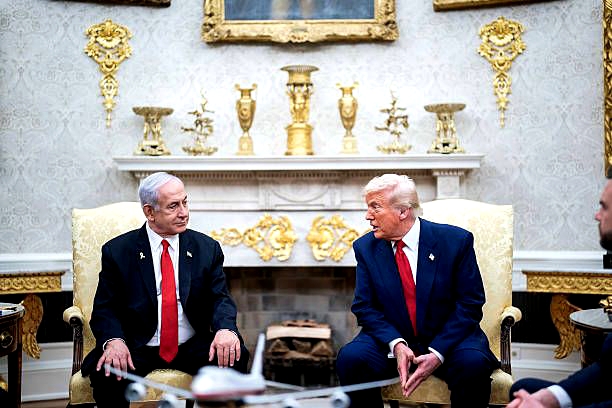
Israel’s Prime Minister has agreed to join United States President Donald Trump’s newly unveiled Board of Peace, a proposed international body that has already sparked global debate over its scope, authority, and implications for existing multilateral institutions.
In a statement released by his office, Prime Minister Benjamin Netanyahu confirmed his acceptance of the invitation to become a member of the board, which is expected to comprise selected world leaders. The initiative, chaired by Trump himself, was initially believed to focus on ending the ongoing Israel–Hamas war in Gaza and overseeing post-war reconstruction efforts.
However, a leaked copy of the board’s charter suggests a broader and more controversial mandate. The document makes no direct reference to Gaza or the Palestinian territories and appears designed to assume roles traditionally associated with the United Nations, raising concerns among several countries and international observers.
Alongside Israel, the United Arab Emirates, Bahrain, Albania, Armenia, Azerbaijan, Belarus, Hungary, Kazakhstan, Morocco, and Vietnam have agreed to join the body. Other invited nations, including Canada, Russia, Turkey, and the United Kingdom, have yet to publicly respond. Norway has already declined participation, citing unresolved concerns, while France and Sweden have also indicated they will not join.
Read Also: Putin Invited to Trump’s ‘Board of Peace’ on Global Conflicts, Gaza Reconstruction
According to the leaked charter, member states will initially serve renewable three-year terms, with the option of securing permanent membership through a financial contribution of $1 billion. The Board of Peace is described as an international organisation aimed at promoting stability, restoring lawful governance, and securing lasting peace in conflict-affected regions, while operating “in accordance with international law.”
Trump will serve as chairman of the board while also acting separately as the United States’ representative. The charter grants him sweeping powers, including the exclusive authority to create, amend, or dissolve subsidiary entities and appoint leaders to a two-year Executive Board.
The White House has already announced the seven founding members of the Executive Board, a group that includes senior US officials, a former British prime minister, and key figures involved in Middle East diplomacy. A separate Gaza Executive Board has also been established to support a proposed Palestinian technocratic government tasked with restoring public services, rebuilding institutions, and stabilising daily life in the territory during the second phase of Trump’s peace plan.
Israeli officials have publicly expressed dissatisfaction with the composition of the Gaza Executive Board, stating that it was not coordinated with Israel and contradicts its policy. Media reports indicate particular concern over the inclusion of representatives from Turkey and Qatar, both of which played roles in brokering the October ceasefire.
The ceasefire, which followed months of intense fighting, remains fragile. Hundreds of Palestinians have reportedly been killed in Israeli strikes since it came into effect, while Israeli forces have also reported casualties from Palestinian attacks. Phase two of the peace plan faces significant hurdles, including unresolved disputes over disarmament, governance, and the future political status of Gaza.
The war began after the Hamas-led attack on southern Israel on 7 October 2023, which killed about 1,200 people and saw hundreds taken hostage. Israel’s subsequent military campaign in Gaza has resulted in tens of thousands of deaths, according to health authorities in the territory.