

FG Plans Internet Access For 55,675 Schools And Hospitals With $500m World Bank Loan
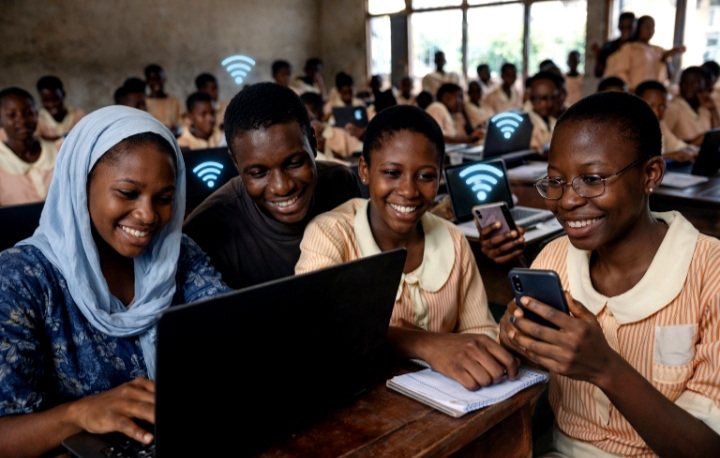
The Federal Government has unveiled plans to connect 55,675 public schools and health facilities to broadband internet under a $500 million World Bank–backed initiative aimed at expanding access to high-quality, climate-resilient digital infrastructure across underserved regions of Nigeria.
According to the World Bank’s Implementation Status and Results Report on the Building Resilient Digital Infrastructure for Growth (BRIDGE) project, the connectivity drive targets 38,803 public schools and 16,872 health facilities, with full delivery expected by September 2030.
The project, approved by the World Bank Board in October 2025, is designed to boost inclusive broadband access in unserved and underserved areas through a large-scale infrastructure rollout that blends public financing with substantial private sector participation.
Beyond education and healthcare facilities, the report projects that the total number of broadband-connected public facilities will rise to 59,103, up from 33,628 recorded in September 2025. This includes 3,428 local government administrative offices, compared to a baseline of just 510.
Implementation will be carried out through a Special Purpose Vehicle (SPV) to deploy nationwide fibre-optic infrastructure. While no private capital had been mobilised as of December 2025, the project structure is expected to attract up to $1.1 billion in private investment by 2030—more than double the value of the World Bank’s concessional loan.
Transaction advisory services for the SPV are currently under procurement, with full implementation activities scheduled to commence in early 2026 following the use of a Project Preparation Advance.
The World Bank projects that broadband users in Nigeria will increase from 92.01 million in April 2025 to 150 million by the project’s completion. Female broadband users are expected to rise from 30.36 million to 45 million, while youth users are projected to grow from 57.96 million to 100 million.
Read Also: KOGI SECURES $500M WORLD BANK FUNDING TO EXPAND LIVELIHOOD SUPPORT UNDER NG-CARES 2.0
Infrastructure targets include the deployment of 90,000 kilometres of fibre-optic cable nationwide, with 90 per cent designed to be climate-resilient. The expansion is expected to drive a 20 per cent reduction in wholesale broadband prices and improve median fixed broadband download speeds from 22.15 Mbps to 50 Mbps.
The programme also features digital capacity-building initiatives, with 37,000 Nigerians expected to receive digital literacy training—60 per cent of whom will be women.
Financial disclosures show that the $500 million IDA loan had not yet been disbursed as of January 2026, as the facility was still pending effectiveness. Despite this, the World Bank rated overall implementation progress as satisfactory, while flagging substantial political, fiduciary, environmental and institutional risks.
Under the financing agreement, $460 million of the loan—representing 92 per cent of the total—will be used to capitalise a new fibre infrastructure company, while the remaining $40 million will fund project services, training, operating costs and the refund of preparation advances.
The Federal Government will participate in the project company through the Ministry of Finance Incorporated, with its equity stake capped at 49 per cent, ensuring majority private ownership and management.