

Electoral Act Amendment: Senate Resumes Debate Today Amid Backlash, 2027 Fears
The Senate will on Tuesday resume deliberations on the controversial Electoral Act (Repeal and Enactment) Amendment Bill, amid growing public backlash and mounting pressure from legal experts, opposition parties and civil society groups warning that further delays could undermine the credibility of the 2027 general elections.
Findings indicate that the upper chamber plans to conclude work on the bill and transmit it this week, following the constitution of a seven-member ad hoc committee tasked with harmonising senators’ positions and resolving contentious clauses in the proposed legislation.
The committee was inaugurated last Thursday after a three-hour closed-door executive session, during which lawmakers subjected the bill to fresh scrutiny. It was mandated to complete its assignment within three days and is expected to submit its report on Tuesday.
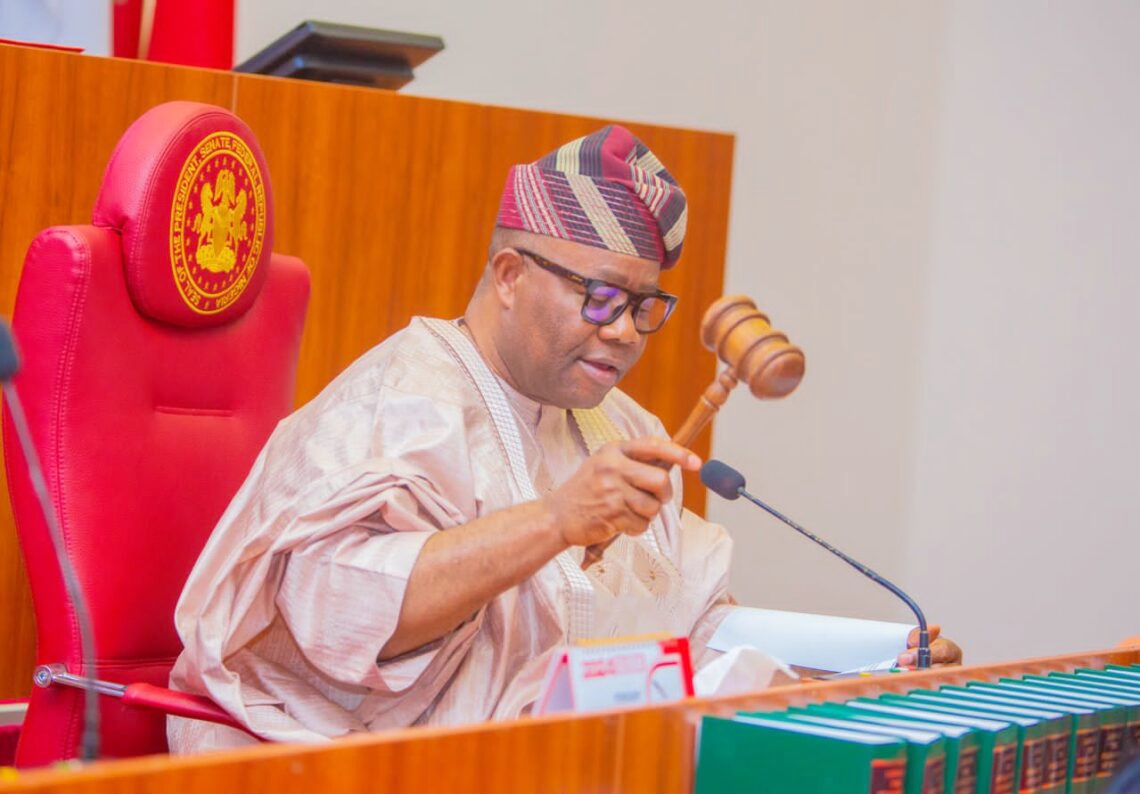
Announcing the decision, Senate President Godswill Akpabio said the committee was set up to synthesise lawmakers’ views and address concerns raised during plenary debates.
The panel is chaired by Senator Niyi Adegbonmire, Chairman of the Senate Committee on Judiciary, Human Rights and Legal Matters. Other members include Adamu Aliero, Aminu Tambuwal, Adams Oshiomhole, Danjuma Goje, Tony Nwoye and Titus Zam.
Akpabio said the committee was given a maximum of three days to submit its report to enable the Senate resume consideration of the bill, stressing that although the House of Representatives has already passed the legislation, the Senate must exercise due diligence.
“This is a very important bill, especially as it is election time. We must take our time to ensure justice is done to all, so that we do not end up at the tribunal,” Akpabio said.
A clause-by-clause review by the Senate Committee on Electoral Matters indicates that the proposed amendments would strengthen electoral integrity, enhance transparency and boost public confidence in Nigeria’s electoral system.
The committee recommended the passage of the Electoral Act (Repeal and Enactment) Bill, 2025, as amended, noting that the reforms would expand voter participation, curb electoral malpractice and strengthen the institutional capacity of the Independent National Electoral Commission (INEC).
Earlier, Senate Leader Opeyemi Bamidele outlined key provisions of the bill, describing it as a significant step toward safeguarding electoral credibility and institutional independence.
He said the proposed law introduces stiffer penalties for electoral offences, including vote-buying, with fines of up to ₦5 million, a two-year jail term, and a 10-year ban from contesting elections.
The bill also prescribes tougher sanctions for result falsification and obstruction of election officials, mandates electronic transmission of polling unit results, and introduces electronically generated voter identification, including a downloadable voter card with a unique QR code.
Read Also: Delayed Electoral Act: ADC Slams Senate
Other provisions include recognition of the voting rights of inmates, a requirement for INEC to register eligible prisoners, standardisation of delegates for indirect party primaries, and a mandate that election funds be released at least one year before polling day.
Bamidele said the reforms are designed to guarantee credible, transparent and secure elections beginning with the 2027 general polls, subject to approval by at least two-thirds of state Houses of Assembly in line with constitutional requirements.
The renewed push by the Senate comes amid sustained criticism from legal practitioners, opposition parties and civil society groups over what they describe as unnecessary delays in amending the Electoral Act.
Last week, Senior Advocate of Nigeria and human rights lawyer, Femi Falana, criticised the National Assembly for repeatedly postponing passage of the bill, warning that the delays could erode public trust in the electoral process.
Speaking on Arise News, Falana questioned the decision to set up another committee to review a bill already passed by the House of Representatives in December 2025.
“This rigmarole is meant to give the impression to Nigerians that the proposed Electoral Act is being addressed,” he said, warning that retaining the status quo would deepen electoral impunity.
Falana also recalled unresolved reforms such as the proposed Electoral Offences Commission, first recommended in 2008, and questioned why critical electoral reforms were yet to be enacted.
Similarly, opposition parties including the African Democratic Congress (ADC), Labour Party (LP) and New Nigeria People’s Party (NNPP) have raised concerns over what they describe as a lack of urgency by the National Assembly ahead of the 2027 polls.
The parties warned that continued delays could undermine public confidence and threaten the credibility of the elections.
Despite the backlash, the Senate maintains that the newly constituted ad hoc committee will fast-track the process as lawmakers intensify efforts to conclude work on the bill in the coming days.