
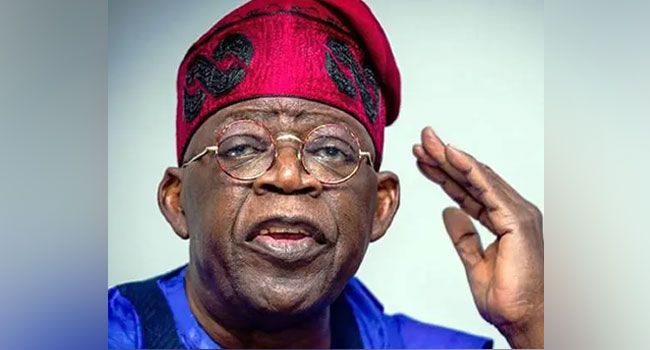
President Bola Tinubu has assured the World Bank that Nigeria’s ongoing economic reforms are irreversible, declaring that his administration remains firmly committed to policies aimed at unlocking the country’s vast economic potential despite initial hardships.
Tinubu gave the assurance at the State House while receiving a World Bank delegation led by the Managing Director of Operations, Anna Bjerde, following a briefing by the Minister of Finance and Coordinating Minister of the Economy, Wale Edun, and Vice President Kashim Shettima.
Expressing confidence in the reform agenda, the President said Nigeria had crossed the point of retreat.
“Since we have gone into this tunnel of reform, we have our hands on the power and we’re never going to look back,” Tinubu said, acknowledging that the reforms were initially painful but necessary.
He described Nigeria as “the heart of the African continent,” stressing that decisive action was required to harness the country’s youthful population and expansive arable land. According to him, agriculture remains a central pillar of the reform programme, with renewed emphasis on mechanisation and productivity.
Tinubu said mechanisation centres had already been established to support farmers, particularly in seed development and improved yields, while calling on the World Bank to deepen its support in the agricultural value chain.
He also linked agricultural growth to industrial development, citing improved output in Nigeria’s petrochemical sector and the need to scale fertiliser production to support farmers and boost food security.
Reaffirming his administration’s commitment to transparency and accountability, Tinubu said the removal of fuel subsidy and other reforms were difficult but unavoidable decisions aimed at stabilising the economy.
“It was difficult for a leader to look the other way in a corrupt environment, especially in a subsidy regime. We chose to give it up so that the country and the world can benefit from a stable currency,” he said.
Read Also: Economic Reforms: World Bank’s Anna Bjerde arrives Nigeria
The President cited easing inflation and improved naira stability as early gains of the reforms, adding that the government was now better positioned to support investors and improve the ease of doing business.
He urged the World Bank to explore innovative financing models tailored to Nigeria’s large population and development needs, while calling for faster processes to cut bureaucracy and strengthen skills development.
In her response, Bjerde commended Nigeria’s leadership for maintaining consistency in its reform efforts over the past two years, describing the country as a frequent reference point in global policy discussions.
She said the World Bank had aligned its Country Partnership Framework with Nigeria’s ambition of achieving a $1 trillion economy and 7 per cent growth, with a focus on job creation, infrastructure, agriculture, SME financing and human capital development.
Bjerde disclosed that the Bank’s support package includes $17 billion in public financing, $5 billion annually for private sector mobilisation, and expanded investment guarantees.