
Nasir El-Rufai: Lawyers Protest Abuja Home Raid
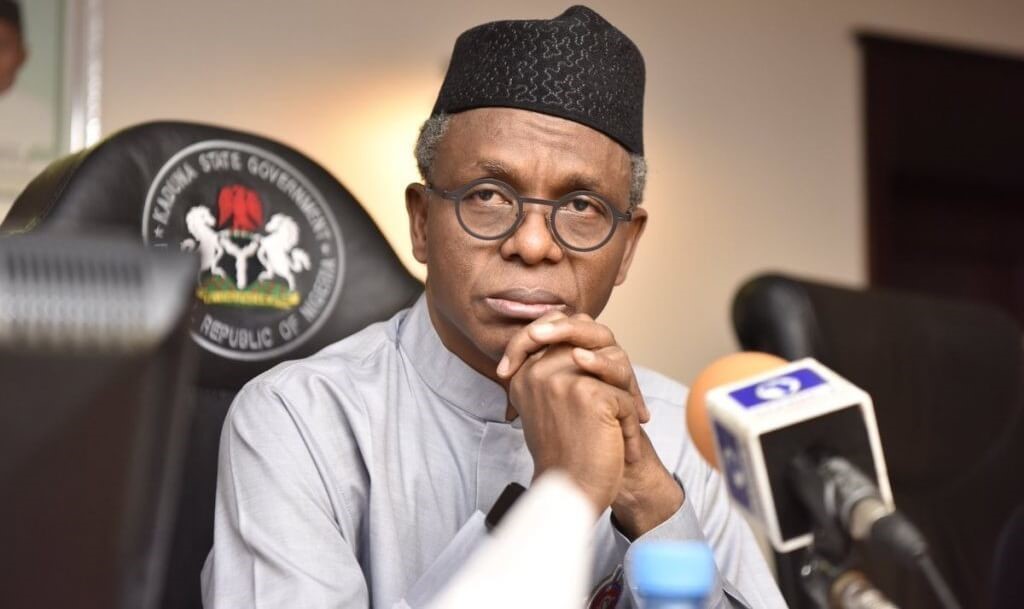
Former Kaduna State Governor Nasir El-Rufai remains in detention under the watch of the Independent Corrupt Practices and Other Related Offences Commission, as his legal team challenges the search of his Abuja residence. Authorities confirmed late Thursday that El-Rufai spent a second night in ICPC custody. However, the commission refused to disclose the exact allegations under review. Officials maintained that the former governor remains with investigators, while declining to comment further. This development followed his earlier detention by the Economic and Financial Crimes Commission earlier in the week. The EFCC released him late Wednesday. Nevertheless, ICPC operatives immediately assumed custody upon his release.
Before these events, El-Rufai had formally communicated his readiness to honour an ICPC invitation. His lawyers said he was scheduled to appear voluntarily on Tuesday. Meanwhile, security agents reportedly seized his passport at an airport encounter involving the Department of State Services. That incident signaled mounting official scrutiny. Significantly, speculation has swirled around a stalled N11.1 billion joint venture light rail project in Kaduna. Although unverified claims link the investigation to that project, authorities have not confirmed any connection. Efforts to obtain clarification from the commission’s spokesperson yielded no response.
In a related development, El-Rufai’s media aide disclosed that ICPC operatives searched his Aso Drive residence in Abuja. According to the aide, legal representatives described the operation as procedurally flawed. Counsel Ubong Akpan reportedly condemned the search as unlawful and inconsistent with due process protections. Furthermore, the legal team argued that investigators disregarded fundamental rights safeguards. They insisted that authorities failed to observe proper judicial standards during the search. Consequently, the lawyers framed the action as executive overreach rather than legitimate enforcement.
Read Also: ICPC Grills El-Rufai Hours After EFCC Release
However, anti-corruption agencies continue to assert their statutory powers in high-profile probes. Nigeria’s legal framework empowers both the EFCC and ICPC to investigate public sector misconduct. Although their mandates overlap in certain areas, agencies often coordinate complex cases. Nevertheless, the optics of sequential detentions invite scrutiny. Indeed, the rapid handover from one agency to another suggests an expanding investigative net. Critics question whether the strategy reflects inter-agency synergy or institutional rivalry. Conversely, supporters argue that parallel oversight strengthens accountability mechanisms.
Above all, the episode underscores the evolving relationship between political power and anti-graft enforcement. El-Rufai once occupied a central position within Nigeria’s political establishment. Today, he confronts a legal process that could redefine his public legacy. As the investigation unfolds, observers await formal charges or official clarification. Until then, uncertainty clouds both the allegations and their potential implications. What remains clear, however, is that Nigeria’s anti-corruption institutions have entered a decisive phase in this unfolding drama.