
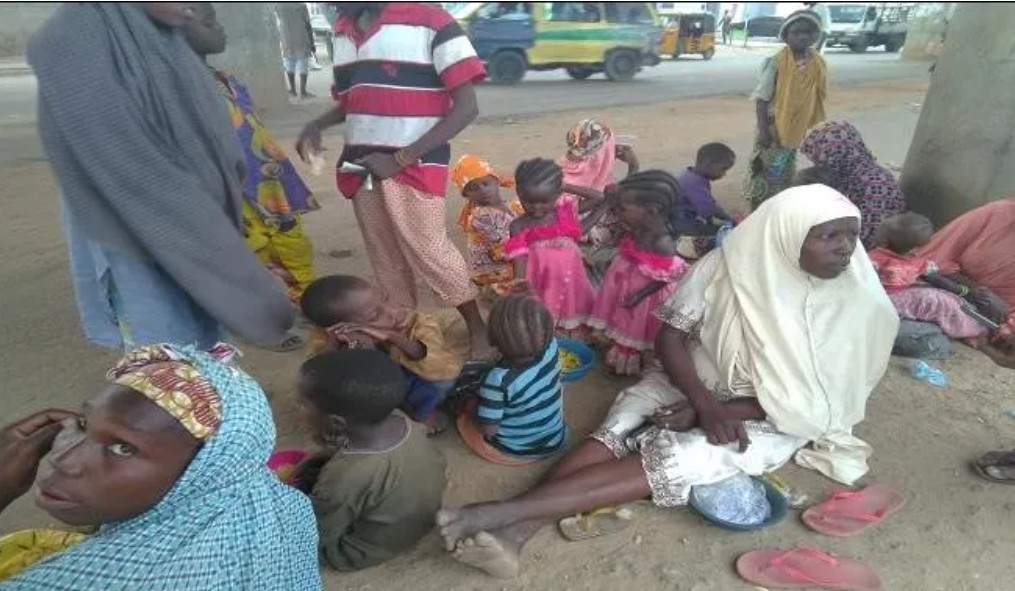
The Katsina State Police Command has confirmed the death of four persons following a stampede during the distribution of annual Ramadan alms. The tragedy occurred on Thursday night, 26 February 2026, at the Kofar Guga residence of Alhaji Dahiru Usman Sarki. A large crowd had gathered at the philanthropist’s home to receive “Zakkat” (alms) when the situation spiralled out of control. Officers from the Central Police Station arrived at approximately 9 p.m. to find a scene of chaos, with several victims already trampled.
While rescuers rushed the injured to the General Hospital in Katsina, four women eventually succumbed to their injuries. They have been identified as Bilkisu Mamman (40), Ihsan Musbahu (40), Aisha Sani (16), and Salamatu Kabir (45). At least 18 others sustained varying degrees of injury, including 15-year-old Hafsat Zubairu, who was transferred to the Federal Teaching Hospital for specialised care. The incident highlights the lethal risks associated with unregulated private charity in a region where economic hardship often drives thousands to such gatherings.
The Commissioner of Police, Bello Shehu, has ordered a full investigation into the tragedy. Organisers of the distribution have already been invited for questioning to determine why adequate crowd-control measures were not in place. The Command noted that it received no prior notification of the event, which prevented the deployment of a security detail to manage the throng. It is a grim irony that an act intended to alleviate suffering during the holy month has instead resulted in multiple funerals.
This is not the first time such an event has turned fatal in Katsina. Similar stampedes were recorded in 2021 and 2024 at the homes of prominent businessmen, often triggered by the “overzealousness” of crowds or the lack of professional security. The police have now issued a stern reminder to all individuals and organisations planning alms distributions: notify the authorities in advance. Without a coordinated security plan, these palatial residences effectively become death traps for the very people they aim to help.
The deaths of a teenager and three middle-aged women have left the Kofar Guga community in mourning. For the survivors, the physical bruises will fade, but the psychological trauma of being crushed in a crowd will linger. The state government is under increasing pressure to regulate how private philanthropists conduct these mass distributions. While the intent is charitable, the execution remains amateurish and, in this instance, criminal in its negligence.
As the investigation continues, the police have appealed for calm and urged the public to rely on verified channels for information. The Commissioner has vowed that “necessary measures” will be taken to prevent a recurrence. However, in an environment where poverty is endemic, the lure of free food and cash will always draw a crowd. The challenge remains whether the state can impose order on a tradition of giving that has existed for centuries.