
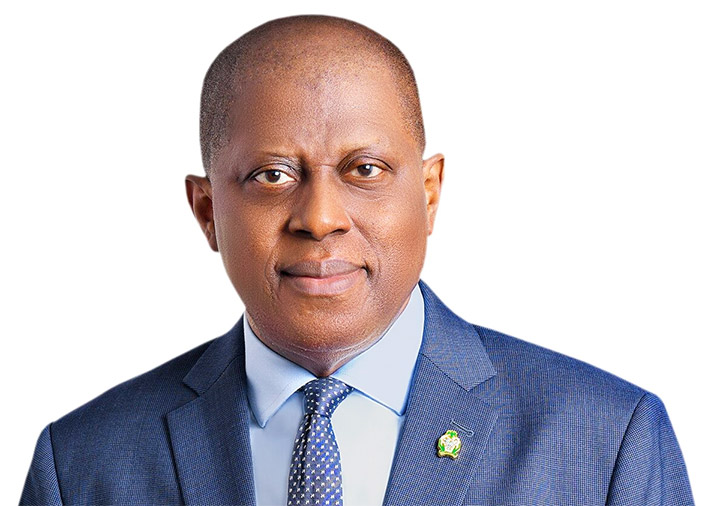
Nigeria’s net foreign exchange reserves have climbed by 772 per cent in two years, marking a sharp recovery in the country’s external buffers. Central Bank of Nigeria (CBN) Governor, Olayemi Cardoso, revealed on Monday that net reserves rose from a lowly $3.99 billion at the end of 2023 to $34.80 billion by December 2025. This fundamental shift suggests that the central bank has successfully cleared a significant portion of the encumbrances that previously hollowed out the nation’s savings.
The quality of these reserves has improved alongside the quantity. Cardoso noted that the 2025 net position alone now exceeds the total gross reserves recorded at the end of 2023, which stood at $33.22 billion. This distinction is vital for investors. Gross reserves often mask underlying debts and forward contracts; net reserves represent the actual “unencumbered” cash available to defend the Naira. The current trajectory indicates a move toward more transparent and credible foreign exchange management.
Data from the apex bank shows a steady upward climb throughout the last year. Gross external reserves reached $45.71 billion by the close of 2025, up from $40.19 billion the previous year. By February 16, 2026, that figure had stretched further to $50.45 billion. This accumulation provides the CBN with a more formidable war chest to meet external obligations and support exchange rate stability. It also signals a departure from the opaque practices that previously dampened investor appetite.
The governor attributed this expansion to rigorous policy reforms and external sector adjustments. Increased transparency appears to be attracting stronger foreign exchange inflows, allowing the bank to move away from desperate liquidity measures. The focus has shifted to reserve management practices that prioritise capital preservation and liquidity. For a country long plagued by “dollar famines,” these figures offer a rare moment of macroeconomic breathing room.
This strengthened position validates the ongoing tightening cycle managed by the Monetary Policy Committee. By bolstering the net reserve position, the CBN is better equipped to handle shocks in the global oil market or sudden capital flight. Cardoso reaffirmed his commitment to maintaining these buffers to ensure orderly market operations. Confidence in Nigeria’s external position is slowly being rebuilt on a foundation of hard currency rather than optimistic projections.
Despite the impressive percentages, the bank’s task is far from finished. Sustaining this momentum requires continued discipline in fiscal and monetary coordination. However, the move from $3.99 billion to $34.80 billion in two years provides the clearest evidence yet of a successful rebalancing. Nigeria enters 2026 with its most robust financial cushion in recent memory.