


Dangote Refinery Hikes Petrol Price as Global Crude Hits $80
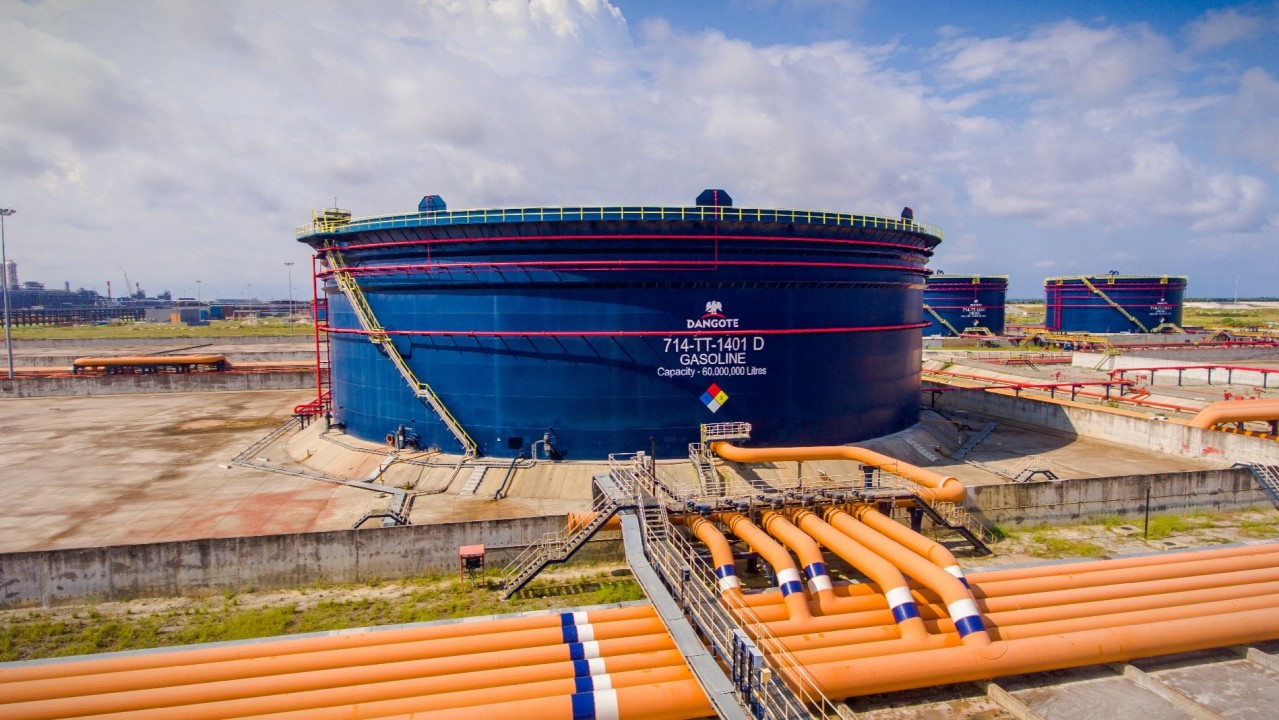 Dangote Refinery & Petrochemicals
The Dangote Petroleum Refinery has raised its petrol ex-depot price by 100 Naira, taking the rate from 774 Naira to 874 Naira per litre. Management implemented the change on Monday following a sharp rise in global crude oil prices, which surged past the $80 per barrel mark overnight. The refinery briefly suspended petrol loading at midnight on March 2 to recalibrate its pricing model against rising replacement costs. While petrol sales were paused, the loading of diesel continued without interruption.
This price adjustment reflects the renewed volatility in international energy markets triggered by escalating tensions between the United States and Iran. As the conflict threatens supply routes through the Strait of Hormuz, global crude fundamentals have shifted rapidly. Industry sources confirmed that the issuance of pro-forma invoices was halted yesterday to account for these new risk premiums. Market benchmarks on petroleumprice.ng already shows the revised rates, which are expected to trigger immediate increases at filling stations nationwide.
Private depot owners followed the refinery’s lead, with several halting their own sales during Monday’s trading session. This ripple effect suggests a tightening of the downstream sector as operators wait for the market to stabilise. Despite Nigeria’s expanded local refining capacity, the cost of petrol remains tethered to global crude prices, insurance, and shipping logistics. Analysts warn that if crude prices continue their trajectory toward $90 per barrel, further hikes are inevitable.
The price hike arrives at a sensitive time for the Nigerian economy, where transport costs dictate the price of food and essential goods. The 13% increase at the gantry level will likely force independent marketers to review their pump prices, potentially pushing them toward the 1,000 Naira mark in some regions. This development underscores the reality that local refining provides supply security but does not entirely insulate the country from global market shocks.
Government officials and energy experts are monitoring the situation as the “Strait of Hormuz premium” begins to bite. The strategic waterway is a vital passageway for global oil, and any threat of closure by Iran sends immediate shockwaves through refining margins. For Aliko Dangote’s $20 billion facility, maintaining a commercially viable operation requires passing these crude cost increases on to the market. The era of static, state-subsidised pricing appears firmly in the past.
The outlook for the remainder of March remains grim for motorists. If the US-Iran confrontation escalates, the current 874 Naira price may serve only as a temporary floor. For now, the focus shifts to how the Nigerian public and the transport unions will react to yet another increase in the cost of movement. Macroeconomic resilience is being tested as the nation’s largest private industrial project navigates its first major global geopolitical crisis.