
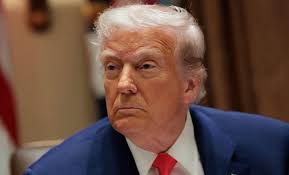
United States President Donald Trump has declared he is unconcerned about whether the Iranian national football team participates in the 2026 FIFA World Cup, as escalating military conflict in the Middle East throws Tehran’s involvement into serious doubt.
In an interview with Politico on Tuesday, President Trump was unequivocal when asked about Iran’s place in the tournament, which the United States is co-hosting alongside Canada and Mexico. “I really don’t care,” the President stated. Offering a broader assessment of the Islamic Republic’s current standing, he added, “I think Iran is a very badly defeated country. They’re running on fumes” .
The remarks represent the first direct intervention by the US head of state on the matter and come amid a dramatic escalation of hostilities. Over the weekend, the US and Israel launched coordinated strikes on Iranian targets—a military action that reports indicate resulted in the death of Supreme Leader Ayatollah Ali Khamenei and other senior officials . Iran has since retaliated with missile and drone attacks against American and allied facilities across the Gulf region, striking targets in Kuwait, Qatar, and the UAE, and widening a conflict that now directly implicates multiple nations .
The spiraling violence has moved swiftly from the battlefield to the pitch. Mehdi Taj, president of the Football Federation of the Islamic Republic of Iran, has publicly cast doubt on his country’s ability to travel to the US for the tournament, scheduled to run from June 11 to July 19. “What is certain is that after this attack, we cannot be expected to look forward to the World Cup with hope,” Taj told the Iranian sports outlet Varzesh3 following the strikes . He has since reiterated this position on Iranian television, confirming the indefinite suspension of the domestic league due to the conflict . Iran was notably absent from a FIFA workshop for participating teams held recently in Atlanta, a move widely interpreted in sporting circles as a clear signal of the country’s potential withdrawal .
The situation presents a complex dilemma for global football governing body FIFA, which has traditionally held fast to the principle of keeping politics separate from sport. FIFA Secretary General Mattias Grafstrom has stated that the organization is “closely monitoring the situation” and is focused on ensuring a safe tournament with all 48 qualifying teams . However, the organization’s regulations grant it significant leeway. According to FIFA’s published rules for the 2026 tournament, if a member association withdraws or is excluded, FIFA has the authority to decide on the matter at its “sole discretion” and may replace the association with another .
Iran’s qualification for the World Cup, its seventh overall and fourth consecutive appearance, was secured with a top-place finish in its Asian qualifying group. The team, known as Team Melli, was drawn in Group G alongside Belgium, Egypt, and New Zealand, and was scheduled to play two matches in Los Angeles and one in Seattle—cities with significant Iranian diaspora populations . The schedule had even left open the possibility of a high-stakes knockout round match between Iran and the US on July 3 in Dallas .
The logistical and legal hurdles were already evident before the recent airstrikes. Taj and other Iranian officials were denied US visas for the World Cup draw last December . While a US executive order enacting travel restrictions contains exemptions for athletes and support personnel, the discretion applied to other team-affiliated individuals remains a potential friction point .
Should Iran formally withdraw, a high-stakes diplomatic and sporting scramble is expected to fill the vacancy. The most frequently cited replacement is Iraq, which advanced to an intercontinental playoff after defeating the UAE in Asian qualifying . Analysts suggest that Iraq, as the next highest-ranked nation in the Asian Football Confederation not yet qualified, would be the natural contender. However, FIFA’s broad discretionary powers mean it could theoretically select a team from another confederation . This has sparked speculation in other quarters, with reports suggesting nations like China are internally monitoring the situation for a potential reprieve . A precedent for dramatic late replacements exists, most famously when Denmark stepped in for Yugoslavia at the 1992 European Championship and went on to win the tournament .
The financial and competitive penalties for Iran would be severe. Beyond the immediate loss of at least $10.5 million in preparation and participation fees, a late withdrawal could trigger fines of up to 500,000 Swiss francs and potentially lead to exclusion from qualifying for the 2030 World Cup .
In Washington, the White House has framed the conflict not as a threat to the tournament, but as a necessary act of security. Andrew Giuliani, director of the White House FIFA World Cup Task Force, stated that President Trump’s actions against what he termed a “terrorist-supporting group” would ultimately help protect the millions of people planning to attend the World Cup .