
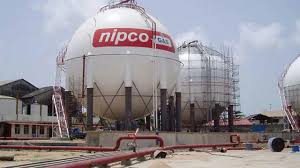
NIPCO Gas Limited, one of Nigeria’s foremost downstream gas companies, has announced an ambitious infrastructure programme that includes the construction of 20 compressed natural gas stations across the country, two major compression hubs in Lagos State and Ogun State, an 80-kilometre natural gas pipeline linking Sagamu to Ibadan, and additional gas distribution infrastructure connecting Sagamu to Abeokuta. The rollout, described by the company as a direct response to Nigeria’s post-petroleum subsidy reform environment and the Federal Government’s clean energy agenda, represents one of the more substantial private-sector commitments to gas infrastructure in the country in recent years.
Nagendra Verma, the Managing Director of NIPCO Gas Limited, disclosed the details of the expansion during a media engagement held at the company’s Lagos office. Verma confirmed that the 20 additional CNG stations are being developed through a joint venture arrangement with the Nigerian Gas Marketing Limited, the gas marketing subsidiary of the Nigerian National Petroleum Company Limited.
“Aligned with the Federal Government’s clean energy and post-subsidy reform agenda, NIPCO Gas Limited, in a joint venture with NGML, is currently constructing 20 additional Compressed Natural Gas stations across Nigeria,” Verma stated at the engagement.
Nigeria’s gas sector has long been regarded as one of the country’s most underutilised economic assets. With proven natural gas reserves estimated at approximately 209 trillion cubic feet, Nigeria holds Africa’s largest gas reserves and ranks among the top ten globally. Yet, despite this abundance, domestic gas utilisation has historically remained low, constrained by inadequate infrastructure, pipeline vandalism, pricing disputes between producers and distributors, and a regulatory environment that critics have long described as insufficiently enabling.
For decades, Nigeria’s transport sector ran almost exclusively on petrol and diesel, both of which were heavily subsidised by the Federal Government. The subsidy regime, which had its roots in the 1970s oil boom, shielded consumers from the true cost of refined petroleum products but placed enormous fiscal pressure on government finances. The International Monetary Fund, the World Bank, and domestic economists repeatedly argued that the subsidy was unsustainable, inequitable in distribution, and a disincentive to investment in alternative energy infrastructure.
The removal of the petrol subsidy by the administration of President Bola Tinubu in May 2023, announced on the floor of the National Assembly on the day of his inauguration, marked a decisive turning point. Petrol prices rose sharply, tripling and in some cases quadrupling almost overnight, triggering significant economic disruption and intensifying pressure on households and businesses that depended on fuel for transportation and power generation. The government, acknowledging the hardship this caused, responded by accelerating policy frameworks intended to promote alternative fuels, particularly compressed natural gas, as a cheaper and cleaner substitute for petrol in the transportation sector.
The Federal Government’s Presidential Compressed Natural Gas Initiative, launched in 2023, sought to fast-track the conversion of vehicles to CNG and expand the fuelling infrastructure required to support such conversions. The initiative targeted the deployment of CNG refuelling stations across major cities and transport corridors, with a particular focus on mass transit operators, commercial bus fleets, and ride-hailing services. NIPCO Gas’s current expansion programme appears directly aligned with the objectives of that initiative.
The 20 stations being developed under the NIPCO Gas and NGML joint venture are intended to broaden Nigeria’s CNG refuelling network across key transport corridors and high-traffic urban centres. While the company did not specify the precise locations of all 20 stations at the media engagement, Verma indicated that the nationwide rollout has been strategically designed to ensure meaningful geographic coverage.
“The nationwide expansion is strategically designed to ensure broader coverage along key transport corridors and high-traffic urban centres, thereby improving accessibility and affordability of CNG for commercial vehicles, fleet operators, mass transit systems, and private motorists,” Verma stated.
He explained that the distribution model underpinning the expansion would rely on what the industry describes as a mother-daughter station framework. Under this model, large compression facilities, referred to as mother stations, compress natural gas sourced from the pipeline network and transfer it into high-pressure tube trailers. These trailers then transport the compressed gas to smaller daughter stations located in areas that do not have direct access to pipeline infrastructure, where the gas is dispensed to vehicles and industrial consumers.
“Through the mother-daughter network model, reliable gas supply will be extended to areas not directly connected to pipeline infrastructure,” Verma said.
This model is particularly relevant in a country like Nigeria, where the gas pipeline network, though expanding, remains concentrated in certain corridors and regions. By using the mother-daughter approach, the company aims to reach communities and transport operators that would otherwise be excluded from the CNG market due to pipeline inaccessibility.
Central to the company’s CNG distribution strategy are two major mother stations being developed at Lekki in Lagos State and Ore in Ondo State. Verma disclosed that both facilities are at advanced stages of completion.
“CNG mother stations located at Lekki and Ore are at advanced stages of completion. These facilities will serve as primary compression and dispatch hubs, enabling the efficient supply of CNG to daughter stations and industrial customers across various regions,” he noted.
The choice of Lekki and Ore as hub locations reflects strategic logistical thinking. Lekki, situated on the eastern coastal flank of Lagos, is home to significant commercial and industrial activity and sits along the Lekki Free Trade Zone corridor, one of the largest in Africa. It is also connected to the gas pipeline infrastructure that serves the broader Lagos and coastal region. A major compression hub at that location would place NIPCO Gas in a strong position to serve a wide population of commercial vehicle operators in Lagos, Nigeria’s commercial capital and most populous city.
Ore, located along the Lagos-Benin highway in Ondo State, is one of Nigeria’s busiest road transit points. Thousands of commercial vehicles, including articulated trucks, interstate buses, and private motorists pass through Ore daily, making it a natural location for a CNG distribution hub intended to serve the South-West and South-South transport corridors.
Verma was emphatic that the infrastructure expansion would deliver benefits beyond fuel access. He linked the projects to employment generation, cost reduction for businesses, environmental improvement, and broader economic stimulus.
“This expansion is expected to generate significant employment opportunities, reduce transportation fuel costs, stimulate enterprises within the mobility value chain, lower carbon emissions, and contribute to improved air quality,” he highlighted.
The environmental dimension of this argument is increasingly significant within Nigeria’s policy discourse. Nigeria is a signatory to the Paris Agreement on climate change and has committed to achieving net zero emissions by 2060 under its updated Nationally Determined Contribution. The country’s transport sector is a notable contributor to urban air pollution, particularly in cities like Lagos, Kano, and Port Harcourt, where vehicular emissions are concentrated. Natural gas combustion produces significantly lower levels of particulate matter, sulphur dioxide, and nitrogen oxides compared to petrol and diesel, and the shift to CNG-powered vehicles is widely regarded as a meaningful near-term contribution to improved urban air quality.
From a cost perspective, CNG has consistently been cheaper than petrol on a per-kilometre equivalent basis in markets where it is available. In Nigeria, following the removal of the petrol subsidy, this differential has widened considerably, making the economic case for CNG conversion more compelling than it has ever been. Fleet operators, in particular, stand to make substantial savings on fuel expenditure over time, provided they have reliable access to
Beyond the CNG rollout, NIPCO Gas is also pressing ahead with a major gas transmission project in the South-West. Verma disclosed that the company, acting pursuant to a mandate granted by the Nigerian National Petroleum Company Limited, is developing an 18-inch diameter, 80-kilometre natural gas pipeline from Sagamu in Ogun State to Ibadan in Oyo State, in partnership with NNPC Gas Marketing Limited.
He stated that the project is scheduled for completion by June or July 2026 and is expected to substantially improve gas availability for industries and commercial consumers in Ogun and Oyo states, as well as adjacent areas.
“This critical infrastructure will enhance manufacturing competitiveness, reduce production costs for industries currently dependent on alternative fuels, and stimulate regional economic growth,” Verma asserted.
The Sagamu-Ibadan corridor carries significant industrial and commercial importance. Ibadan, Oyo State’s capital and one of Nigeria’s largest cities by population, hosts a broad base of manufacturing enterprises, small and medium industries, educational institutions, and a substantial commercial sector. Many of these businesses have relied on diesel generators and liquefied petroleum gas for their energy needs, at costs that have risen sharply alongside global fuel price fluctuations and the domestic impact of currency depreciation.
A reliable pipeline gas supply from Sagamu to Ibadan would give industries in that region access to a cheaper, more stable, and environmentally preferable energy source, which could meaningfully reduce their production costs. Sagamu itself sits along Nigeria’s main pipeline infrastructure corridor, making it a natural originating point for gas transmission into the interior of the South-West.
In addition to the Ibadan pipeline, NIPCO Gas is developing gas distribution infrastructure from Sagamu to Abeokuta, the Ogun State capital. This project is intended to deepen gas penetration into the South-West by connecting another significant commercial and industrial hub to the gas network.
Abeokuta, like Ibadan, is home to a growing industrial base and a large urban population. The Ogun State government has in recent years positioned the state as a manufacturing and investment destination, attracting factories and industrial parks that require reliable and affordable energy inputs. Access to pipeline natural gas would enhance the competitiveness of these enterprises and reduce the environmental burden associated with diesel consumption at industrial scale.
The combined effect of the Sagamu-Ibadan pipeline, the Sagamu-Abeokuta distribution line, and the CNG station network would, if fully executed, constitute a significant deepening of gas infrastructure across the South-West, a region that has traditionally been less well-served by gas pipelines compared to the Niger Delta and parts of the South-East and South-South.
NIPCO Gas Limited is a subsidiary of the NIPCO Group, which has operated in Nigeria’s downstream petroleum sector since 1998. The group, which was originally involved in petroleum product marketing, expanded into the gas sector through NIPCO Gas, developing CNG and liquefied petroleum gas operations as the business environment evolved. The company’s partnership with entities within the NNPC group on several of its current projects reflects a broader pattern in Nigeria’s gas sector, where private operators and state-affiliated entities increasingly collaborate on infrastructure development.
Nigeria’s gas sector has been undergoing regulatory and structural transformation in recent years. The Petroleum Industry Act, signed into law by former President Muhammadu Buhari in August 2021, overhauled the legal framework governing oil and gas operations in Nigeria, including provisions intended to stimulate domestic gas utilisation, facilitate investment in midstream and downstream infrastructure, and restructure the NNPC into a commercially oriented national oil company. The Act also established the Nigerian Upstream Petroleum Regulatory Commission and the Nigerian Midstream and Downstream Petroleum Regulatory Authority as the successor regulators to the defunct Department of Petroleum Resources, which dissolved following the Act’s commencement.
Within this transformed regulatory environment, operators like NIPCO Gas are navigating a market that offers clearer rules and greater commercial incentives for gas investment than at any point in the country’s recent history. The convergence of subsidy removal, policy support for CNG adoption, and improved regulatory clarity has, in the view of many industry participants, created a more enabling environment for the kind of infrastructure investments that NIPCO Gas has now publicly committed to.
Verma, underscoring his company’s broader strategic orientation, described NIPCO Gas as well positioned to support Nigeria’s energy security and long-term development through sustained infrastructure investment.
“NIPCO Gas remains well positioned to advance energy security and sustainable growth through continued infrastructure investments,” he stated.