


DisCos Garnered N207bn in December as Revenue Leakage Persists
Nigeria’s electricity distribution companies (DisCos) collected N207.49 billion from customers in December 2025, according to the latest performance factsheet from the Nigerian Electricity Regulatory Commission (NERC). While the figure suggests a bustling festive period for the utilities, it masks a persistent fiscal wound: a N51.17 billion revenue shortfall. Of the N258.66 billion billed to consumers, only 80.22% was actually recovered. This collection efficiency gap remains a primary hurdle for a sector that desperately needs liquidity to upgrade its aging infrastructure.
The technical health of the grid tells a grimmer story of “billing efficiency.” In December, DisCos received electricity worth N309.65 billion from the national grid, yet they were only able to successfully bill customers for N258.66 billion of that energy. This indicates that roughly 16% of the power supplied was lost to theft, metering errors, or technical faults before a bill could be generated. When combined with collection failures, the industry’s “revenue recovery efficiency” stands at a sobering 79.62%.
DisCo Collection Efficiency Ranking (December 2025)
| Rank | DisCo | Billing (N’bn) | Collection (N’bn) | Collection Efficiency (%) |
| 1 | Eko | 41.41 | 38.01 | 91.79% |
| 2 | Yola | 4.25 | 3.55 | 83.74% |
| 3 | Ikeja | 43.41 | 36.20 | 83.38% |
| 4 | Ibadan | 28.34 | 23.60 | 83.27% |
| 5 | Abuja | 46.68 | 38.11 | 81.64% |
| 6 | Benin | 21.53 | 18.38 | 85.37%* |
| 7 | Port Harcourt | 21.60 | 17.62 | 81.57%* |
| 8 | Enugu | 23.08 | 17.57 | 76.13% |
| 9 | Kano | 15.64 | 8.98 | 57.45% |
| 10 | Jos | 12.67 | 5.43 | 42.92% |
| N/A | Kaduna | — | — |
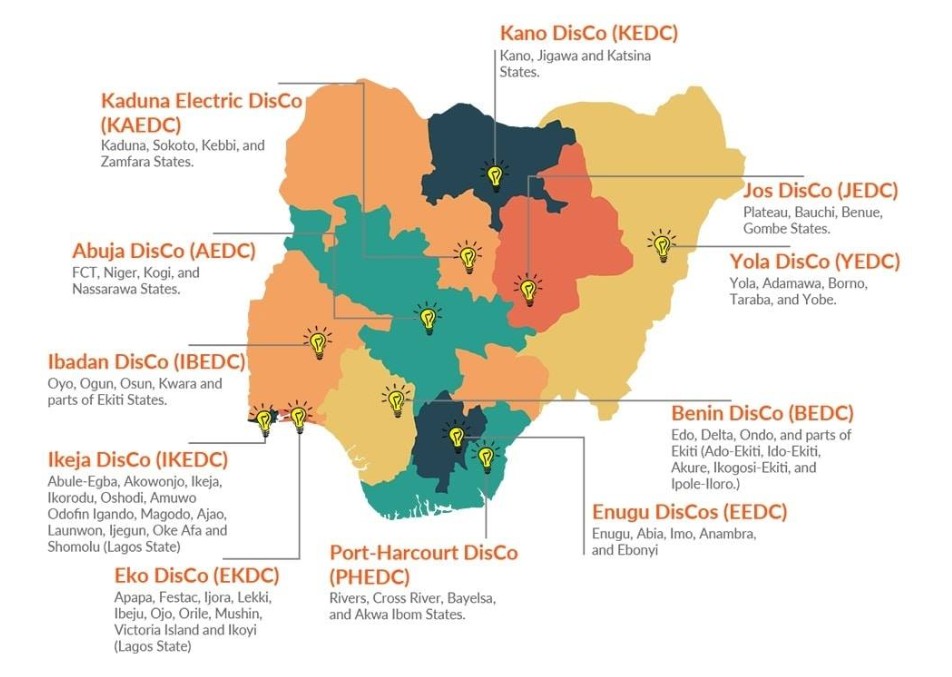
Performance varies wildly across the country’s geography. Eko Electricity Distribution Company emerged as the gold standard for the month, achieving a remarkable 91.79% collection efficiency by recovering N38.01 billion. In contrast, Jos Electricity Distribution Company struggled at the bottom of the table, managing to collect only 42.92% of its billed revenue. Such a wide disparity suggests that while urban, metered hubs in Lagos are becoming commercially viable, the “hinterland” grids remain a massive drain on the sector’s collective balance sheet.
The pricing gap also continues to haunt the utilities. NERC revealed that while the allowed average tariff is N124.30 per kilowatt hour, DisCos only realised N98.97 per kilowatt hour in actual revenue. This shortfall of approximately N25 per unit complicates the “transition to a market-reflective tariff” that the federal government has long promised. For many DisCos, the cost of buying power from the grid remains higher than the revenue they can realistically squeeze from a resistant and often unmetered public.
Abuja and Lagos remain the commercial engines of the Nigerian power sector. Abuja DisCo recorded the highest absolute revenue collection at N38.11 billion, followed closely by the two Lagos-based utilities, Ikeja and Eko. Together, these three companies account for over 50% of the total revenue collected nationwide. This concentration of liquidity in a few urban centers underscores the difficulty of maintaining a national grid where northern and eastern franchises often operate at a significant loss.
One notable absence in the NERC report was the Kaduna Electricity Distribution Company, whose data was unavailable due to an ongoing billing system upgrade. Regulatory insiders suggest such upgrades are often an euphemism for fixing deep-seated data inaccuracies. As the industry moves into 2026, the pressure on DisCos to improve metering and curb energy theft will only intensify. Without a move toward 100% billing and collection efficiency, the “liquidity crunch” will continue to prevent the massive capital investment required to end Nigeria’s chronic blackouts.