


France Says Strategic Reserve Deployment on Table at Emergency G7 Talks
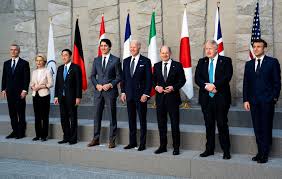
G7 Ministers to Weigh Emergency Oil Release as Middle East War Triggers Market Chaos
Group of Seven finance ministers will convene emergency talks Monday to consider coordinated releases from strategic petroleum reserves in an effort to stabilise global energy markets convulsed by the escalating Middle East conflict, according to a French government source with direct knowledge of the agenda. The meeting, scheduled for 1:30 pm Paris time under France’s rotating G7 presidency, represents the first major international economic response to a crisis that has sent oil prices surging thirty percent and triggered sharp sell-offs across Asian equity markets.
The Financial Times reported earlier that finance ministers from the advanced economies bloc had agreed to discuss a joint strategic reserve release coordinated through the International Energy Agency, the Paris-based organisation established precisely for such supply emergencies. Three G7 members, including the United States, have already indicated support for the measure, the newspaper said, though final agreement would require consensus among all seven members: Canada, France, Germany, Italy, Japan, the United Kingdom, and the United States.
France’s finance ministry confirmed that the virtual session would “review the situation in the Gulf from an economic point of view” and examine the “events of recent days,” diplomatic language encompassing the US-Israeli military campaign against Iran that has now entered its second week without indication of imminent resolution. “The use of strategic reserves is an option being considered,” the government source stated, emphasising that no final decision had been reached.
The mere prospect of coordinated intervention provided immediate, if partial, relief to markets reeling from supply anxiety. Brent crude and West Texas Intermediate benchmarks had both posted gains approaching one-third of their pre-crisis values during early Asian trading Monday, reflecting trader assessments that Iranian oil exports and potentially broader Gulf production could be disrupted by sustained military operations. Prices retreated from session highs following the Financial Times report, though they remained significantly elevated compared to levels prevailing before hostilities commenced.
United States President Donald Trump dismissed market volatility as acceptable collateral damage from the military campaign. “It’s a small price to pay” to neutralise Iran’s nuclear programme, Trump told reporters, maintaining the administration’s position that price spikes represent temporary dislocation rather than structural economic threat. The statement aligned with previous White House messaging that has consistently prioritised geopolitical objectives over immediate market stability.
The International Energy Agency’s prospective coordinating role would invoke mechanisms developed through five decades of energy security architecture. The agency was created in 1974 in direct response to the 1973 oil crisis, when Arab producers imposed an embargo against Western nations supporting Israel during the Yom Kippur War, triggering fuel shortages, rationing, and recessions across industrialised economies. That traumatic episode established the principle that major oil-consuming democracies required institutionalised collective defence against supply weaponisation.
Current IEA protocols require member states to maintain emergency petroleum reserves equivalent to at least ninety days of net oil imports. These stockpiles, held either in government-controlled facilities or through mandated private sector storage, collectively represent the most significant buffer against sudden supply interruptions in global energy markets. The last coordinated IEA release occurred in 2022 following Russia’s invasion of Ukraine, when member states deployed sixty million barrels over six months to offset disrupted Russian flows.
Monday’s market movements demonstrated the speed with which regional military conflicts can transmit through global financial systems. Asian equity indices posted broad declines as energy cost projections threatened corporate profit margins and consumer purchasing power across import-dependent economies. Japanese, South Korean, and Australian benchmarks all registered significant losses, while safe-haven assets including gold and sovereign bonds attracted capital flight from risk exposure.
The thirty percent oil price surge, even partially reversed, carries substantial macroeconomic implications beyond immediate trading floors. Energy costs permeate virtually all production and consumption activities, meaning sustained elevation threatens inflationary pressures that could complicate monetary policy calculations for central banks worldwide. The European Central Bank, Bank of England, and Federal Reserve have all recently moderated interest rate trajectories in response to cooling price pressures; renewed energy inflation could force reconsideration of those dovish pivots.
G7 finance ministers confront these technical challenges within an extraordinarily compressed decision timeline. Previous coordinated reserve releases, including the 2022 Ukraine response and the 2011 Libyan civil war intervention, benefited from days or weeks of preliminary consultation among technical officials. Monday’s meeting, called with hours of advance notice, must assess reserve deployment necessity while military operations continue and Iranian retaliation capabilities remain active.
France’s stewardship of the deliberations carries particular symbolic weight given the nation’s complex historical relationship with Middle Eastern energy producers. French diplomacy maintained more extensive engagement with pre-revolutionary Iran than many Western counterparts, and TotalEnergies, the partially state-controlled energy major, had pursued significant Iranian development opportunities prior to the reimposition of American sanctions. These historical connections may inform Paris’s assessment of both the crisis severity and the appropriate multilateral response.
The specific mechanics of any coordinated release would require detailed operational planning beyond Monday’s ministerial discussion. Strategic petroleum reserves are not immediately fungible; crude quality variations, storage location logistics, and refinery configuration compatibility all influence effective deployment. The United States Strategic Petroleum Reserve, the world’s largest such facility with approximately three hundred and seventy-five million barrels in cavern storage along the Gulf Coast, has historically served as the anchor for international coordination efforts.
Japan and Germany, both heavily import-dependent industrial economies, maintain substantial reserves that could contribute to collective action, though domestic political considerations regarding stockpile depletion may complicate their participation. Canada, a significant net exporter, holds smaller emergency stocks relative to consumption, while Italy and the United Kingdom occupy intermediate positions in reserve adequacy.
The crisis has exposed persistent vulnerabilities in global energy security architecture despite decades of diversification efforts and renewable energy expansion. The International Energy Agency’s founding mission assumed that supply disruptions would emanate from producer country decisions rather than military destruction of infrastructure; the current scenario, involving active bombardment of Iranian oil facilities by Israeli forces, presents novel challenges for which existing protocols were not explicitly designed.
Market participants will scrutinise Monday’s meeting for indications of commitment magnitude as much as for binary release decisions. The 2022 coordinated release, while historically large in absolute terms, proved insufficient to prevent sustained price elevation as Russian supply constraints persisted. Traders may discount announced interventions if perceived as inadequate to offset potential Iranian export disappearance and possible contagion to neighbouring producer states.
The broader geopolitical context complicates purely economic calculations. Trump’s characterisation of price increases as acceptable cost suggests that American diplomatic priorities may not align perfectly with consumer country inflation concerns. If Washington views energy market instability as leverage for maximum pressure against Tehran, it might resist reserve deployment even when technical criteria for release are satisfied.
Conversely, European and Japanese ministers face more immediate domestic political pressure to contain energy cost spirals that directly impact household budgets and industrial competitiveness. This transatlantic divergence in pain tolerance could strain G7 unity precisely when coordinated action would maximise market impact.
The meeting occurs against a backdrop of deteriorating military conditions that could render economic interventions irrelevant if supply infrastructure sustains catastrophic damage. Israeli strikes against Iranian fuel storage and distribution networks have already generated severe domestic shortages in Tehran; extension of such tactics to export terminals or loading facilities would physically prevent oil from reaching global markets regardless of strategic reserve availability.
Historical precedent offers limited guidance for current circumstances. The 1973 crisis that created the IEA framework involved deliberate producer withholding rather than military destruction; the 1991 Gulf War saw significant supply disruption but occurred when Saudi Arabia possessed substantial spare production capacity to offset lost Iraqi and Kuwaiti exports. Today’s market features tighter fundamental balances, with OPEC+ production restraint already limiting available buffers before military operations commenced.
Asian market reactions Monday morning provided early indication of how quickly financial instability can compound physical supply concerns. Beyond immediate commodity and equity impacts, currency volatility emerged as the Japanese yen and South Korean won depreciated against the dollar, reflecting safe-haven flows and import cost deterioration. Central banks across the region face unpalatable choices between defending exchange rates through interest rate increases that would slow growth, or accepting currency weakness that amplifies energy import inflation.
The G7’s ability to project economic management competence during this crisis carries reputational stakes extending beyond immediate market stabilisation. The grouping has struggled to maintain cohesion on trade, taxation, and climate finance issues in recent years; effective coordination on energy security could demonstrate continued institutional relevance, while failure or discord would reinforce perceptions of advanced economy disarray.
French officials emphasised that Monday’s session represents preliminary assessment rather than definitive action. The government source cautioned that multiple options remain under review, with reserve release representing only one potential tool among broader economic policy responses. Nevertheless, the very convening of emergency ministerial talks signals recognition that military developments in the Gulf have already transcended regional security confines to threaten global economic stability.
The International Energy Agency’s technical staff have likely prepared deployment scenarios for ministerial consideration, including volume magnitude, release phasing, and geographical distribution patterns that would maximise market impact. Any announcement emerging from the meeting would require subsequent operational implementation involving national petroleum reserve administrators, adding hours or days between political decision and physical market effect.
For the moment, markets remain suspended between fear of supply loss and hope of policy response, with prices reflecting this uncertainty through elevated volatility. The G7 ministers’ challenge is to provide credible reassurance without depleting reserves prematurely should military operations extend over months rather than weeks, or should damage to Iranian infrastructure prove more extensive than currently apparent.