


Iraq Coach Urges FIFA to Postpone World Cup Play-off Amid Airspace Crisis
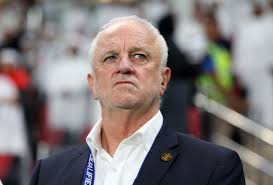
Iraq national team manager Graham Arnold has issued an urgent appeal to FIFA for the postponement of his country’s decisive World Cup inter-continental play-off match, warning that ongoing airspace closures triggered by the escalating US-Israeli conflict with Iran could force the Lions of Mesopotamia to field a severely weakened squad for the most significant fixture in four decades. The Australian coach, who assumed leadership of the Iraqi side in May 2025, told the BBC on Monday that the closure of Iraqi airspace since 28 February has created logistical barriers that threaten to derail a qualification campaign that has already captured the imagination of a football-starved nation.
Arnold’s intervention marks a dramatic shift in tone from late February, when he declared Iraq ready to “shock the world” as the team stood on the threshold of ending a 40-year absence from the global tournament. “We’re going to play without fear, shock the world and enjoy it,” he said in remarks obtained from the FIFA website, capturing the optimism that had built following Iraq’s hard-fought 3-2 aggregate victory over the United Arab Emirates in the fifth round of Asian qualifying the previous November.
That triumph secured Iraq’s place in the inter-continental play-off phase, where they are scheduled to face the winner of a semi-final between Bolivia and Suriname in Monterrey, Mexico, on 31 March. The single-match winner-take-all fixture offers a direct route to the 2026 World Cup, which will be co-hosted by the United States, Mexico and Canada beginning on 11 June. For a nation that last appeared at the World Cup finals in Mexico in 1986, the stakes extend far beyond sporting achievement into questions of national pride and collective identity.
The regional security crisis that erupted with American and Israeli strikes against Iranian targets on 28 February has fundamentally altered the operational environment for Iraqi football. Iraqi airspace was closed immediately following the initial attacks and has remained shut through nine days of retaliatory Iranian missile and drone strikes targeting Israel, Gulf states, and military installations across the Middle East. The closure has severed the primary mechanism by which Arnold’s squad would normally assemble for international duty.
The Australian coach outlined the stark choice facing his administration. Fielding a team composed exclusively of players based outside Iraq would, in his assessment, critically undermine the country’s qualification prospects. “It wouldn’t be our best team and we need our best team for the country’s biggest game in 40 years,” Arnold told the BBC. The statement reflects both technical calculation and emotional recognition of what this tournament represents to Iraqi society.
Arnold elaborated on the personal motivations that led him to accept the managerial position eleven months prior. “The Iraqi people are so passionate about the game that it is insane. The fact that they haven’t qualified for 40 years is probably the main reason I took this job,” he said. This framing positions the current crisis not merely as a logistical inconvenience but as a potential betrayal of popular expectation at a moment of rare national unity.
The coach has proposed a specific alternative schedule that would preserve Iraq’s competitive integrity while accommodating the security constraints. Under Arnold’s plan, Bolivia and Suriname would contest their semi-final on the originally scheduled date of 26 March as planned, with the victor then facing Iraq approximately one week before the World Cup opening ceremony in the United States. “Let Bolivia play Suriname this month and then a week before the World Cup, we play the winner in the US. The winner of that game stays on and the loser goes home,” Arnold explained.
This compressed timeline would eliminate the traditional preparation window that qualified teams enjoy, but Arnold suggested the trade-off favours competitive fairness over rigid adherence to calendar. “If FIFA was to delay the game it gives us time to prepare properly,” he said, indicating that even a brief reopening of Iraqi airspace would permit the domestic-based contingent of his squad to join preparations.
The administrative burden of navigating these constraints has fallen heavily upon Adnan Dirjal, president of the Iraq Football Association. Arnold noted that Dirjal “is working round the clock trying to plan and prepare to make everyone in Iraq’s dream come true,” underscoring the institutional pressure to secure a favourable ruling from world football’s governing body. The urgency of the appeal is magnified by FIFA’s own scheduling imperatives, as the 2026 tournament represents the first expanded 48-team edition requiring complex logistical coordination across three host nations.
The historical context of Iraq’s World Cup drought lends particular weight to Arnold’s petition. The 1986 tournament in Mexico marked the sole appearance by Iraqi national colours on football’s biggest stage, with the team failing to advance from a group containing Paraguay, Belgium, and hosts Mexico. Subsequent generations have experienced near-misses and qualification frustrations against the backdrop of war, sanctions, and political instability that have defined modern Iraqi history.
The current squad’s achievement in reaching the inter-continental play-off already represents the most sustained qualification campaign since that 1986 appearance. The 3-2 aggregate victory over the United Arab Emirates in November demonstrated resilience and tactical discipline under Arnold’s guidance, building upon the foundation established during Asian qualifying’s earlier rounds. To see that progress compromised by geopolitical circumstances beyond football’s control would compound a historical narrative of external disruption.
FIFA has not issued public comment on Arnold’s request, and the organisation faces competing pressures in any decision. The inter-continental play-off format was designed specifically to provide competitive balance between confederations while maintaining tournament scheduling integrity. Altering established fixtures at short notice would create precedent concerns and potential objections from other participating federations, particularly Bolivia and Suriname, whose own preparations have proceeded without equivalent disruption.
However, the exceptional nature of the regional security crisis, now entering its second week with civilian casualties mounting and airspace restrictions extending across multiple nations, may justify exceptional measures. The closure of Iraqi airspace is not a discretionary choice by local authorities but a response to active military operations involving ballistic missile exchanges and aerial bombardment across the Middle East. Under these conditions, the principle of sporting fairness arguably supports accommodation rather than rigid enforcement.
The broader implications of Arnold’s appeal extend to questions of how international sports bodies respond to geopolitical disruption. The 2022 World Cup in Qatar faced extensive criticism regarding the treatment of migrant workers and LGBTQ+ rights, while the 2018 tournament in Russia proceeded against the backdrop of annexation in Crimea and allegations of state-sponsored doping. The current crisis presents a more immediate operational challenge, testing FIFA’s capacity to adapt to rapidly evolving security environments.
For Iraqi football specifically, the outcome of this administrative intervention may determine whether a generation of players realises its potential on the global stage. The squad assembled by Arnold combines experienced professionals based in European and Asian leagues with emerging talents developed within Iraq’s domestic league, which has shown signs of revival following years of instability. Denying this group the opportunity to compete at full strength would represent not merely a sporting disappointment but a lost opportunity for national narrative reconstruction.
The coach’s emphasis on preparation time reflects professional standards that have sometimes eluded Iraqi football’s administrative history. Arnold’s appointment in May 2025 was widely interpreted as an attempt to impose organisational discipline upon a federation that has experienced frequent managerial turnover and occasional FIFA intervention. His current advocacy for postponement rather than compromised participation demonstrates consistency with that professionalisation agenda, prioritising competitive integrity over symbolic presence.
The coming days will determine whether FIFA accepts the logic of Arnold’s argument or insists upon scheduled completion of the play-off tournament. The organisation’s decision will signal its approach to similar disruptions that may arise as geopolitical instability increasingly intersects with international sporting calendars. For Iraq, the stakes are immediate and profound: either a fair opportunity to end four decades of World Cup absence, or a painful demonstration that even sporting dreams remain vulnerable to the region’s recurring cycles of conflict.