
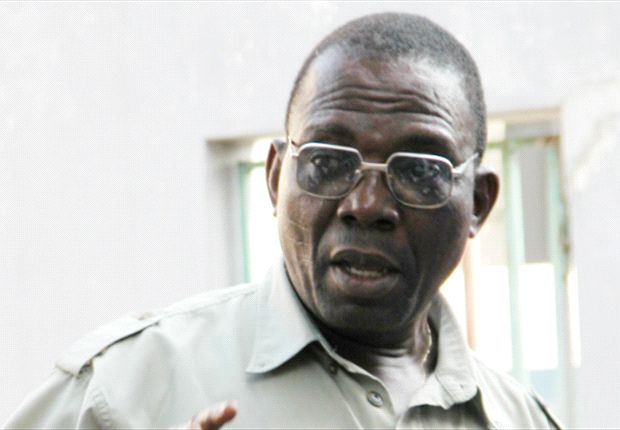
High Chief Adegboye Onigbinde, the first indigenous coach to lead Nigeria to a FIFA World Cup, has died. His family confirmed his passing on Monday at the age of 88. A towering figure in African football, Onigbinde’s career spanned decades of tactical evolution and administrative service. He famously steered the Super Eagles during the 2002 World Cup in South Korea and Japan. His death marks the end of an era for the nation’s sporting heritage.
The Modakeke High Chief first took charge of the national team, then known as the Green Eagles, in 1982. Two years later, he led Nigeria to the final of the 1984 African Nations Cup, finishing as runners-up to Cameroon. His return to the dugout in 2002 followed the sudden dismissal of Shuaibu Amodu. Though Nigeria exited the 2002 World Cup in the group stage, Onigbinde was praised for blooding young talent. He remained a fierce advocate for local coaching talent throughout his life.
Onigbinde’s influence extended well beyond the touchline. He served as a high-ranking technical instructor for both CAF and FIFA, shaping coaching education across the continent. His deep understanding of the game made him a sought-after consultant for football federations globally. At the club level, he led Shooting Stars Sports Club of Ibadan to the final of the African Cup of Champions Clubs in 1984. He was widely regarded as a cerebral tactician who prioritised discipline and technical proficiency.
The veteran coach was known for his blunt, often professorial critiques of Nigerian football administration. He frequently lamented the decline of the domestic league and the over-reliance on foreign managers. His authority came from a lifetime of study and practical success on the pitch. Even in his later years, he remained an active voice in sporting discourse. He viewed football not merely as a game but as a complex science.
Funeral arrangements remain pending as the family begins a period of mourning. Tributes from the Nigeria Football Federation and former players have begun to pour in. Many credit him with professionalising the national team’s technical approach during his various tenures. His legacy includes a generation of coaches who trained under his FIFA-accredited programmes. Nigeria has lost its most distinguished footballing patriarch.
The timing of his passing coincides with a period of reflection for Nigerian football. The Super Eagles continue to struggle with the very tactical inconsistencies that Onigbinde often highlighted. His absence leaves a void in the technical leadership of the African game. He leaves behind a large family and a nation grateful for his service. He lived a life defined by the pursuit of excellence on the grass.