
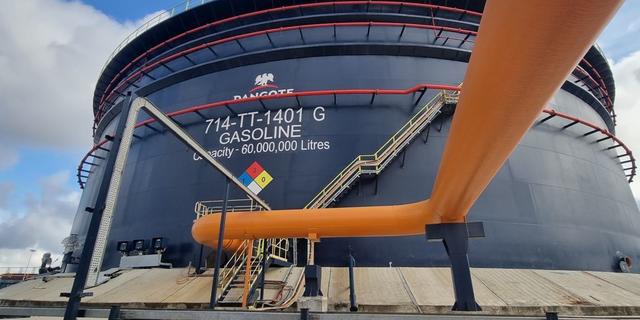
The Dangote Petroleum Refinery has announced a sweeping reduction in the prices of petrol and diesel, effective March 10, 2026. In a move described by management as a reflection of “economic patriotism,” the gantry price of petrol (PMS) has been cut by ₦100, falling from ₦1,175 to ₦1,075 per litre. Diesel (AGO) saw an even steeper decline, with the price per litre dropping ₦190 to ₦1,430. This price correction follows a volatile week of trading and a sudden dip in international crude benchmarks after the initial shocks of the Middle East conflict began to subside.
The refinery also adjusted its coastal pricing for petrol downward by ₦122, bringing the rate to ₦1,028 per litre. These adjustments are intended to signal that the Lekki facility remains responsive to market dynamics rather than acting as a static price setter. Management noted that as global crude prices retreated from their war-induced peaks, it was “imperative” to pass those savings on to Nigerian consumers. The announcement has already begun to ease anxiety among independent marketers who were bracing for a sustained ₦1,300 pump price.
To maintain transparency, the refinery clarified that its pricing remains tied to global benchmarks. Even under the federal government’s “Naira-for-Crude” arrangement, the facility pays the international market rate plus a premium of $3 to $6 per barrel. Furthermore, all foreign exchange transactions are conducted at the prevailing market rate without subsidies. This “no-subsidy” model ensures that while the refinery can lower prices when crude falls, it remains exposed to the same upward pressures as any international player when markets tighten.
The company highlighted its 2025 track record as evidence of its fair-pricing philosophy. According to the statement, the refinery reduced gantry prices eight times last year while only implementing two increases. This latest cut is framed as a continuation of that trend, aimed at supporting national energy security while remaining “mindful of the economic realities” facing Nigerians. For many, the reduction offers a much-needed reprieve from the transport and logistics inflation that typically follows a fuel hike.
Market analysts suggest this move may force other players in the downstream sector to follow suit. If the ₦100 reduction is fully reflected at the pumps, commuters could see a visible dip in fares by the weekend. However, the refinery warned that its pricing remains a function of global benchmarks and the exchange rate. Should the conflict in the Middle East escalate again or the naira weaken, these gains could be short-lived.
The decision has been welcomed by the Organised Private Sector (OPS), which had earlier warned of a massive inflationary surge. By cutting prices almost as quickly as it raised them, the Dangote Refinery is positioning itself as a stabilising force in a notoriously erratic market. For now, the “war premium” on Nigerian fuel appears to be evaporating, providing the economy with a brief moment to catch its breath.