


Nigeria Unveils 20 Million-Woman Digital Support Plan at UN
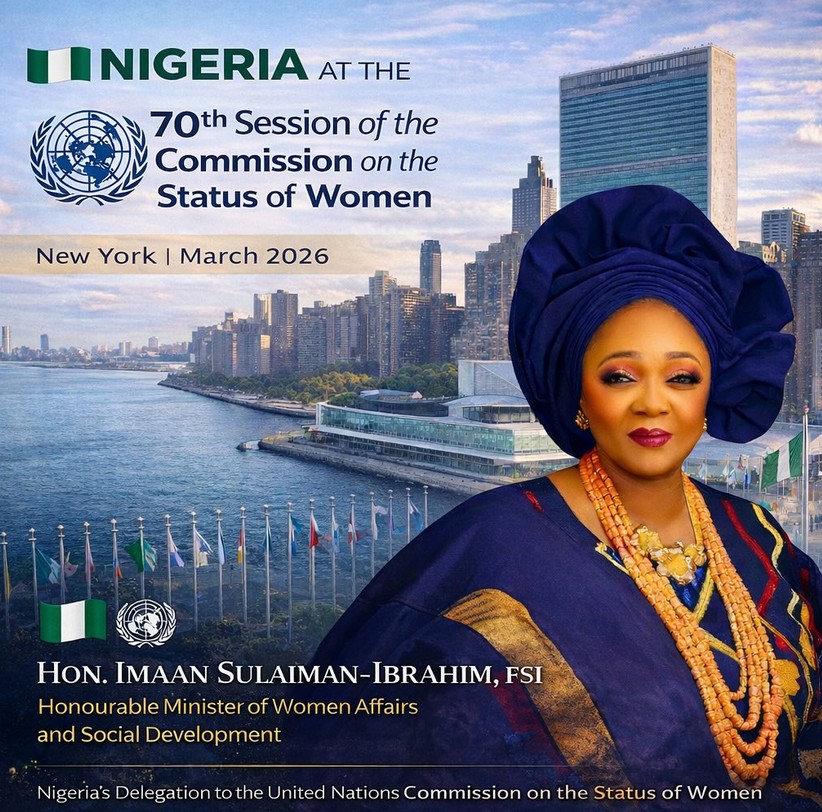
Nigeria has announced a sweeping set of initiatives to bolster women’s economic inclusion and social safety nets at the 70th United Nations Commission on the Status of Women (CSW70). Addressing the summit in New York, the Minister of Women’s Affairs, Imaan Sulaiman-Ibrahim, revealed that the country’s social protection coverage has scaled from one million households in 2015 to nearly 10 million in 2026. Women constitute over 70 per cent of these beneficiaries. This expansion marks a pivotal shift in the state’s approach to domestic welfare under the current administration.
A cornerstone of the new strategy is the Women Digital Harmony Initiative. The centrepiece of this digital push is the “Happy Woman App,” designed to link 20 million women to government support, mentorship, and credit. By leveraging mobile technology, the government aims to bypass traditional gatekeepers that often hinder rural women from accessing economic opportunities. Digital inclusion is no longer a peripheral goal; it is now the primary vehicle for the Renewed Hope Agenda.
The government is also moving to formalise the “care economy,” a sector long ignored by traditional GDP metrics. New policies will recognise unpaid care work and expand services for childcare and eldercare. This shift acknowledges that the domestic burden often prevents women from participating in the formal workforce. Recognising this labour is a blunt, necessary step toward true economic parity.
On the legislative front, the executive is backing the Reserved Special Seats Bill. This proposed law aims to correct a stark imbalance in the National Assembly, where women’s representation currently languishes below 10 per cent. While legal frameworks like the Violence Against Persons (Prohibition) Act exist, the minister noted that political inclusion requires structural quotas. The government has also introduced an affirmative procurement system to ensure women-owned businesses get a fair share of public contracts.
The fight against gender-based violence is being digitised through a National Electronic Dashboard. This tool is designed to improve coordination between agencies and ensure that reports do not disappear into bureaucratic voids. By centralising data, the ministry hopes to foster a culture of accountability that has been historically lacking. Protection is being treated as a data-driven mandate rather than a mere social service.
Finally, the Renewed Hope Social Impact Interventions 774 (RHSI-774) will target all local government areas with a focus on clean energy and access to finance. This local-first approach seeks to bridge the gap between high-level policy in Abuja and the lived reality in rural Nigeria. The success of these initiatives will depend on their execution at the grassroots level. Nigeria has the plans; it must now prove it has the persistence.