
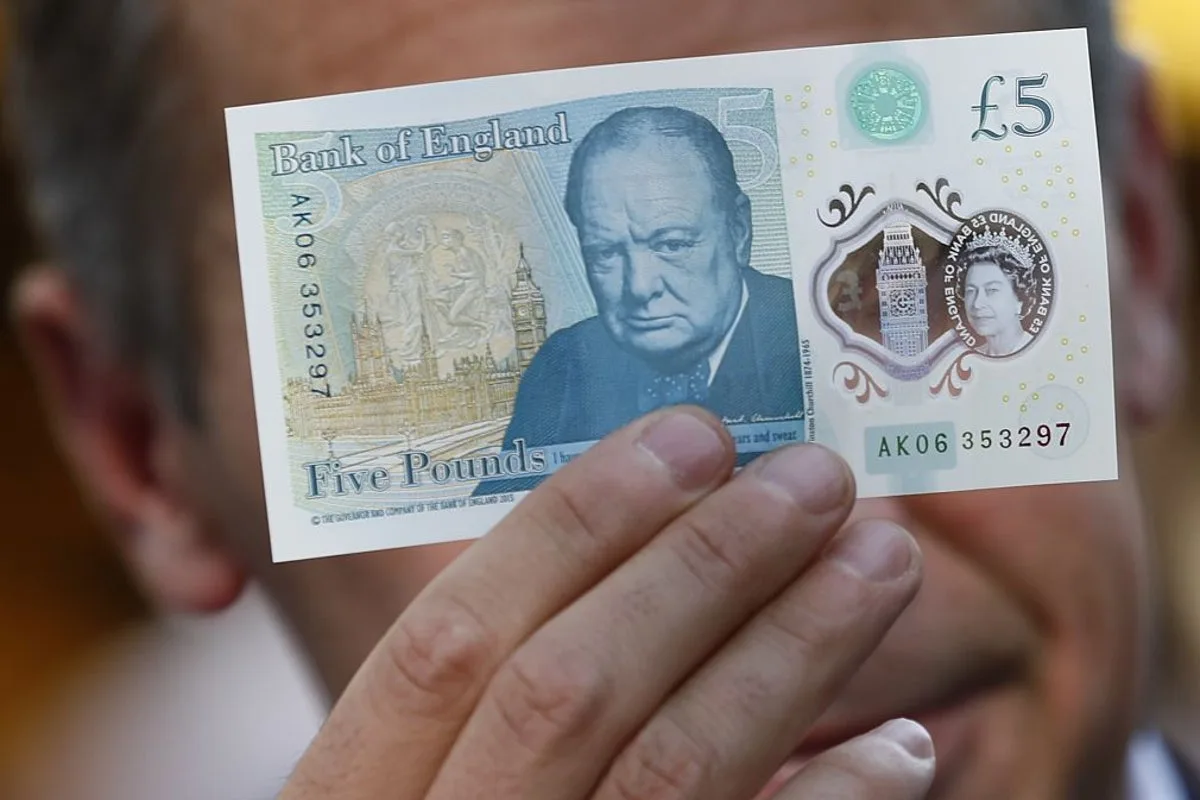
The Bank of England has announced plans to remove Winston Churchill from the £5 banknote, replacing the wartime leader with images of British wildlife including badgers, otters, and barn owls in a sweeping redesign that has triggered fierce criticism from senior parliamentarians. The decision, revealed on Thursday, forms part of a broader move to phase out historical figures from all sterling denominations in favour of nature scenes celebrating the United Kingdom’s biodiversity.
Churchill, who has featured on the £5 note since 2016, will be joined in departure by novelist Jane Austen on the £10 note, artist J. M. W. Turner on the £20, and mathematician Alan Turing on the £50. The next series of banknotes, which will not enter circulation for several years, will instead depict native animals, plants, and landscapes selected through a forthcoming public consultation. Potential subjects include frogs, hedgehogs, newts, and various natural habitats, the Bank confirmed.
“For more than 50 years, the bank has proudly showcased many inspirational historical figures who have helped shape national thought, innovation, leadership and values on its banknotes,” the institution stated in its official announcement. “The change to wildlife imagery provides an opportunity to celebrate another important aspect of the UK.”
The redesign marks the most significant aesthetic shift in British currency since the transition to polymer substrate between 2016 and 2021, which introduced the current Churchill portrait alongside other contemporary series featuring Austen, Turner, and Turing. Those notes replaced earlier depictions of Charles Dickens, Michael Faraday, Edward Elgar, Florence Nightingale, and Christopher Wren that had circulated since the 1970s.
Victoria Cleland, the Bank’s chief cashier, identified security considerations as the primary motivation for the thematic overhaul. “Nature is a great choice from a banknote authentication perspective and means we can showcase the UK’s rich and varied wildlife on the next series of banknotes,” she said. The Bank has not specified a release date for the new notes, though currency experts suggest 2028 represents the earliest feasible introduction given design, consultation, and production timelines.
The announcement provoked immediate political backlash. Ed Davey, leader of the Liberal Democrats, directed criticism at the specific juxtaposition of Churchill’s removal with animal imagery. “Let’s celebrate our wonderful British wildlife, sure, but Winston Churchill helped save our country and the whole of Europe from fascism,” he wrote on X. “He deserves better than being replaced by a badger.”
Alex Burghart, a Conservative lawmaker and former minister, employed similar rhetorical framing in his objection. “He earned his place on our five-pound note. He must not be replaced with an otter,” he posted on X. “The great people who shaped this nation should not be forgotten.” Both parliamentarians characterised the decision as a diminishment of historical memory rather than a simple design update.
Churchill’s presence on British currency has carried particular symbolic weight since his 2016 introduction. He became the first prime minister to feature on a standard circulation banknote, selected partly to commemorate the fiftieth anniversary of his death in 1965. His depiction showed him as he appeared in 1941, during his first premiership, alongside his 1940 statement “I have nothing to offer but blood, toil, tears and sweat” and a view of the Houses of Parliament.
The wartime leader’s currency status has previously attracted controversy. In 2013, when the Bank initially announced Churchill’s selection, critics noted his complex legacy including the 1943 Bengal famine and his documented racist views toward colonial subjects. Defenders countered that his role in resisting Nazi expansion warranted recognition regardless of subsequent historical reassessment. The current objections from Davey and Burghart represent the first significant parliamentary resistance to his removal specifically.
The Bank’s decision reflects broader institutional patterns in currency design across advanced economies. The European Central Bank’s second series of euro banknotes, introduced between 2013 and 2019, abandoned architectural imagery in favour of abstract “ages and styles” motifs. Australia has maintained wildlife themes since converting to polymer currency in 1988. Canada incorporated vertical orientation and civil rights themes in its 2018 redesign. Security experts note that natural imagery offers particular advantages for anti-counterfeiting measures, as organic textures provide complex visual elements difficult to replicate accurately.
Historical precedent suggests that public consultation processes for British banknotes typically generate substantial engagement. The 2013 selection of Jane Austen for the £10 note followed a campaign led by journalist Caroline Criado Perez after the Bank initially proposed an all-male lineup for the polymer series. Over 35,000 submissions contributed to Austen’s eventual selection. The forthcoming wildlife consultation will likely attract comparable participation from both conservation organisations and heritage advocates.
Monarchical continuity provides one constant across the redesign. King Charles III’s portrait will feature on the obverse of all new denominations, maintaining the constitutional convention of sovereign representation on British currency established in 1960 when Queen Elizabeth II first appeared on the £1 note. Notes bearing the late Queen’s image will remain legal tender indefinitely, with the Bank estimating that Elizabeth-era notes will continue circulating for at least a decade following any Charles-series introduction.
The phase-out of historical figures represents a definitive break with the Bank’s half-century practice of using currency as a medium for national biography. Since 1970, when the first series featuring historical subjects appeared, the Bank has selected 18 individuals for note portraits, drawn from literature, science, music, nursing, architecture, economics, and politics. The forthcoming wildlife series will be the first to carry no human representation whatsoever on its reverse sides.
Conservation organisations have cautiously welcomed the thematic shift. The Royal Society for the Protection of Birds noted that British currency offered “an unparalleled platform for raising awareness of biodiversity decline,” though it declined to endorse specific species prior to the consultation launch. The Woodland Trust suggested that habitat imagery could “reconnect urban populations with ecological realities.” Neither organisation addressed the political controversy surrounding the historical figure removals.
The Bank has not indicated whether any commemorative or limited-edition notes might preserve historical imagery in alternative formats. Previous special issues, including the 2019 Turing £50 celebrating his birth centenary and the 2017 Jane Austen £10 marking the bicentenary of her death, have demonstrated institutional willingness to deploy historical subjects for specific occasions. Standard circulation policy, however, will definitively abandon this approach.
For Churchill specifically, the removal from the £5 note leaves his representation on British currency dependent upon the 1965 crown coin, still technically legal tender though rarely encountered in circulation, and the 2015 £20 coin issued by the Royal Mint. No definitive monument or permanent public honour has been proposed by either the Bank or parliamentary critics to replace the banknote visibility his supporters consider appropriate to his historical stature.
The consultation process will commence later this year, with the Bank committing to “gather views” on specific wildlife selections. Final design approval rests with the Bank’s court of directors, with Treasury notification but not consent required under the 1998 Bank of England Act. Parliamentary scrutiny remains limited to post-announcement debate, as no legislative mechanism mandates legislative approval of currency design changes.