
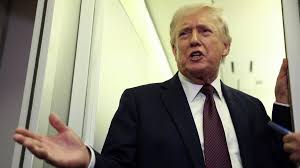
United States President Donald Trump has issued a stark warning that the North Atlantic Treaty Organization faces a “very bad” future if European allies refuse to contribute military resources toward reopening the Strait of Hormuz, the strategic waterway effectively closed by Iran during the escalating Mideast conflict.
Speaking to The Financial Times in a brief interview on Sunday, Trump said he expects European nations to assist in the effort to reopen the critical oil transport corridor, arguing that just as America has provided substantial support to Ukraine in its war against Russia, European allies must now reciprocate by helping address the Strait of Hormuz crisis, which has sent global energy prices soaring.
“If there’s no response or if it’s a negative response I think it will be very bad for the future of NATO,” Trump stated, reinforcing his longstanding criticism of the alliance as overly dependent on American military and financial contributions while European members fail to meet their defence spending obligations.
The Strait of Hormuz, a narrow channel between the Persian Gulf and the Gulf of Oman measuring just 21 miles at its narrowest point, serves as the world’s most important oil chokepoint. Approximately 21 million barrels of crude oil and petroleum products pass through the strait daily, representing roughly 21 percent of global petroleum liquids consumption, according to the US Energy Information Administration. The waterway is bordered by Iran to the north and the United Arab Emirates and Oman to the south.
Iran’s effective closure of the strait has disrupted this vital supply route, creating immediate shockwaves across global energy markets and threatening economies heavily dependent on Gulf oil exports. Europe, China, Japan, South Korea, and India are among the largest consumers of oil transported through the strait, with European nations importing significant volumes of crude from Saudi Arabia, Iraq, Kuwait, and the UAE.
Trump told The Financial Times that the upcoming summit in Beijing with Chinese President Xi Jinping could be delayed as Washington presses for Chinese assistance in addressing the strait closure.
“We’d like to know before” the summit whether China will help, Trump said, noting that China and many European countries depend far more heavily on Gulf oil flows than the United States, which has achieved energy independence through expanded domestic production from shale formations.
“It’s only appropriate that people who are the beneficiaries of the Strait will help to make sure that nothing bad happens there,” Trump stated.
Speaking separately to reporters traveling with him aboard Air Force One, Trump disclosed that the United States was in active discussions with “about seven” countries regarding assistance to reopen the Strait of Hormuz, though he did not identify the nations involved.
When pressed by The Financial Times on the specific type of support he was seeking, Trump said he wanted minesweepers to clear potential naval mines as well as “people who are going to knock out some bad actors that are along the (Iranian) shore,” suggesting a military component to the operation that would target Iranian coastal installations threatening maritime traffic.
Trump’s demand for European military participation represents a direct challenge to NATO’s traditional focus on European and North Atlantic security while highlighting persistent American frustration over what Washington views as inadequate burden-sharing within the alliance. Trump has repeatedly criticized NATO members for failing to meet the alliance’s target of spending two percent of gross domestic product on defence, a benchmark only a minority of member states currently achieve.
During his first presidency from 2017 to 2021, Trump frequently threatened to withdraw from NATO or reduce American security commitments unless European allies increased their defence expenditures. His return to office has reignited these tensions, with the Strait of Hormuz crisis providing a new focal point for American demands that European nations contribute more substantially to global security challenges affecting their economic interests.
The closure of the Strait of Hormuz occurs within the context of a broader Mideast war involving Iran, though details of the conflict’s origins, participants, and current military dynamics remain subject to ongoing developments. Iran has historically threatened to close the strait during periods of heightened tension with the United States and regional adversaries, viewing control of the waterway as a strategic deterrent against military action.
Previous Iranian threats to close the strait occurred during the 1980-1988 Iran-Iraq War, when both nations attacked oil tankers in what became known as the Tanker War, prompting American naval escorts under Operation Earnest Will. More recently, Iran threatened strait closure in 2012 in response to international sanctions over its nuclear program and again in 2018 after Trump withdrew the United States from the Joint Comprehensive Plan of Action nuclear agreement.
The current closure has triggered sharp increases in global oil prices, with markets responding to immediate supply disruption fears and uncertainty about the conflict’s duration. On Sunday, the US benchmark West Texas Intermediate crude opened 2.5 percent higher at 100.22 dollars per barrel, while Brent crude, the international benchmark, rose 2.9 percent to 106.11 dollars per barrel.
The price surge represents a significant reversal from the relative stability that characterized oil markets through much of 2024 and early 2025, when prices hovered between 70 and 85 dollars per barrel. Energy analysts warn that prolonged closure of the strait could push prices substantially higher, potentially exceeding 120 dollars per barrel if alternative supply routes through pipelines and overland transport cannot compensate for the lost maritime capacity.
European economies, already grappling with energy security concerns following the disruption of Russian natural gas supplies during the Ukraine war, face renewed vulnerability to oil price shocks. Germany, France, Italy, and Spain import substantial volumes of crude oil from Gulf producers, with refineries dependent on steady flows to maintain production of gasoline, diesel, and other petroleum products.
China, the world’s largest crude oil importer, brings in approximately 10.3 million barrels daily, with roughly 40 percent of those imports transiting the Strait of Hormuz from Saudi Arabia, Iraq, Kuwait, Oman, and the UAE. India similarly relies on the strait for the majority of its oil imports, making both Asian giants heavily exposed to the current disruption.
Trump’s linkage of European assistance on the Strait of Hormuz to American support for Ukraine represents a transactional approach to alliance relationships that has defined his foreign policy. The United States has provided over 100 billion dollars in military, economic, and humanitarian assistance to Ukraine since Russia launched its full-scale invasion in February 2022, including advanced weapons systems, intelligence support, and training for Ukrainian forces.
European nations have collectively provided substantial aid to Ukraine as well, with the European Union and individual member states contributing tens of billions of dollars in military equipment, financial assistance, and refugee support. However, American contributions have consistently exceeded European totals, a disparity Trump has repeatedly highlighted as evidence of inadequate European commitment to shared security challenges.
NATO, established in 1949 as a collective defence alliance against Soviet expansion, has never invoked its mutual defence clause, Article 5, for operations outside the North Atlantic region except following the September 11, 2001 terrorist attacks in the United States. The alliance’s involvement in Middle East operations has historically been limited to training missions, maritime security operations, and political support rather than direct combat roles.
Trump’s demand that European allies contribute military assets to reopen the Strait of Hormuz tests the boundaries of NATO’s mandate and raises questions about the alliance’s willingness to operate in defence of economic interests beyond its traditional geographic scope. Some European leaders have expressed caution about expanding NATO’s operational reach into the Middle East, arguing that such missions risk entangling the alliance in regional conflicts beyond its core defensive purpose.
The request for minesweepers indicates American concern that Iran may have deployed naval mines in the strait’s shipping lanes, a tactic Iran used during the 1980s Tanker War. Modern naval mines pose significant threats to commercial shipping and require specialized vessels equipped with sonar detection systems and mine neutralization equipment to clear safely.
Trump’s reference to eliminating “bad actors” along the Iranian shore suggests potential military strikes against Iranian Revolutionary Guard Corps naval facilities, coastal missile batteries, or small boat units that could threaten vessels attempting to transit the strait. Such operations would likely involve naval aviation, cruise missiles, or special operations forces and could escalate the conflict depending on Iran’s response.
The uncertainty surrounding the Mideast war’s duration has created volatility in oil futures markets, where traders are pricing in significant risk premiums reflecting potential for prolonged supply disruptions. Goldman Sachs and other investment banks have revised their oil price forecasts upward, with some analysts projecting that sustained closure of the Strait of Hormuz could push Brent crude above 130 dollars per barrel within weeks.
Higher oil prices carry broad economic implications, increasing inflation, raising transportation costs, and reducing consumer purchasing power. Central banks in Europe and the United States, already managing inflation concerns, face difficult decisions about whether to maintain current interest rate policies or adjust monetary stance in response to energy-driven price pressures.
Trump has not specified a deadline for European or Chinese responses to his request for assistance with the Strait of Hormuz, nor has he detailed potential consequences beyond warning of a “very bad” future for NATO. However, his willingness to condition the Beijing summit on Chinese cooperation suggests he views the crisis as a test of whether major powers will contribute to addressing global challenges affecting their own economic interests.
NATO Secretary General has not issued a public response to Trump’s statements as of the time of this report. European governments are likely consulting among themselves and with Washington to assess the scope of American demands and determine appropriate responses that balance alliance solidarity with domestic political and military constraints.
The crisis represents the most significant challenge to global oil supplies since the 2003 Iraq War and could reshape energy security calculations for major economies if the strait closure extends beyond the short term.