


Trump Claims US-Iran Talks Under Way
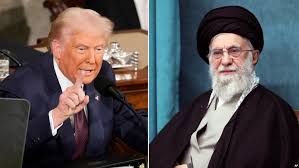
United States President Donald Trump said Sunday that Washington was engaged in discussions with Iran over the ongoing conflict but indicated Tehran remained unprepared to conclude a deal, even as Iran’s foreign minister categorically denied any such talks were taking place.
Speaking aboard Air Force One, Trump confirmed the existence of diplomatic contacts when asked whether any negotiations were under way to end the war that has spread across the Middle East and disrupted global energy markets since the joint US-Israeli offensive began on February 28.
“Yes, we’re talking to them,” Trump told reporters, declining to provide specifics on the nature or format of the discussions. “But I don’t think they’re ready. But they are getting pretty close.”
However, Iran’s Foreign Minister Abbas Araghchi directly contradicted Trump’s assertion during an interview on CBS News’ Face the Nation program aired Sunday, insisting no diplomatic engagement was occurring between the two countries.
“We are stable and strong enough. We are only defending our people,” Araghchi stated. “We don’t see any reason why we should talk with Americans, because we were talking with them when they decided to attack us. There is no good experience talking with Americans.”
The conflicting accounts underscore the deep mistrust and communication breakdown between Washington and Tehran as the war enters its third week, with no clear resolution in sight despite mounting international pressure for a ceasefire.
Trump expressed uncertainty about pursuing negotiations, citing the decimation of Iran’s leadership structure following the opening salvos of Operation Epic Fury, which killed Supreme Leader Ali Khamenei and dozens of senior Iranian officials in coordinated strikes across multiple cities on February 28.
“I’m not sure I even want to make a deal because first of all nobody even knows who you’re dealing with, because most of their leadership has been killed,” Trump said, though he maintained that “they want to make a deal badly.”
The February 28 attacks, which Trump and Israeli Prime Minister Benjamin Netanyahu described as aimed at dismantling Iran’s nuclear weapons program and creating conditions for regime change, targeted nearly 900 sites in the operation’s first 12 hours alone. The strikes hit Iran’s air defenses, ballistic missile facilities, nuclear enrichment sites, and government infrastructure, killing Khamenei, who had led Iran since 1989 following the death of revolutionary leader Ruhollah Khomeini.
Iran responded with waves of ballistic missiles and drone strikes against Israel, United States military bases across the region, and civilian and military targets in Gulf Arab states hosting American forces. The retaliatory attacks have killed more than 2,000 people across Iran, Lebanon, and Israel, displaced hundreds of thousands in Lebanon, and stranded travelers throughout the Middle East as airlines suspended operations over conflict zones.
The current hostilities follow months of escalating tensions that began with massive anti-government protests in Iran in late December 2025 and January 2026. Demonstrations initially sparked by economic collapse and currency freefall grew into the largest uprising since the 1979 Islamic Revolution, with protesters explicitly calling for the overthrow of the theocratic government.
Iranian security forces responded with lethal force on a scale unseen since World War II. While the Iranian government acknowledged 3,117 deaths, officials within Iran’s Ministry of Health placed the toll at approximately 30,000, a figure Trump cited in his February 27 news briefing. The US-based Human Rights Activists News Agency estimated 7,000 deaths, while the International Centre for Human Rights reported 43,000 killed and at least 26,541 detained.
The brutal crackdown prompted Trump to threaten military intervention, declaring that the United States would not tolerate mass killings of Iranian civilians. By late January, Washington had deployed the USS Abraham Lincoln carrier strike group and additional naval and air force assets to the Persian Gulf region at levels not seen since the 2003 invasion of Iraq.
Before the February 28 strikes, the United States and Iran had held indirect negotiations in Muscat, Oman on February 6, mediated by Omani Foreign Minister Badr bin Hamad Al Busaidi. Both Iranian and Omani officials described those talks as constructive, with reports suggesting Iran had proposed a three-step plan including limited uranium enrichment up to 1.5 percent and transfer of excess highly enriched uranium to Turkey or Russia for peaceful purposes.
However, the talks collapsed amid disagreements over American demands that Iran completely dismantle its nuclear and ballistic missile programs and end support for proxy forces across the region. Trump publicly stated he was “not thrilled” with the negotiations, while Iranian officials insisted they would only discuss the nuclear issue and would not negotiate on their missile program or regional presence.
The conflict represents the culmination of decades of hostility between Washington and Tehran that intensified dramatically after Trump withdrew the United States from the Joint Comprehensive Plan of Action nuclear deal in 2018 and reimposed what his administration termed a “maximum pressure” sanctions campaign. The JCPOA, negotiated under President Barack Obama and implemented in 2016, had placed strict limitations on Iran’s nuclear activities in exchange for sanctions relief.
Trump’s first administration abandoned the agreement, arguing it merely delayed rather than prevented Iran’s path to nuclear weapons and failed to address Tehran’s ballistic missile development or support for armed groups throughout the Middle East. The Biden administration maintained most sanctions but engaged in limited diplomatic contacts, while Trump’s return to office in January 2025 brought renewed threats and an intensified economic warfare strategy.
Secretary of the Treasury Scott Bessent described the collapse of Iran’s currency in December 2025 as the “grand culmination” of the maximum pressure approach. The Iranian rial lost significant value as international sanctions tightened and domestic economic mismanagement compounded the crisis, creating conditions that fueled the subsequent mass protests.
A 12-day war in June 2025 had already severely weakened Iran’s defensive capabilities and nuclear infrastructure. Israeli airstrikes during that conflict targeted Iran’s air defense systems and nuclear facilities at Natanz, Fordow, and Isfahan. The United States subsequently deployed GBU-57 bunker-buster bombs against underground enrichment sites in what Trump characterized as a limited operation.
A low-confidence assessment by the Defense Intelligence Agency, which the Trump administration labeled a politically motivated leak, suggested Iran had relocated much of its enriched uranium stockpile before the strikes and that the operation set back the nuclear program by only months rather than years as officials publicly claimed. The DIA concluded in 2025 that Iran would require approximately a decade to develop technical capacity for producing missiles capable of reaching the United States.
Iran’s position entering the current conflict was significantly compromised compared to previous confrontations. The fall of Syrian President Bashar al-Assad’s government in 2024 removed a key Iranian ally and supply corridor. Israeli operations against Hezbollah in Lebanon and Hamas in Gaza throughout 2024 had eliminated much of the leadership of Iran’s primary proxy forces, weakening what Tehran termed its Axis of Resistance.
The International Atomic Energy Agency reported in late February that Iran had concealed highly enriched uranium at levels approaching weapons-grade in underground facilities at Isfahan that remained largely undamaged despite previous strikes. The IAEA stated it had no evidence of an organized nuclear weapons program but could not verify that Iran’s broader nuclear activities were exclusively peaceful, as Iranian authorities denied the agency full access to suspect sites.
The conflict has had severe global economic ramifications, particularly affecting energy markets and developing economies dependent on affordable fuel. International oil prices surged as Iranian military operations disrupted shipping through the Strait of Hormuz, through which approximately one-fifth of global oil supplies transit. The G7 nations declined to jointly tap strategic petroleum reserves to ease price pressures despite lobbying from energy-dependent economies.
Bangladesh closed universities early for summer vacation, while Pakistan and the Philippines implemented four-day work weeks to reduce fuel consumption. The head of Saudi Arabia’s state oil company Aramco warned that continued conflict would have “drastic” effects on the world economy. International Monetary Fund Managing Director Kristalina Georgieva projected that every 10 percent increase in energy prices throughout 2026 would raise global inflation by approximately 0.5 percent.
Regional Arab states have faced difficult choices regarding the conflict. Saudi Arabia, the United Arab Emirates, and other Gulf Cooperation Council members have deepened relations with Israel in recent years through the Abraham Accords framework and share American and Israeli concerns about Iran’s nuclear ambitions and regional influence. However, Iranian counter-strikes on military and civilian targets in these countries have complicated their positions and raised domestic political pressures.
Qatar, Egypt, and Turkey attempted to mediate between Washington and Tehran in early 2026, with all three nations warning that military escalation could destabilize the entire Middle East. Turkish officials reportedly pressured the Trump administration to pursue diplomatic solutions, while Saudi Arabia’s Defense Minister Prince Khalid bin Salman reportedly argued in meetings with American officials that military action against Iran was necessary despite significant risks.
The United Kingdom, France, and Germany issued a joint statement on February 28 condemning Iranian counter-strikes and calling for renewed diplomacy while reiterating demands that Tehran end its nuclear program, curtail ballistic missile development, cease domestic repression, and stop supporting armed groups abroad. British Prime Minister Keir Starmer said he did “not believe in regime change from the skies,” and the UK has not participated militarily in the strikes.
China, which has strengthened relations with Iran in recent years through expanded trade and diplomatic coordination, urged its citizens in Iran to evacuate as conflict intensified. Beijing has generally opposed Western military intervention in the Middle East and has advocated for diplomatic resolution of the nuclear dispute through multilateral frameworks.
The United States government has justified its military operations under Article 51 of the United Nations Charter, which permits self-defense until the Security Council takes necessary action. American officials have cited Iran’s advancing nuclear and ballistic missile programs as constituting an imminent threat requiring preemptive action.
Trump has openly called for the overthrow of Iran’s governing system while simultaneously suggesting he would be open to negotiations with a new supreme leader appointed following Khamenei’s death. Iranian constitutional procedures require the Assembly of Experts, a clerical body, to select a new supreme leader, but Israeli strikes destroyed the building where the assembly was scheduled to convene on March 3, delaying the succession process.
The contradictory statements from Trump and Araghchi regarding ongoing diplomatic contacts reflect the chaotic information environment and breakdown in formal communication channels between the two governments. Previous indirect negotiations have been conducted through intermediaries including Omani, Qatari, and Swiss officials, making it possible that some form of backchannel communication continues even as both sides publicly deny direct talks.
Observers note that both Washington and Tehran face domestic political pressures that complicate diplomacy. Trump has staked significant political capital on his maximum pressure approach and his promise to prevent Iran from acquiring nuclear weapons, making any perceived concessions politically costly. Meanwhile, Iran’s interim leadership structure, operating without Khamenei’s unifying authority, may lack the political cohesion to make major strategic decisions or concessions.
As the conflict enters its fourth week, humanitarian concerns are mounting alongside economic disruptions. International organizations have warned of potential food and medicine shortages in Iran as sanctions and conflict damage civilian infrastructure. The United Nations Security Council has been unable to pass resolutions calling for ceasefire due to divisions among permanent members, with Russia and China opposing Western-led initiatives and the United States vetoing measures it views as insufficiently addressing Iran’s nuclear program.
Neither Trump nor Araghchi provided timelines for potential diplomatic breakthroughs during their Sunday media appearances, suggesting the war may continue for an extended period despite its mounting human and economic costs.