


Ghana Leads UN Push to Recognise Transatlantic Slave Trade
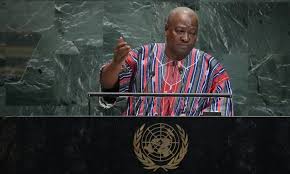
Ghana is set to formally table a resolution before the United Nations General Assembly later this month that would declare the transatlantic slave trade and the racialised chattel enslavement of Africans as the gravest crime against humanity, a move advocates say would represent the first comprehensive UN action on the subject in the organisation’s eight-decade history.
The resolution is scheduled for consideration and adoption on March 25, 2026 a date observed globally as the International Day of Remembrance of the Victims of Slavery and the Transatlantic Slave Trade. According to a statement released on Thursday by Ghana’s Ministry of Foreign Affairs and Regional Integration, the initiative fulfils a commitment made by President John Dramani Mahama during his address to the UN General Assembly in September 2025.
“All is set for the historic tabling of a United Nations resolution declaring the Transatlantic Slave Trade as the gravest crime against humanity consistent with President Mahama’s pledge during his statement at the UN General Assembly last year,” the ministry said in the statement.
The draft resolution, which Ghana is championing in its capacity as the African Union’s designated lead on reparations, is being pursued in close collaboration with the African Union, the Caribbean Community (CARICOM), and global networks representing people of African descent.
The ministry explained that the proposed text seeks to formally designate the trafficking of enslaved Africans and the system of racialised chattel enslavement as the most severe crime against humanity. This classification, according to the statement, is based on multiple factors including what it described as “the definitive break in world history, scale, duration, systemic nature, brutality and enduring consequences that continue to shape socio-economic realities and structural inequalities across the world.”
If adopted, the resolution would mark a significant departure from previous UN engagements with the legacy of slavery. The ministry noted that while the transatlantic slave trade has been condemned in various forums, a dedicated, comprehensive resolution of this nature has never been passed by the General Assembly since the United Nations was founded in 1945.
“Its adoption would preserve historical truth as a foundation for justice and reconciliation and respond to the call for meaningful engagement on reparatory justice, accountability and healing,” the statement added.
The choice of March 25 carries symbolic weight, as it is the officially designated International Day of Remembrance of the Victims of Slavery and the Transatlantic Slave Trade. The ministry emphasised that formally naming the historical reality through a UN resolution is not merely a symbolic gesture but “the beginning of a reckoning with the structural inequalities that underpin debt asymmetries, development gaps, climate vulnerability and global financial governance.”
Ahead of the formal tabling, Ghana has organised a series of commemorative events in New York. The ministry disclosed plans for a wreath-laying ceremony at the African Burial Ground National Monument in Lower Manhattan on March 24, 2026. The following day, prior to the General Assembly session, a high-level event focused on reparatory justice is scheduled to take place at UN headquarters.
The resolution initiative is situated within a broader, long-term continental strategy. Ghana has committed to pursuing reparatory justice under the framework of the African Union’s Decade of Action on Reparations and African Heritage, a ten-year programme spanning 2026 to 2036 that seeks to consolidate advocacy, research, and policy engagement on reparations across member states and the diaspora.
The ministry issued a direct appeal to UN member states, urging them to lend their support to the draft resolution. “All countries should be counted on the right side of history and justice,” the statement read, calling for unified backing when the resolution comes before the General Assembly for consideration later this month.
The proposed resolution arrives amid a growing global conversation on reparatory justice, with Caribbean nations through CARICOM having long pursued a reparations agenda, and various European countries and institutions facing renewed calls to address historical complicity in the slave trade. Ghana, as a major departure point during the transatlantic slave trade—with forts and castles along its coast serving as some of the final holding sites for enslaved Africans—has positioned itself at the forefront of African advocacy on the issue in recent years.