
UEFA Threatens to Strip Italy of Euro 2032
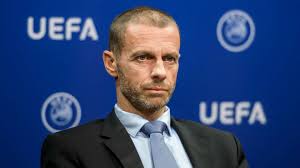
UEFA president Aleksander Čeferin has issued a firm ultimatum to Italy, warning that the country risks losing its right to co-host the 2032 European Championship unless it urgently upgrades its football infrastructure.
The warning comes as Italy grapples with a deepening football crisis, having failed to qualify for a third consecutive World Cup just days ago.
Čeferin, speaking in an interview with Italian publication Gazzetta dello Sport published on Thursday, declared: “Euro 2032 is scheduled and will take place, of that there is no doubt. I just hope that the infrastructure (in Italy) will be ready. If that’s not the case, the tournament will not be held in Italy.”
The UEFA chief did not mince words regarding the state of Italian football venues. He said: “Maybe Italy’s politicians should ask themselves why the football infrastructure is among the worst in Europe.” Čeferin added that Italian football’s biggest problem was “the relationship between the football authorities and politics.”
Italy is scheduled to co-host the tournament with Turkey, but the country’s stadiums remain largely outdated. Italy last hosted a major international football tournament in 1990, and many of its top stadiums, built or refurbished for that World Cup, are now in a sorry state.
The Italian Football Federation (FIGC) has until October 2026 to name five stadiums that will host Euro 2032 matches. Currently, 11 cities are candidates: Rome, Florence, Bologna, Verona, Milan, Genoa, Bari, Naples, Turin, Cagliari and Palermo.
However, only one venue — Juventus’s Allianz Stadium in Turin — is completely ready to host matches at the summer international tournament. Italy can present new stadiums or ones requiring redevelopment as long as work begins by March 2027.
Several major renovation projects are underway. Inter Milan and AC Milan recently purchased the San Siro from the city of Milan and hope to complete a new 71,500-capacity arena on the same site by 2031. However, the public prosecutors’ office in Milan is probing the sale of the land for alleged bid-rigging.
Roma have received approval from local authorities to build a new stadium in the east of the city, while Fiorentina’s Stadio Artemio Franchi is being redeveloped. Last month, the city of Naples presented a 200 million euros ($230 million) renovation project for the Stadio Diego Armando Maradona, which Mayor Gaetano Manfredi said needed doing “regardless of 2032.”
Meanwhile, the FIGC is in a state of leadership flux. President Gabriele Gravina resigned on Thursday following the national team’s failure to qualify for a third straight World Cup. Gravina, 72, who also serves as UEFA first vice-president, announced his resignation after a meeting at the federation’s Rome headquarters. He had held the post since October 2018.
Čeferin, who had previously backed Gravina, absolved the former FIGC president of blame for the stadium crisis. “Perhaps it is Italian politicians who should be asking themselves why Italy has some of the worst football infrastructure in Europe,” he said.
Turkey, by contrast, has its stadiums and infrastructure almost entirely ready after a massive national construction project under President Recep Tayyip Erdoğan’s leadership. Should Italy fail to meet the October deadline, UEFA could reassign hosting duties exclusively to Turkey.