
Edun: 4% GDP Growth Insufficient to Break Nigeria’s Poverty Trap
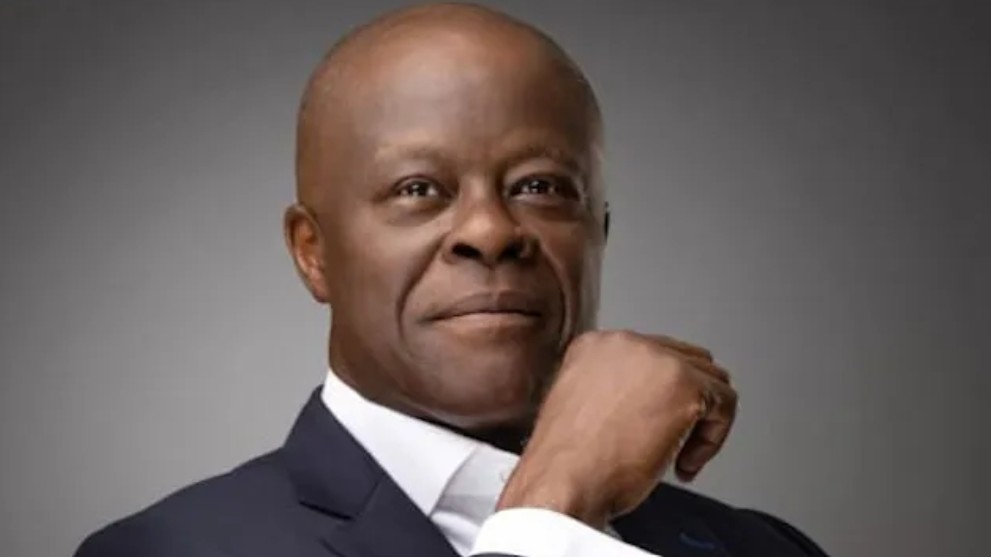
The Minister of Finance and Coordinating Minister for the Economy, Wale Edun, has warned that Nigeria’s current economic trajectory is failing the poor. Speaking virtually at the Nigeria Business Summit 2026 in Lagos, Edun noted that while average yearly GDP growth has climbed from 2% to 4%, the uptick remains too shallow to lift millions out of poverty. He admitted that despite this “important improvement,” the figures still fall short of the targets set by President Bola Tinubu’s “Renewed Hope” agenda.
The government’s strategy now hinges on a “productivity-led” recovery. Edun identified agriculture, energy, and manufacturing as the levers required to shift the needle. He lamented that agriculture, which accounts for 25% of the GDP, remains plagued by an underdeveloped value chain. To address energy deficits, the Federal Executive Council recently approved the Grid Asset Management Company. This move aims to unlock “stranded capacity” in power generation and attract the private capital necessary to stabilise the national grid.
A central pillar of the new economic roadmap is the $1 trillion GDP target. Edun argued that achieving this milestone depends on the formalisation and scaling of Small and Medium Enterprises (SMEs), which constitute 90% of Nigerian businesses. The government plans to expand access to affordable financing and push for the digitisation of the informal sector. “Government cannot drive transformation alone,” Edun stated, emphasising that trust-based partnerships with the private sector are non-negotiable for inclusive development.
Trade diversification is also a priority as the government attempts to escape its dependence on volatile oil earnings. The Minister highlighted the “National Single Window Initiative” as a tool to streamline exports and improve trade logistics. With intra-African trade currently at a sub-optimal 15%, Edun believes the African Continental Free Trade Area (AfCFTA) offers a “historic opportunity” for Nigerian firms to scale globally. He positioned Nigeria as a natural export leader, given its domestic market of over 200 million people.
Lagos State Governor Babajide Sanwo-Olu, represented by Commissioner Mosopefolu George, echoed the summit’s focus on the grassroots economy. He reported that the state has already empowered over 200,000 entrepreneurs with skills and financing. Chuma Nwokocha, Group CEO of Stanbic IBTC, added that the interconnected nature of Nigeria’s challenges—from renewable energy to tech—requires a unified response from experts across all sectors.
The summit concluded with a sober reminder of the task ahead. While the 4% growth rate is a move in the right direction, the Minister’s assessment suggests that Nigeria is running just to stay in place. To truly conquer poverty, the state must remove the bureaucratic and infrastructural bottlenecks that currently stifle private enterprise. Without these structural shifts, the $1 trillion dream will remain a mathematical ambition rather than a lived reality for millions.