
Nigeria’s N135bn Election Litigation Budget Sparks Outrage
FG Budgets N135.22bn For Post-Election Disputes Ahead Of 2027 Polls, Critics Cry Foul
A N135.22 billion line item quietly tucked into Nigeria’s 2026 federal budget has ignited a firestorm of criticism from opposition parties, legal minds, and civil society groups who argue the allocation signals the government’s own low expectations for the integrity of the 2027 general elections.
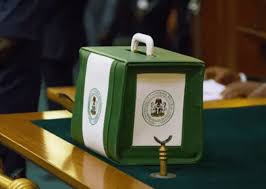
The provision, officially labelled “Electoral Adjudication and Post Election Provision,” was contained in the House of Representatives Order Paper dated March 31, 2026, as part of the 2026 Appropriation Bill. The allocation was placed under Service-Wide Votes, a centrally managed pool of resources used to settle national obligations not assigned to any single ministry, department, or agency.
Budget documents showed that total Consolidated Revenue Fund charges stood at N3.70 trillion, meaning the electoral adjudication line alone accounts for approximately 3.65 per cent of that segment of government spending.
The provision is a new budget line that was not included in the original draft of the 2026 budget proposal presented earlier.
The allocation sits alongside a much larger N1.01 trillion statutory transfer to the Independent National Electoral Commission, which emerged as the largest recipient within the statutory transfer category, accounting for roughly 21 per cent of the total N4.80 trillion statutory transfers proposed in the budget. Statutory transfers are constitutionally backed first-line charges from the Consolidated Revenue Fund, shielded from direct executive interference.
INEC had earlier informed the National Assembly in February 2026 that it required N873.78 billion to conduct the 2027 general elections and an additional N171 billion to fund its operational activities during the 2026 fiscal year, a figure that significantly exceeds the N313.4 billion released for the 2023 general elections.
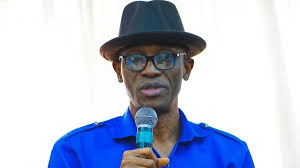
Both the Peoples Democratic Party and the African Democratic Congress raised concerns about the provision. PDP National Publicity Secretary Ini Ememobong argued that a transparent electoral commission would have little need for such a large litigation budget. “It means that INEC itself is anticipating that it will not do well and that people will not accept the outcome of the results. Because if INEC becomes very transparent, post-election litigation will be reduced drastically,” he said. He also questioned the use of external counsel, stating that “most of the lawyers should be in-house.”
ADC National Publicity Secretary Bolaji Abdullahi, while acknowledging that INEC is routinely joined in post-election suits, nonetheless described the N135bn figure as excessive, arguing that the scale of the provision raises accountability concerns.
Senior Advocate of Nigeria Femi Falana dismissed the allocation as unjustifiable, noting that INEC already operates legal departments across all 36 states. “In 2023, INEC was joined as a party in less than 3,500 pre-election cases, election petitions, and appeals arising from them,” Falana said, adding that INEC “may not spend up to N20 billion on election legal battles” under credible conditions.
Political economist Prof. Pat Utomi questioned the government’s role in electoral litigation altogether. “It is not the Federal Government that goes to elections, it is the individual candidates, so why should the Federal Government have a budget for it?” he said, adding that if the funds were intended for INEC, they should appear within INEC’s own appropriation.
Anthony Ubani of #FixPolitics Africa described the provision as “a troubling signal about the state of our democracy,” warning that heavy post-election litigation budgeting implies elections are no longer expected to be trusted but contested. “A credible electoral system should settle outcomes at the ballot box, not in the courtroom,” he said.
Debo Adeniran of the Centre for Anti-Corruption and Open Leadership raised the possibility of double appropriation, noting that if INEC had already received close to N1 trillion, it “ought to have included legal battles in its appropriation.” Auwal Rafsanjani of the Civil Society Legislative Advocacy Centre warned the funds could disproportionately benefit ruling-party candidates, urging both INEC and the government to prioritise free and fair elections over litigation planning.
The Federal Government has not issued a detailed public explanation of the rationale for the specific N135.22bn figure or the mechanism through which it would be disbursed.