
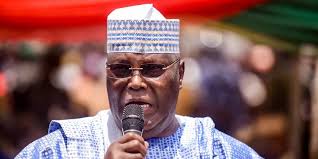
Former Vice President Atiku Abubakar has faulted President Bola Tinubu’s comparison of Nigeria’s fuel prices with other African nations, insisting lower petrol costs do not reflect Nigerians’ economic hardship.
The African Democratic Congress chieftain’s position came in a statement issued in Abuja on Saturday by his Senior Special Assistant on Public Communication, Phrank Shaibu.
The response followed Tinubu’s remarks during a Friday visit to Bayelsa State, where the President urged Nigerians to be grateful that petrol prices remain lower than in countries like Kenya, while acknowledging hardship and promising relief for vulnerable citizens.
Reacting, Atiku said the comparison was misplaced. “It is both curious and troubling that the President would isolate fuel prices as a metric of economic comfort while ignoring the far more critical indicators of purchasing power, income levels, and cost of living,” he said.
“This selective reasoning betrays either a fundamental misunderstanding of economic realities or a deliberate attempt to deflect from policy failures.”
Atiku noted that while Nigeria’s petrol prices may appear lower than Kenya or South Africa, “this comparison collapses instantly when placed against the backdrop of economic realities. Nigeria today is more expensive to live in than Kenya, with the average cost of living significantly higher, despite lower fuel prices.”
He further pointed to declining earning power: “More alarming is the collapse in earning power. Kenya’s GDP per capita is nearly double that of Nigeria, and a minimum wage earner in Nairobi takes home the equivalent of about ₦170,000—more than twice Nigeria’s ₦70,000.”
“In effect, while a Kenyan earns more and pays more, a Nigerian earns far less and is forced to survive under crushing economic pressure. This is the reality the President chose to ignore.”
The former Vice President also criticised Nigeria’s wage structure, stressing affordability goes beyond pricing. “The implication is clear: affordability is not defined by price alone, but by the relationship between income and expenditure. On this measure, Nigerians have never had it worse.”
“It is, therefore, deeply disappointing that at a time when citizens expect empathy, clarity, and decisive leadership, the President has chosen the path of statistical convenience,” he stated.
“A government that relies on selective comparisons while its citizens grapple with rising poverty, inflation, and declining living standards risks appearing not only out of touch, but indifferent.”