
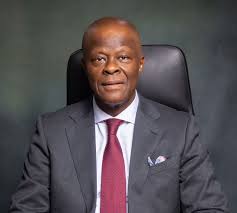
Nigeria’s Minister of Finance and Coordinating Minister of the Economy, Mr. Olawale Edun, has warned against any return to generalized subsidy regimes, cautioning that hard-won economic gains must not be reversed despite mounting global shocks and geopolitical tensions.
Speaking in Washington D.C. on Tuesday in his capacity as Chair of the G-24 Group of Nations, Edun addressed journalists on the sidelines of the World Bank and International Monetary Fund Spring Meetings. He emphasised that developing countries now face a troubling financial reality where debt servicing obligations exceed the external support they receive.
“The elevated borrowing costs and the debt servicing burden that developing countries are paying is weighing heavily on their ability to transform their economies and to achieve sustainable development,” Edun stated. “When you look at debt servicing, the outflow from debt servicing because of elevated interest costs outweigh what came in.”
The minister argued that policymakers must navigate a delicate path between inflation control and economic expansion. “There’s a critical balancing role here, where if interest rates are raised too early and too high in an effort to curtail potentially rising inflation, that too can do damage to the transformations which are taking place in economies. On the other hand, if interest rates are not moved in time, that too can do damage,” he explained.
Turning to Nigeria’s domestic reform agenda, Edun cautioned against policy reversals. “Having made so much progress, it is important that we don’t have a return to generalized subsidies, a sort of relapse into policies that have not proven successful in the past,” he said. He advocated instead for targeted social interventions, noting that “the focus really should be on helping the poorest and most vulnerable to cope with the increased pricing regime that they will face.”
Director of the G-24 Secretariat, Iyabo Masha, reinforced concerns about the debt landscape. “Even with that, the gap remains, and so there’s still much more they can do, especially on the debt side, on how they bring down the cost of borrowing,” she said.
Edun called on multilateral development institutions to “step up at this time with support, liquid support, as well as thought leadership to help countries navigate this period.” He stressed, however, that long-term resilience must be built internally. “There has to be a reliance on domestic resource mobilization, comprehensive tax regimes that not only improve resource mobilization but at the same time reduce the cost to the lowest earners,” he stated.
On global trade fragmentation, Edun observed that “what we have seen in recent years is a retreat from a world trading system that is rules-based and orderly. That has driven developing countries to focus on domestic production and more on regional integration.”
Other officials present at the briefing included First Vice-Chair Akhtar Javed, representing Pakistan’s Finance Minister, and Second Vice-Chair Bernardo Acosta, representing Ecuador’s Minister of Economy and Finance.