
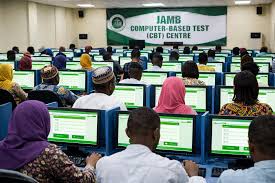
Nigeria’s largest single coordinated academic assessment commenced Thursday with the opening session of the 2026 Unified Tertiary Matriculation Examination, marking the beginning of a seven-day logistical operation spanning 966 accredited facilities nationwide. The examination cycle, administered by the Joint Admissions and Matriculation Board, will conclude April 22 after processing approximately 2.2 million prospective university entrants through Computer-Based Test protocols.
Prof. Is-haq Oloyede, the board’s registrar, addressed technical personnel through virtual channels ahead of the inaugural sessions, emphasising that examination integrity rests substantially upon frontline staff conduct. His briefing acknowledged operational friction identified during preliminary mock assessments, attributing most complications to insufficient venue evaluation procedures rather than systemic technological failures.
The regulatory framework for the 2026 exercise incorporates performance-based incentives for supervisory teams demonstrating exceptional adherence to material handling protocols and reporting timelines. This motivational structure supplements existing disciplinary measures, including the board’s reiterated prohibition against unauthorised items within examination environments and its established zero-tolerance posture regarding academic dishonesty.
Technological safeguards deployed for the current cycle include comprehensive biometric verification infrastructure and real-time monitoring capabilities designed to authenticate candidate identity and detect irregularities. Oloyede indicated that individuals failing biometric confirmation will undergo rescheduling to alternative designated venues rather than immediate disqualification, a procedural adjustment intended to reduce exclusion while maintaining security standards.
The examination architecture distributes daily candidate volume across four distinct temporal sessions, a scheduling mechanism intended to mitigate congestion at CBT facilities and enhance the efficiency of verification workflows. Facility requirements mandate operational computer systems, reliable internet connectivity, and appropriately trained administrative personnel at all participating centres.
Field observation at a Jahi district venue in the Federal Capital Territory indicated minor temporal deviation from scheduled commencement, with the initial 8:30 am session initiating approximately ten minutes behind timetable. Such adjustments fall within anticipated operational variance for large-scale computer-based assessments involving biometric processing and system synchronisation protocols.
The 2026 candidate volume represents continued expansion in tertiary education demand, requiring sustained coordination between JAMB headquarters, zonal administrative units, and private sector service providers responsible for technical infrastructure maintenance across diverse geographic and connectivity contexts.