
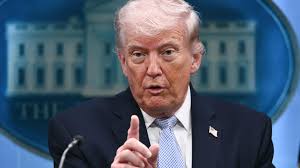
Washington has positioned itself as architect of potential diplomatic breakthrough in the Middle East, with President Donald Trump declaring that Israeli and Lebanese leaders will engage in direct conversation Thursday a development that would mark the first such contact in the history of the two states. The announcement follows closely on the first ambassadorial-level meeting between the parties in Washington since 1993, suggesting accelerated American efforts to de-escalate the regional conflagration that has consumed Lebanon since March.
The proposed leadership dialogue emerges against a devastating operational backdrop. Israeli military action in Lebanon has produced more than 2,000 fatalities and displaced over one million civilians since Hezbollah initiated hostilities on March 2, with Israeli ground forces now occupying southern territory despite sustained international pressure for cessation. The humanitarian dimensions have not produced corresponding diplomatic momentum until this week’s Washington engagements.
“Trying to get a little breathing room between Israel and Lebanon,” Trump posted Wednesday on Truth Social, characterising the Tuesday ambassadorial session as preliminary to broader engagement. The president declined to identify which leaders would participate or specify the format of the proposed Thursday exchange.
The declaration encountered immediate credibility questions. An official Lebanese source informed AFP that Beirut possessed no knowledge of planned contact through established diplomatic channels. The office of Israeli Prime Minister Benjamin Netanyahu similarly withheld confirmation when approached by the same agency. The disconnect between presidential announcement and governmental acknowledgment introduces uncertainty regarding the substance of Trump’s assertion.
Historical context underscores the exceptional nature of the claim. Michael Young of the Carnegie Middle East Centre noted that no precedent exists for direct leadership communication between the states. The nearest approximation occurred in September 1982, when Bachir Gemayel conferred with Israeli officials following his election to the Lebanese presidency—though his assassination prior to inauguration precluded institutional consolidation of that engagement. Diplomatic contact otherwise remained confined to the 1992-1993 Washington meetings of professional envoys during the Madrid peace process era.
A senior US administration official, speaking anonymously, delineated Washington’s strategic calculus as pursuit of “durable peace” rather than immediate ceasefire imposition. “The president would welcome the end of hostilities in Lebanon as part of a peace agreement between Israel and Lebanon,” the official stated, emphasising that parallel American negotiations with Tehran regarding Iran’s nuclear programme operate on separate tracks. “Both sides need to build political momentum.”
The official characterised the objective as constructing sufficient trust between governments to enable sustainable arrangements, suggesting a phased approach prioritising institutional relationship-building over rapid conflict termination.
Netanyahu articulated Israeli negotiating priorities Wednesday as “first, the dismantling of Hezbollah; second, a sustainable peace… achieved through strength.” This formulation maintains the security-first posture that has characterised Israeli policy throughout the campaign. Lebanese Ambassador Nada Hamadeh Moawad reportedly advanced contrasting immediate demands, calling for ceasefire implementation during the Tuesday session—a proposal Israel has thus far declined.
Hezbollah’s leadership has denounced the diplomatic opening as “capitulation,” maintaining organisational opposition to normalised engagement with Israel. The movement’s military wing continued operations Thursday, claiming drone attacks against northern Israeli positions, while the Israeli army issued evacuation orders for southern Lebanese territories extending to the Zahrani River—approximately 40 kilometres from the border—indicating expanded operational ambitions despite the diplomatic activity.
Ground clashes persisted in Bint Jbeil, five kilometres from the frontier, where Hezbollah elements contest Israeli advance. The juxtaposition of negotiation announcements with intensifying military operations illustrates the complex simultaneity of diplomatic and kinetic dimensions in contemporary Middle Eastern conflict.