
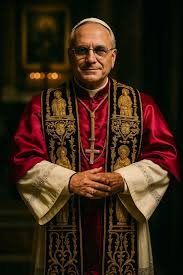
Pope Leo XIV has clarified that a speech he delivered in Cameroon condemning “tyrants” ransacking the world was written well before recent criticism from United States President Donald Trump and was never intended as a response to the American leader.
Speaking to journalists on Saturday while travelling to Angola for the next leg of his African tour, the Pontiff expressed regret that his remarks in Bamenda had been interpreted as an attempt to engage Trump in a public debate. “Much of what has been written since then has been more commentary on commentary, trying to interpret what has been said,” Leo said, according to the AFP news agency.
The Pope stated unequivocally that he has no interest in exchanging words with the US president. “It was perceived as if I were trying to start a new debate with the president, which doesn’t interest me at all,” he said.
The controversy stems from the Pope’s high-security visit on Thursday to Bamenda, the epicentre of a nearly decade-long Anglophone separatist insurgency in northwestern Cameroon. During his address, Leo condemned the actions of “tyrants” and offered prayers for victims of conflict. Several sections of the American media interpreted the statement as a veiled swipe at Trump, who had publicly criticised the Pope only days earlier.
On April 12, Trump told reporters he was “not a big fan of Pope Leo” and accused the Vatican leader of “toying with a country (Iran) that wants a nuclear weapon.” The US president later reinforced his stance on his Truth Social platform, writing: “I don’t want a Pope who thinks it’s OK for Iran to have a Nuclear Weapon. Pope Leo is weak on Crime and terrible for Foreign Policy.”
Addressing the timeline of events, Leo insisted that his prepared remarks predated the American media’s interpretation and Trump’s comments. He noted that “there’s been a certain narrative that has not been accurate in all of its aspects.”
The Pope’s visit to Cameroon and Angola forms part of a broader pastoral tour of the African continent, occurring against a backdrop of ongoing diplomatic tensions between the Holy See and Washington over issues including nuclear non-proliferation and international diplomacy.