
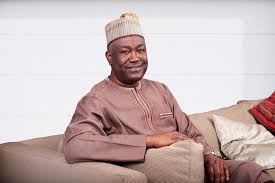
Former presidential candidate Dr Gbenga Olawepo-Hashim has declared that pro-democracy groups across the country will mobilise against any attempt to impose a one-party system on Nigeria, following a strategic consultation with human rights lawyer Femi Falana, SAN.
The declaration was contained in a statement issued by the Gbenga Olawepo-Hashim Media Office on Wednesday.
“We resolved to sustain the multi-party structure of Nigeria’s democracy and resist one-party rule,” Olawepo-Hashim stated after the meeting, which forms part of ongoing consultations with stakeholders on the state of the nation’s democratic health.
The former presidential candidate described Falana as an ally whose relationship with him spans over four decades, anchored on activism, resistance, and a shared commitment to justice. He recalled their joint involvement in the anti-apartheid struggle under the Nigeria-ANC Friendship and Cultural Association, including a protest on January 7, 1988, during the visit of former British Prime Minister Margaret Thatcher.
According to the statement, Olawepo-Hashim led a student contingent that defied security restrictions and advanced onto the airport tarmac in protest, an action that resulted in the arrest of five activists. He noted that only two of those involved remain alive, while others, including Olaitan Oyerinde, Chris Ayaeze, and Rotimi Ewebiyi, have since passed on.
He further highlighted his legal battles against military rule, including a 1988 suit challenging the Structural Adjustment Programme under the regime of Ibrahim Babangida, in which Falana served as his pro bono lawyer. The statement also referenced his 1989 detention in a constitutional case against the Attorney General of the Federation, handled by a legal team led by Alao Aka-Bashorun.
Olawepo-Hashim disclosed that Falana played a key role in his appointment as National Administrative Secretary of the Committee for the Defence of Human Rights, where he worked under the late Beko Ransome-Kuti.
The meeting comes amid growing political discourse about the trajectory of Nigeria’s Fourth Republic, which has operated a multi-party democratic system since the return to civilian rule in 1999. Recent defections by opposition figures to the ruling All Progressives Congress and the perceived weakening of major opposition platforms, including the Peoples Democratic Party, have triggered concerns about reduced electoral competitiveness ahead of the 2027 general elections.
Olawepo-Hashim stressed that consultations with like-minded stakeholders will continue as part of efforts to safeguard democratic values, civil liberties, and political plurality in the country.