
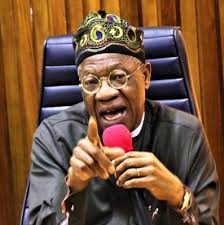
The 2020 #EndSARS protests, which began as a decentralized call for the disbandment of the Special Anti-Robbery Squad (SARS), encountered its most significant hurdle not in a communication gap, but in the rapid proliferation of disinformation. Former Minister of Information and Culture, Alhaji Lai Mohammed, provided this retrospective analysis during a forum at the London School of Economics and Political Science (LSE) on Friday.
Reflecting on his eight-year tenure as the federal government’s spokesperson, Mohammed asserted that while the demonstrations initially stemmed from legitimate public grievances regarding police brutality, the trajectory of the movement was fundamentally altered by unverified digital narratives. The protests were originally ignited by a viral video on October 3, 2020, allegedly showing SARS officers assaulting a citizen in Ughelli, Delta State. By October 8, the #EndSARS hashtag had mobilized thousands across Nigerian cities, with the Lekki Toll Plaza in Lagos becoming the symbolic epicenter.
In a statement released Sunday by his media office’s Head of Strategic Communications, Nnamdi Atupulazi, the former minister maintained that the situation reached a critical inflection point following the intervention of security forces.
“The biggest challenge came when the government deployed troops to the Lekki Toll Gate in Lagos to disperse the protesters. That’s when fake news and disinformation escalated,” Mohammed stated. He further critiqued international reportage, specifically alleging that CNN utilized “unverified or manipulated content,” which he claimed distorted global perceptions of the events.
Beyond the 2020 civil unrest, Mohammed detailed the logistical complexities of managing public information during the COVID-19 pandemic. Lacking a modern precedent—noting that the Spanish Flu occurred over a century prior—the government adopted a multi-channel strategy. This included daily briefings and the translation of advocacy materials into indigenous languages and Pidgin. According to Mohammed, internal weekly opinion polls conducted at the time indicated public approval ratings of “between 97 per cent and 98 per cent” regarding the government’s pandemic communication.
The former minister also defended the 2021 suspension of Twitter (now X) operations in Nigeria. He characterized the move as a necessary response to the platform’s perceived reluctance to curb “misinformation, incitement and divisive content” that threatened national stability.
Addressing broader security narratives, Mohammed recalled organized media tours of the North-East as a “turning point” in demonstrating the reclamation of territories from insurgents. These efforts, alongside unscripted town hall meetings, were framed as essential tools for direct citizen engagement.
Mohammed’s engagement at the LSE concluded a three-day speaking tour in the United Kingdom, which included visits to Abbey College Cambridge and St John’s College. The tour follows the release of his book, *Headlines & Soundbites: Media Moments That Defined an Administration*, which archives his perspectives on government communication between 2015 and 2023.