
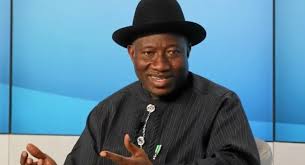
A Federal High Court sitting in Abuja has fixed Friday, May 8, 2026, to hear a legal suit seeking to permanently restrain former President Goodluck Jonathan from contesting the 2027 presidential election, thrusting one of Nigeria’s most enduring constitutional debates back into the spotlight.
The suit, filed by an Abuja based legal practitioner, asks the court to issue a perpetual injunction blocking Jonathan from seeking nomination by any political party ahead of the 2027 general elections. The plaintiff is equally seeking a court order compelling the Independent National Electoral Commission (INEC) to reject and decline to publish Jonathan’s name should any party attempt to sponsor him as a candidate.
Justice Peter Lifu fixed the hearing date after confirming that court processes had been served, noting that some defendants were yet to respond to the originating summons. The matter remains at a preliminary stage.
At the centre of the dispute is Section 137(3) of the 1999 Constitution as amended, which prohibits anyone sworn in twice as President from seeking the office again. The plaintiff contends that Jonathan, a Peoples Democratic Party (PDP) member, was first sworn in as President in 2010 following the death of President Umaru Musa Yar’Adua, and again after winning the 2011 presidential election. Having taken the presidential oath twice, the suit argues, he has exhausted the constitutional limit.
The legal argument is not without precedent on either side. In 2022, a Federal High Court in Bayelsa dismissed a similar suit, ruling that the constitutional amendment introducing Section 137(3) could not be applied retroactively to Jonathan because his tenure ended in 2015, before the provision took effect. That judgment has remained the primary reference point for those who insist Jonathan is constitutionally eligible to run should he choose to do so.
Critics, however, maintain that the spirit of the amended constitution is clear and that his two oath takings should disqualify him regardless of when the amendment came into force.
Jonathan has not publicly declared any intention to contest in 2027, but reports of political consultations and endorsements from various groups encouraging a return have grown considerably in recent months. Supporters frequently cite his experience, international standing, and perceived moderation as qualifications, while opponents warn that such a bid would undermine established constitutional limits on tenure.
INEC, listed as a defendant, may be required to publicly state its position on whether it would accept or reject his nomination if a party presents him as a candidate.
Legal observers note that the court’s eventual ruling could carry implications far beyond Jonathan himself, potentially defining the eligibility boundaries for former officeholders and shaping how constitutional amendments are applied in future elections.
As the hearing date arrives, political stakeholders and constitutional lawyers across the country are watching closely.