

Remi Tinubu’s Akara Advice Sparks Online Outrage
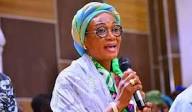
A call by the First Lady, Senator Oluremi Tinubu, urging Nigerians to take up petty trades such as selling akara, roasting corn and producing kuli-kuli has ignited a sharp online row, with critics insisting the advice ignores the depth of hardship that millions of households are battling.
Mrs Tinubu made the remarks on Wednesday while addressing State House Correspondents after the Renewed Hope Initiative’s second-quarter meeting with wives of state governors at the State House, Abuja. A video of her comments was shared on Friday by News Channel 247.
She framed the message around grants her office has disbursed to vulnerable citizens. “We’re trying to give hope, and to start akara business doesn’t take a lot of money. To start roasting corn, or somebody even said kuli kuli doesn’t take much. We didn’t give them a loan; we gave it to them as a grant,” she said. She added, “What is within our hands, I have given, and I keep giving.”
The First Lady listed several interventions under the initiative, saying she donated N2bn to tackle tuberculosis, N1bn for breast cancer and N500m to address malnutrition, alongside scholarships, ICT training and support for agriculture.
Her appeal, however, landed against a backdrop of intense economic strain. The latest National Bureau of Statistics data put headline inflation at 15.93 per cent in May 2026, the third consecutive monthly rise in 2026, up from 15.69 per cent in April. Food inflation stood at 16.96 per cent year on year in May. While those figures are far below the 26.06 per cent recorded a year earlier, prices have been climbing again, partly on the back of a March fuel price shock.
The hardship runs deeper than monthly price movements. In its Nigeria Development Update released in April 2026, the World Bank reported that the share of Nigerians living below the poverty line rose from 56 per cent in 2023 to 61 per cent in 2024, and further to 63 per cent in 2025, equivalent to about 140 million people. The bank noted that household incomes have not grown fast enough to offset still elevated inflation, even as the headline rate moderated.
The online reaction was swift. A user on X, @ADCVanguard_, said the video showed “exactly how disconnected Nigeria’s ruling class has become from the reality of ordinary citizens.” Another, @TossynBankz_, drew a careful distinction, writing, “Nobody is mocking akara, roasted corn, or kuli-kuli. Those are honest businesses. The problem is that Nigerians are asking for a better economy, more jobs, and lower prices.”
Public policy expert and former NERC chairman, Sam Amadi, also weighed in. In a post on X on Friday, he argued the approach reflected political calculation rather than good governance, saying the First Lady “knows what works best for Nigerian politics.”
Not all voices were critical. A user, @Akikanju1568901, defended the message, describing akara as “one of the most lucrative businesses in Nigeria,” and noting that “akara sellers sent many kids to universities, built houses, bought cars.” Another, @PemiOladapo, said, “There’s dignity in labour. These are our local snacks!”
The episode echoes a recurring pattern under the Tinubu administration, where official messaging on the Renewed Hope Agenda repeatedly collides with the lived experience of citizens. With poverty projected by the World Bank to fall only gradually, to about 59 per cent by 2028, the gap between empowerment rhetoric and household reality appears set to remain a live political flashpoint heading towards 2027.