


Military Pressure Forces Fresh ISWAP Surrenders In Borno
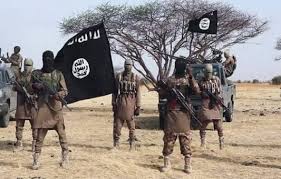
A fresh group of top Islamic State West Africa Province commanders has surrendered to troops of the Joint Task Force North East, Operation HADIN KAI, in the latest sign that sustained military pressure is fracturing the insurgent group’s leadership across Borno State and the wider Lake Chad Basin.
The Acting Media Information Officer of the Joint Task Force, Captain Mohammed Goni, disclosed the development in a statement issued on Monday in Maiduguri. He said the surrender came alongside that of 76 terrorist foot soldiers and some of their family members, who also laid down their arms within the past week.
Although the military withheld the identities of the commanders and the locations of their surrender for security reasons, Goni attributed the breakthrough to intelligence-driven operations. “Troops of the Joint Task Force North East, Operation HADIN KAI, have continued to record significant operational successes in the ongoing counter-terrorism campaign against Boko Haram and Islamic State West Africa Province (ISWAP) terrorists through sustained operations backed by credible, timely and actionable intelligence,” he stated.
He said the surrendered leaders are “currently in a secure location undergoing profiling, debriefing and other established procedures in accordance with extant operational protocols.” According to him, continuous operations have degraded the insurgents’ combat capabilities while weakening morale “within their ranks and leadership.”
The fresh capitulations follow a string of high-profile reverses for ISWAP. On June 8, two senior commanders, Ismail Mohammed and Abu Umar, the latter a vehicle-borne improvised explosive device specialist, surrendered to the 159 Battalion in Geidam, Yobe State. Interrogations later revealed that Mohammed Khalifa, a member of the ISWAP Shura Council, the group’s highest decision-making body, had been killed in joint operations.
The pressure intensified sharply earlier this year. On May 15, 2026, Nigeria and the United States launched a joint military operation against ISWAP and Boko Haram, combining special forces raids with multiple rounds of airstrikes. Senior ISWAP leader Abu-Bilal al-Minuki was killed during that offensive, and by May 19 the Defence Headquarters confirmed that about 175 fighters had been killed since the joint operations began. That campaign followed a US strike on December 25, 2025, against Islamic State targets in the country’s north-west.
The renewed momentum marks a shift after a difficult stretch for Nigeria’s security forces. ISWAP escalated its insurgency from January 2025, mounting at least twelve coordinated assaults on military bases in Borno within three months and exploiting the weaknesses of the military’s “supercamp” strategy. Boko Haram, under its leader Bakura Doro, also resurged in the Lake Chad region during the same period.
The human cost of the conflict remains staggering. The insurgency, which began in 2009, has killed tens of thousands of people and displaced more than two million. United Nations humanitarian figures from June 2025 put the number of internally displaced persons in the Lake Chad region at 2.9 million, alongside 272,000 refugees.
Goni said Operation HADIN KAI remains committed to defeating terrorism and restoring lasting peace. “The pressure on the remaining terrorist elements will continue unabated until they are completely neutralised or forced to surrender,” the statement added.
Analysts caution that surrenders alone will not end the crisis. Reintegration programmes across the region have repeatedly faltered, with community rejection and unmet government promises driving some former fighters back to the trenches. Nigeria’s Minister of Defence, Christopher Musa, has previously said military action can resolve only about 30 per cent of the conflict, with the remainder dependent on good governance.