
Tinubu Meets Security Chiefs Over Rising Threats
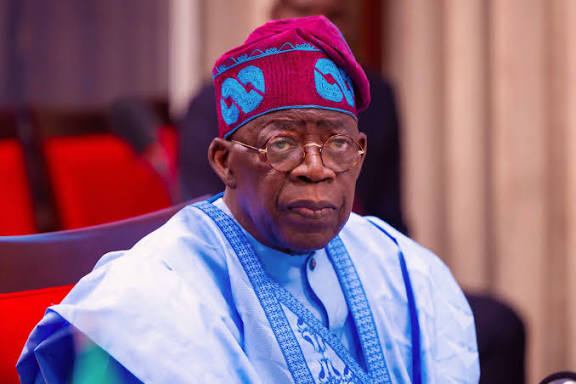
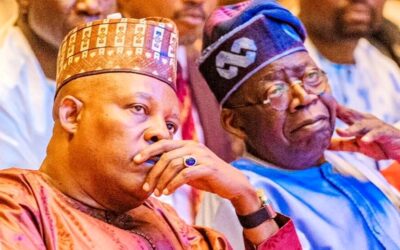
President Bola Tinubu gathered his entire security establishment at the Presidential Villa in Abuja on Thursday evening for a closed-door review of a threat picture that has grown more complicated by the week, bringing together the military high command, intelligence heads and homeland security advisers for a session that ran beyond two hours.
The State House confirmed the meeting through a photograph released the same evening, though the Presidency had issued no formal statement on its outcome as at the time of filing. Officials familiar with the agenda described the engagement as a broad assessment of the security situation across the country’s several theatres of operation, with terrorism, banditry and kidnapping topping the list of concerns.
Present were the National Security Adviser, Nuhu Ribadu; Minister of Defence, General Christopher Musa (retd.); Chief of Defence Staff, General Olufemi Oluyede; Chief of Army Staff, Lieutenant General Waidi Shaibu; and the Chief of Defence Intelligence, Lieutenant General Emmanuel Undiandeye. The Director-General of the Department of State Services, Adeola Ajayi; his National Intelligence Agency counterpart, Mohammed Mohammed; the Special Adviser on Homeland Security, Major General Adeyinka Famadewa (retd.); and the Inspector-General of Police, Olatunde Disu, also attended.
The timing is significant. The meeting followed the recent withdrawal by the United States of most of the combat forces it had deployed to Nigeria earlier in the year. Commander of US Africa Command, General Dagvin Anderson, disclosed the drawdown at the 2026 African Chiefs of Defence Conference in Luanda, Angola, explaining that the specific mission had been completed while intelligence cooperation would continue at Abuja’s request. Washington had sent about 200 personnel in February 2026, and a joint operation in May killed Abu-Bilal al-Minuki, described as the second-in-command of ISIS, at a hideout in Borno State. AFRICOM said roughly 200 fighters were eliminated in the wider campaign.
On the domestic front, the pressure has not eased. On July 7, troops of Operation Fansan Yamma, backed by the Air Component of the Joint Task Force (North West), disrupted what the military called a major planned offensive, with three Nigerian Air Force aircraft tracking a convoy of about 300 armed fighters on motorcycles moving toward Gummi and striking the formation. In the North-East, troops of Operation Hadin Kai repelled a fresh assault on the Mairari base on July 1. Security analysts have recorded at least 13 attacks on military bases in 2026, most of them in Borno State.
Away from the battlefield, the politics of insecurity sharpened. In Kebbi, the state government said schools in volatile areas had stayed shut for about seven months, insisting the closures were a response to banditry rather than politics. The Special Adviser to Governor Nasir Idris on Communication and Strategy, Abdullahi Zuru, said the decision was taken to protect lives, adding, “No pressure will make us compromise on students’ lives.”
The African Democratic Congress kept up its criticism of the ruling party. Its National Publicity Secretary, Bolaji Abdullahi, speaking on Channels Television, argued that the government appeared fixated on 2027, saying, “The country is sinking under their watch.”
Meanwhile, former Vice President Atiku Abubakar and NDC vice-presidential candidate Rabiu Kwankwaso demanded state protection for opposition figure Peter Obi and due process for detained former Kaduna governor Nasir el-Rufai. “Nothing must happen to Peter Obi,” Atiku said. In Oyo, 46 pupils and teachers abducted from Oriire remained in captivity nearly two months on, a reminder of how far the security challenge still stretches.