
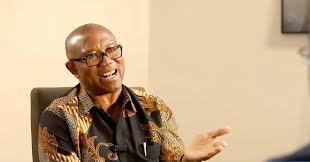
Peter Obi, the former Anambra State governor and a leading opposition figure ahead of the 2027 election, has declared his readiness to die for Nigeria, arguing that genuine leadership demands the ultimate sacrifice in the face of the country’s worsening security crisis.
Obi spoke in a recent episode of the Black Box interview on Nevon HQ with journalist Rufai Oseni, posted on Tuesday. He was asked what he would do as Commander-in-Chief to rescue kidnapped schoolchildren held in the bush, address the beheading of teachers and respond to the killing of senior military officers, including generals. While he did not outline specific operational strategies, he stressed commitment and decisive leadership.
“I have fought criminality in Anambra. Commitment solves the problem for everybody,” he said. He recounted how, during his tenure, notorious kidnappers were forced out of the state, referencing a known kidnapper called Vance who he said admitted operations became untenable under his administration.
“One government. It’s either I’m in charge or they’re in charge. One person must be in charge. We declare war. If you’re ready to lead, you must be ready to die. If you’re not ready to die, go home,” he added. Asked directly if he was ready to die for Nigeria, Obi replied, “Yes,” adding that he would return home from abroad if war broke out because “God created me a Nigerian.”
The remarks land amid relentless banditry, kidnapping for ransom and attacks on schools and security personnel. On May 15, 2026, armed men attacked three schools in Oriire Local Government Area of Oyo State and abducted dozens of pupils, teachers and a toddler. Seven teachers and 39 students were reportedly taken, while the youngest victim is said to be two years old. On May 17, the kidnappers released a video showing the beheading of a mathematics teacher, Michael Oyedokun, triggering national outrage.
The victims remain unreleased. Governor Seyi Makinde has disclosed that intelligence reports indicate the abductees are being held within the Old Oyo National Park, a vast expanse covering about 2,500 square kilometres across ten local government areas. Separately, a former military spokesman, Major General Rabe Abubakar (retd.), was abducted alongside his wife on May 30, 2026, in Katsina State. He was later confirmed dead, while his wife was rescued days afterward.
The crisis is not new. Mass school abductions have been a recurring security challenge since the 2014 Chibok kidnapping by Boko Haram, which saw 276 schoolgirls taken from a secondary school in Borno State. The 2026 Oyo attack, however, marked a rare expansion of high-profile school raids into the South-West, a region previously considered relatively secure. Estimates indicate that between 1,600 and 1,700 schoolchildren have been abducted directly from Nigerian schools since 2014, with more than 180 killed and nearly 90 injured.
Obi lamented the rise of non-state actors challenging state authority and expressed confidence that committed leadership could restore Nigeria’s military standing. He recalled how Nigerian troops once helped maintain peace in Liberia, Sudan and Kuwait, arguing that detailed operational plans are secondary to the willingness to confront insecurity head-on.
The comments fit Obi’s longstanding messaging on insecurity. In August 2025, following the killing of more than 50 worshippers in a Katsina mosque, he warned that unless the government tackled the root causes of insecurity, Nigeria would continue to witness avoidable deaths. His political platform ahead of the 2027 election remains fluid, following recent developments surrounding opposition coalition efforts.