

Diaspora Lawyer Files To Renounce Nigerian Citizenship, Fees Paid
A Nigerian legal practitioner based in the United Kingdom, Baron Chymaker, has taken a formal step toward severing his legal ties with the country of his parentage, saying his application to renounce his Nigerian citizenship has been lodged with the relevant authorities and all statutory fees paid.
Chymaker, who is widely followed on the platform X for his commentary on international law, comparative legal practice in Britain and Nigeria, and cryptocurrency, disclosed the development in a post on Thursday. According to him, a lawyer acting on his behalf in Nigeria confirmed that the application had been submitted to the Office of the Secretary to the Government of the Federation. “I have today received a confirmation from my lawyer in Nigeria that my application to renounce my Nigerian citizenship has been submitted to the SGF and all fees paid as appropriate. I cannot wait for the approval,” he wrote.
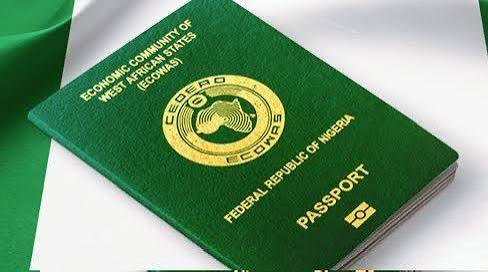
The move is not a sudden one. Chymaker first signalled his intention publicly in late 2025, stating that he had deliberately declined to renew his Nigerian passport, which he said expired in 2020, and would formally apply to renounce his citizenship in the new year. At the time, he indicated that he was prepared to approach the courts for an order compelling the authorities to register his declaration should the application stall. He argued, in his own framing, that his link to Nigeria was inherited rather than chosen, noting that his parents were Nigerian and that he was not born in the country.
His decision arrives against the backdrop of a documented rise in emigration sentiment among Nigerians, a trend popularly described as the “japa” wave, driven by economic pressures, insecurity, and dissatisfaction with governance. While renouncing citizenship outright remains far rarer than simply relocating abroad, Chymaker’s public campaign has drawn attention precisely because it tests the machinery of a constitutional right that is seldom exercised so openly.
The legal pathway itself is set out in Section 29 of the 1999 Constitution of the Federal Republic of Nigeria, as amended. The provision states that any citizen of full age who wishes to renounce citizenship “shall make a declaration in the prescribed manner for the renunciation,” after which “the President shall cause the declaration to be registered,” at which point the person ceases to be a Nigerian citizen. Full age is defined as 18 years and above. Crucially, the power to approve or withhold registration rests solely with the President. Under Section 29(3), the President may decline to register a declaration if it is made during a war in which Nigeria is physically involved, or if, in his opinion, registration would be contrary to public policy.
In administrative practice, renunciation applications are processed through the Ministry of Interior, which collects the prescribed Form G, supporting affidavits, evidence of citizenship elsewhere, and other documents before forwarding them for presidential action. Nigerian missions abroad only facilitate the paperwork; they do not decide outcomes. Because approval is discretionary and tied to the presidency, there are no fixed timelines, a reality that has left applicants like Chymaker awaiting a decision without a guaranteed date.
Legal observers have long noted that citizens by birth may renounce their status if they choose, a point reinforced by the Nigerian Immigration Service’s dedicated N2A visa category for a “Nigerian by birth who renounced Nigerian citizenship.” This effectively allows former citizens to return as visitors under a formal immigration status.
As of the time of filing this report, neither the SGF’s office nor the Ministry of Interior had issued any public statement on the application, and its status remains pending.