

N1.3bn PFIPC Scandal: AGF Appears Before House
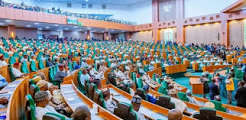
Attention returns to the National Assembly on Monday as the House of Representatives ad hoc committee probing the disputed Presidential Foreign Investment Promotion Council prepares to question the Accountant General of the Federation, Mr Shamseldeen Ogunjimi, over how an organisation the Federal Government insists never lawfully existed found its way into the national budget and was assigned more than N1.3bn in public funds.
Ogunjimi’s appearance opens the third week of an inquiry that has grown from a single motion on the floor of the House into one of the most closely followed governance investigations of the year. The committee, chaired by the lawmaker representing Kanke, Kanam and Pankshin Federal Constituency of Plateau State, Mr Yusuf Gagdi, is expected to press the Accountant General to explain the exact processes through which the PFIPC obtained a government budget code, the administrative step that allowed a body of contested legal standing to appear in the country’s spending plan.
The controversy sits inside an unusually large fiscal year. President Bola Tinubu signed the 2026 Appropriation Act into law with an aggregate expenditure of N68.32tn, the largest in the country’s history, comprising N4.799tn for statutory transfers, N15.8tn for debt service, N15.4tn for recurrent spending and N32.2tn for capital projects. Against that backdrop, the sum tied to the PFIPC is modest in size but heavy in implication, because it speaks to whether the gates guarding the budget can be opened by an entity that the government itself does not recognise.
According to records cited by Gagdi when he moved the motion of urgent public importance, the council’s provision appeared on pages 50 and 51 of the 2026 budget estimates under code 0111062001, carrying a total of N1,302,978,784. That figure was made up of N1,002,978,784 in recurrent expenditure, split into N802,978,783 for personnel and N200,000,001 for overhead, alongside N300,000,000 earmarked for capital spending. Gagdi told the House that the same amount later surfaced under the State House Headquarters in the signed Appropriation Act, a duplication that deepened questions about how the allocation was processed.
Gagdi has repeatedly stressed that the House is not conducting a witch hunt. “Our mandate is to objectively examine the circumstances surrounding the alleged establishment and operations of the PFIPC, determine whether due constitutional and statutory processes were followed, engage all relevant stakeholders, carefully review the available evidence, and submit appropriate findings and recommendations to the House,” he said at the committee’s inauguration by the Speaker, Mr Abbas Tajudeen. He added later, as the panel tightened its posture toward reluctant witnesses, “No agency of government, regardless of its status or perceived influence, will be permitted to undermine the constitutional authority of the House of Representatives or frustrate the discharge of its legislative responsibilities.”
The lawmakers say the council operated from the Federal Secretariat Complex, Phase 3, in Abuja, between November 2024 and October 2025, and interacted with several arms of government during that window. Investigators have questioned documents that purportedly established the body under a provision cited as Chapter N2117 of the Laws of the Federation of Nigeria, a citation the National Assembly says it has no record of. The council also ran a website bearing a government domain, a detail that lent it a veneer of legitimacy while its legal foundation remained unproven.
Testimony gathered so far has exposed apparent gaps at several levels of the bureaucracy. The Head of the Civil Service of the Federation, Mrs Esther Didi Walson-Jack, the Director of Banking Services at the Central Bank of Nigeria, Mr Abdullahi Hamisu, and the Director General of the Budget Office of the Federation, Mr Tanimu Yakubu, have all appeared before the panel. Their accounts centred on how the council navigated official documentation and became embedded in parts of the federal system despite doubts about its status. The Permanent Secretary in the Ministry of Foreign Affairs, Mr Dunoma Umar Ahmed, told the committee the ministry never had any official relationship with the council or the man who presented himself as its Director General, Prince Adeniyi Adeyemi, disclosing that Adeyemi had approached the ministry on three occasions between 2025 and 2026 seeking endorsement for a proposed World Investment Summit, requests that were not granted.
The inquiry drew fresh momentum from the arrest of Adeyemi by operatives of the Nigeria Police Force. He allegedly claimed to have paid N400m through an intermediary to the Chief of Staff to the President, Mr Femi Gbajabiamila, to secure his appointment as head of the council. Both the Presidency and Gbajabiamila have firmly rejected the claim. The Presidency described Adeyemi as an impostor, while the Chief of Staff dismissed the allegation as false and denied any involvement in the body or its activities. The matter has also engaged the anti graft agency, with the Independent Corrupt Practices and Other Related Offences Commission questioning the alleged Director General, even as related forgery and impersonation allegations proceed before the Federal High Court in Abuja under a probe the President himself ordered.
Concern within the committee has extended to the security establishment. Gagdi has noted that the Office of the National Security Adviser established as far back as November 2025 that the council and its purported head were not recognised by the Federal Government, and he has questioned what action followed that finding. The panel has since summoned the National Security Adviser, Mr Nuhu Ribadu, and the Minister of Foreign Affairs, Mrs Bianca Odumegwu-Ojukwu, and directed the Inspector General of Police, Mr Olatunji Disu, to produce two suspects linked to documents said to have originated from the Office of the Head of the Civil Service. Those documents reportedly approved the council’s participation in the budget process and granted a waiver for the deployment of about 300 personnel. Lawmakers are also seeking answers from the Secretary to the Government of the Federation, Mr George Akume, over the alleged transfer of office space in the Federal Secretariat to the council.
The list of officials still expected before the panel is long. Beyond Ogunjimi, it includes Akume, Disu, Odumegwu-Ojukwu, the Minister of Finance and Coordinating Minister of the Economy, Mr Taiwo Oyedele, the Attorney General of the Federation and Minister of Justice, Prince Lateef Fagbemi, and the Executive Secretary of the Nigerian Investment Promotion Commission, Mrs Aisha Rimi.
For all its novelty, the episode revives an old anxiety about the integrity of Nigeria’s budget. The phrase budget padding entered national vocabulary in 2016, when the then chairman of the House Committee on Appropriations, Mr Abdulmumin Jibrin, publicly accused the chamber’s leadership of inserting questionable allocations, a dispute that ended in his suspension. Successive administrations have wrestled with unapproved insertions, duplicated line items and so called ghost entries, and the drive to eliminate ghost workers through the Integrated Payroll and Personnel Information System has run for more than a decade. The PFIPC affair lands squarely in that lineage, testing whether reforms to the appropriation process can detect a body that, by the government’s own account, should never have earned a code.
What the committee ultimately establishes, whether the outcome points to administrative failure, institutional negligence or deliberate misconduct, will shape more than the fate of one disputed council. It will signal how firmly the systems built to protect trillions in public spending can resist manipulation. As Gagdi framed it, “This investigation is in the national interest. It is not targeted at any individual or institution but is aimed at establishing the facts, protecting the integrity of public administration, safeguarding the rule of law, and ensuring that no public office or institution operates outside the framework of the Constitution and the laws of the Federal Republic of Nigeria.” Monday’s session, with the custodian of the nation’s accounts in the witness chair, will test how far that promise can be carried.