

Oyedele Says N15.8trn Subsidy Savings Not FG Windfall As Atiku Demands Account
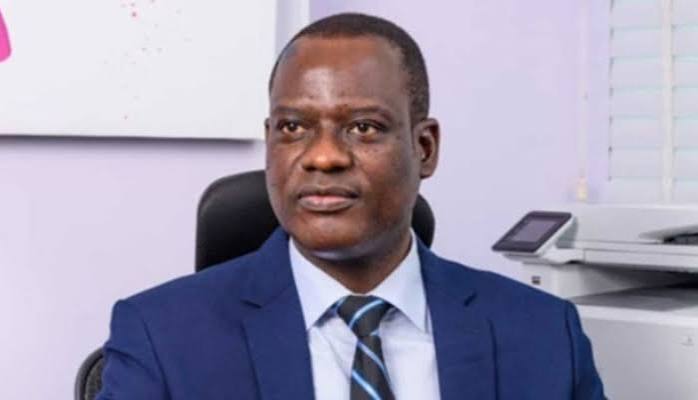
Federal allocations alone cannot deliver prosperity to Nigeria’s 36 states, the Minister of Finance and Coordinating Minister of the Economy, Taiwo Oyedele, has said, urging subnational governments to build their own revenue base even as the opposition demanded a full account of the money freed by three years of economic reform.
Oyedele spoke at the National Council on Finance and Economic Development (NACOFED) conference in Owerri, Imo State. He said Nigeria realised an estimated N15.8 trillion from removing fuel subsidy and liberalising the foreign exchange market between June 2023 and December 2025, but rejected the popular belief that the money left the Federal Government sitting on a large cash pile.
According to the minister, the N15.8 trillion accrued to the Federation Account and was shared across the tiers of government, with the Federal Government receiving N5.43 trillion, the states N6.52 trillion and the 774 local councils N3.88 trillion. He said the Federal Government’s own incremental resources over the period came to about N20.4 trillion, made up of its N5.43 trillion share, N3.12 trillion in other revenue and N11.85 trillion in fresh borrowing.
Against that, he said, government spent roughly N30.64 trillion on new obligations, including N9.39 trillion on wage adjustments and N9.37 trillion on external debt service inflated by the weaker naira, alongside spending on infrastructure and electricity subsidy. “Subsidy removal therefore did not create one large pool of cash available to the Federal Government. It reduced a major fiscal burden and the amount of additional borrowing that would otherwise have been required,” he said.
The minister argued that the reforms have widened the pool shared monthly through the Federation Account, which he said rose from between N300 billion and N600 billion before 2023 to above N2 trillion today. He said states must move from dependence on allocations towards production, investment and job creation, and called for stronger fiscal federalism and diversification.
The latest figures give weight to that point. Data from the Office of the Accountant-General of the Federation showed that the Federal Government, states and councils shared N3.007 trillion for July 2026, the highest monthly distribution on record. Gross statutory revenue for the month rose to N4.359 trillion, up 17.8 per cent from N3.700 trillion in June, which the Accountant-General’s office attributed to stronger oil and non-oil collections.
The reforms have also carried heavy costs for households. Headline inflation eased to 15.91 per cent in June 2026 from 22.41 per cent in May 2023, but the pump price of petrol climbed from about N185 per litre before the reform to between N1,100 and N1,400.
The opposition read the same data differently. The presidential candidate of the African Democratic Congress, Atiku Abubakar, challenged President Bola Tinubu to account for approximately N30 trillion in Federation revenues, deductions, savings and transfers that he said require transparent reconciliation. In a statement by his aide, Phrank Shaibu, Atiku said his review of published figures had flagged roughly N28 trillion up to June 2026, with the July numbers pushing the total towards N30 trillion. “The question President Tinubu must answer remains painfully simple: Where is the money?” he said, adding that the government should publish the ledger rather than issue another statement.
On borrowing, the Director-General of the Debt Management Office, Patience Oniha, said a financing arrangement with First Abu Dhabi Bank was intended to diversify Nigeria’s funding sources and secure cheaper terms, and had received National Assembly approval in line with the Fiscal Responsibility Act.
Imo State governor, Hope Uzodimma, represented by his deputy, Chinyere Ekomaru, said states must be deliberate about diversifying their economies, citing investments in agriculture, the digital economy, power and infrastructure.
The competing accounts leave the defining question of the reform era unresolved: whether the extra revenue is reaching ordinary Nigerians, or merely financing a widening gap between what government earns and what it spends.