
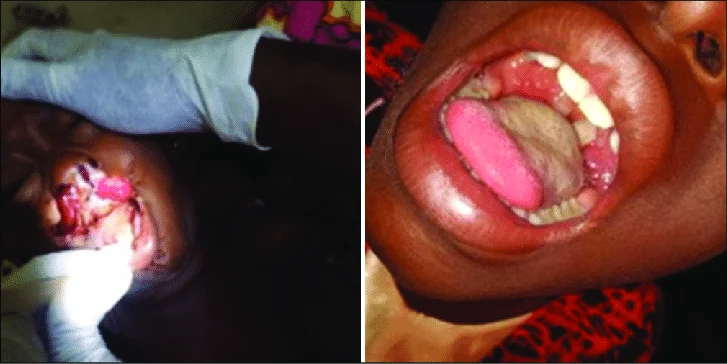
The politics of a public health emergency has broken into the open in Gombe State, where the ruling All Progressives Congress has accused the opposition Peoples Democratic Party of turning a diphtheria outbreak into a partisan weapon, even as the disease continues to kill children across northern Nigeria.
In a statement issued in Gombe on Monday by its State Publicity Secretary, Murtala Usman Wuro Tale, the APC described the PDP’s comments on the outbreak as “dangerous ignorance and insensitivity” and said such remarks were inappropriate while health authorities, medical professionals and development partners were working to contain the disease. The party said diphtheria was a serious infectious disease requiring coordinated medical and public health intervention rather than “sensationalism, speculation and political grandstanding”, and challenged the PDP to explain why it had allegedly failed to acknowledge measures already being taken by the government of Governor Muhammadu Inuwa Yahaya.
The specific PDP statement that drew the response was not made public alongside the APC’s rebuttal, and the opposition’s exact position could not be independently confirmed. What is on record is that the Gombe PDP, through its Publicity Secretary Abdulkadir Ahmad Dukku, has been a persistent critic of the Yahaya administration through 2026, faulting it in recent months over demolitions, local government elections and an empowerment scheme the party alleged was collecting residents’ voters’ cards and bank details. The health exchange fits a pattern of confrontation ahead of the 2027 general election rather than an isolated dispute.
The APC set out what it said the government was doing. According to the party, the state had activated its Public Health Emergency Operations Centre and was running risk communication, active case searches, isolation of suspected and confirmed cases, free treatment at designated secondary and tertiary facilities, and reactive vaccination. It said more than one million children aged two to 15 in affected communities had been vaccinated, and that 350,000 additional doses supplied by the National Primary Health Care Development Agency had been distributed. The party also said the response was being coordinated with the Nigeria Centre for Disease Control and Prevention, the World Health Organisation, the United Nations Children’s Fund and other partners, and pointed to the revitalisation of 228 primary healthcare centres across the state’s 114 wards as evidence of investment in the sector.
These are the government’s own figures, presented through its party, and the state has not released a separate case and fatality count for Gombe for 2026. That gap matters, because the wider picture is grave. Data from the NCDC show Nigeria has recorded more than 10,000 confirmed diphtheria cases in 2026. The agency’s Director General, Dr Jide Idris, said at a briefing in late August that the confirmed cases were concentrated in Kano, Borno and Bauchi, that too many children remained unvaccinated or incompletely vaccinated, and that around 68 per cent of confirmed cases involved unvaccinated people. Eight northern states account for the overwhelming majority of the burden.
The current wave is part of an outbreak that has never fully ended since diphtheria re-emerged in Nigeria in December 2022. NCDC records covering that outbreak up to early 2025 documented more than 42,000 suspected cases across 37 states, over 25,000 confirmed, and 1,319 deaths, with Kano alone accounting for the bulk of infections. Neighbouring states illustrate the scale still being managed this year. Zamfara health authorities reported 367 suspected cases and 44 deaths as of mid-September, while Yobe recorded 511 cases and 13 deaths between January and 8 September, a case fatality rate the state put at 2.5 per cent. Katsina vaccinated more than 150,000 people in five days from late August and secured a further 650,000 doses.
Diphtheria is caused by the bacterium Corynebacterium diphtheriae and spreads through respiratory droplets and close contact. It attacks the throat and nose, where a toxin can cause breathing difficulty, heart failure and nerve damage, and it is largely preventable through vaccination. The WHO has repeatedly urged Nigeria to raise diphtheria vaccination coverage to at least 80 per cent to achieve community protection. A national immunity survey cited by the NCDC found that only about 42 per cent of children under 15 were fully protected, a coverage gap that experts identify as the central driver of recurrent outbreaks. More than two million Nigerian children are under-immunised or have received no routine doses at all.
That context gives the Gombe quarrel its weight. Where the disease is concerned, the technical response the APC described, surveillance, isolation, free treatment and reactive vaccination, aligns with the standard outbreak protocol used nationally and by development partners. Where the politics is concerned, the two parties are contesting not the science but the credit and the criticism, and each accuses the other of bad faith. The APC frames opposition scrutiny as reckless; opposition scrutiny of a government’s handling of a fatal, preventable disease is also a legitimate function in a democracy. Both propositions can hold at once.
What remains unverified is as important as what is confirmed. Gombe’s own 2026 case and death numbers have not been published independently, the vaccination totals cited come from the party rather than from the NPHCDA or NCDC directly, and the full text of the PDP’s original claim is not on the public record. For residents, the practical measures matter more than the exchange of statements: whether the doses reach every ward, whether unvaccinated and zero-dose children are found, and whether coverage climbs toward the threshold that ends outbreaks rather than merely surviving them. The NCDC’s continuing situation reports, and any independent verification of Gombe’s figures, will show whether the response matches the claims made for it.