
The Presidency has backed a decision by the Nigerian National Petroleum Company Limited to forgo its petrol retail profit margin and sell at cost for 30 days, in an intervention aimed at cushioning the impact of global crude oil price shocks on households, but which has already drawn sharp questions from labour and opposition figures over whether it amounts to a reintroduction of fuel subsidy by another name.
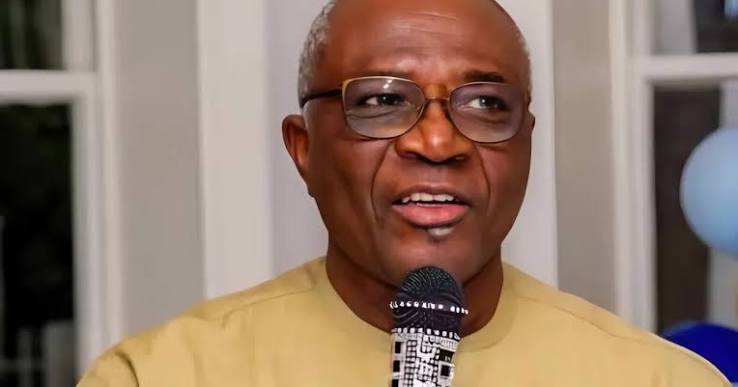
The measure, announced on Thursday by the Minister of Finance and Coordinating Minister of the Economy, Taiwo Oyedele, at a briefing in Abuja, will see NNPC Retail sell petrol at landing cost, with priority given to public transport operators nationwide. According to NNPC’s latest reported price list, petrol currently sells for N1,355 per litre in Lagos and Rivers states and N1,370 per litre in Abuja, down from between N1,420 and N1,450 per litre before recent reductions triggered by the Dangote Petroleum Refinery’s cut in gantry price.
Presidential spokesperson Bayo Onanuga said in a statement that the measure is aimed at cushioning the impact of global crude oil price shocks and volatility on vulnerable households. “NNPC Retail, which already sells petrol at the lowest price in the market, will offer this new deal within the next 30 days. This means if NNPC’s landing cost is N1,300, it will sell fuel to Nigerians, especially commercial vehicles, at the same price,” Onanuga said.
The Presidency was emphatic that the arrangement does not amount to a restoration of the petrol subsidy, which ended on May 29, 2023. “To be perfectly clear, none of these measures restores a blanket subsidy. Doing so would create longer-term harm for a short-term cure. Each measure is designed to reach the people who need help, without putting the wider economy at risk,” Onanuga said.
Oyedele also announced that the Federal Government is negotiating a ceiling of N1,350 per litre on the ex-gantry or landing cost of petrol, under which refiners and importers would carry any shortfall when costs rise above the ceiling and recover it later when crude prices or the exchange rate allow. “This is neither a subsidy nor a price control: it is designed to smooth prices over time rather than suppressing them. The ceiling will be reviewed monthly, reset as costs require, and the figures published for transparency,” the minister said.
The measures come against the backdrop of Nigeria’s post-subsidy economic reality. Data from the National Bureau of Statistics shows that headline inflation eased marginally to 15.39 per cent in August 2026 from 15.43 per cent in July, while the economy grew by 4.43 per cent year-on-year in real terms in the second quarter of 2026, up from 4.23 per cent in the same period of 2025. The naira has also strengthened, appreciating to around N1,332 per dollar in October from over N1,660 a year earlier.
However, the gains have not translated into broad relief for households. The average fare for intra-city bus journeys stood at N1,431.25 in May 2026, representing a 38.63 per cent increase compared to N1,032.46 in May 2025. The national minimum wage of N70,000 remains far below the estimated monthly cost of living for a family of four, which market surveys place between N349,000 and N513,000.
The government says subsidy removal generated N15.8 trillion in savings for the Federation between June 2023 and December 2025, with N5.4 trillion accruing to the Federal Government and N10.4 trillion shared among states and local governments. Oyedele also disclosed that the government had granted a full waiver on taxes and duties applicable to petrol, valued at more than N3.3 trillion for the year ending September 30, 2026.
The intervention has nonetheless drawn criticism. Trade Union Congress President Festus Osifo argued that despite the framing, any move to cap the price of fuel is a subsidy, saying past governments have used elaborate terms to mask fuel price interventions. The Social Democratic Party’s presidential candidate, Adewole Adebayo, also questioned the measure, while former Vice President Atiku Abubakar has separately challenged the administration’s economic approach, arguing that energy costs must fall for Nigerians to feel real relief.
Other measures announced include forward sales of crude to domestic refineries, increased cash transfers to vulnerable households, subsidised credit for small businesses, an accelerated compressed natural gas rollout, and the establishment of a National Strategic Fuel Reserve. The CNG programme has so far converted over 120,000 vehicles nationwide, with more than 100,000 additional conversion kits being processed and plans to deploy 1,000 refuelling stations. Government officials say CNG is between 60 and 70 per cent cheaper than petrol.
What remains unclear is whether the 30-day discount will be extended, how the proposed N1,350 ceiling will operate in practice without distorting the deregulated market, and whether other marketers will follow NNPC’s lead. The Presidency has said the government is working on a comprehensive package of fiscal measures to bring inflation down to single digits sustainably in the near term, but no timeline has been provided. For now, the measures represent an attempt to deliver visible relief without formally reversing a reform the administration insists is necessary for long-term stability.